25 Marketing Ideas for Small Business That Build on Each Other, Even on a Small Budget
Win more local customers on a lean budget: 25 marketing ideas for small business, each with a first step and an easy way to track ROI. Start this week.

Dana Willow
Senior Marketer sharing 15 years of marketing wisdom through an AI lens.
Published on October 8, 2026
Updated on October 10, 2026

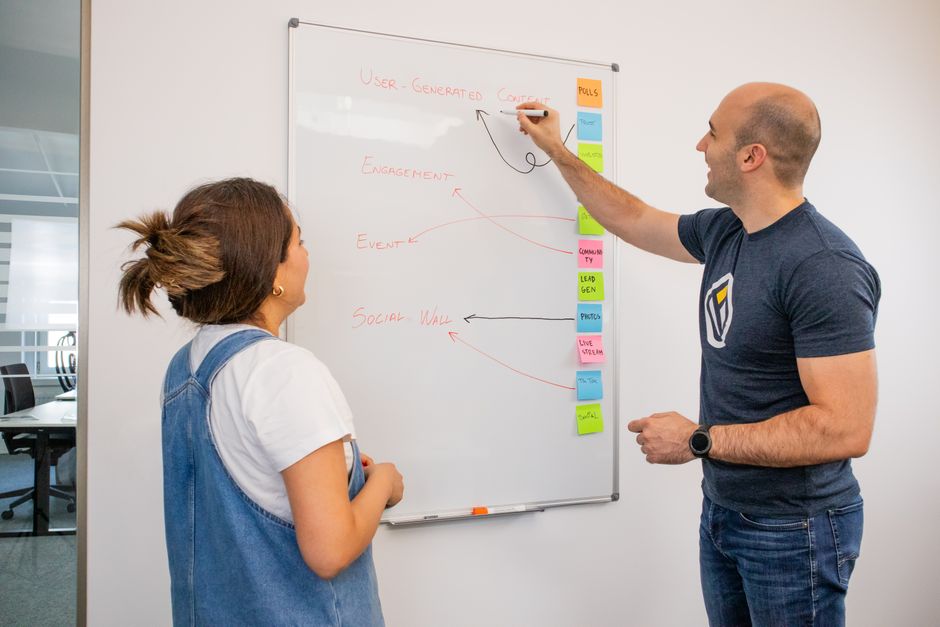
Small business marketing ideas that build on each other on a small budget.
Key Takeaways
- Write a one-page plan before you test any single idea. It should cover your audience, offer, channels, budget, and one metric.
- Get the foundations right first: a Google Business Profile, consistent local listings, and a mobile-friendly site with one clear call to action.
- Word of mouth and user-generated content cost almost nothing, and they're often a small business's strongest growth levers.
- Choose 3–5 ideas that fit your business type and run them for 90 days instead of trying everything at once.
- Track each idea with free tools like UTM links, a "how did you hear about us" question, and promo codes. That tells you what to keep and what to cut.
What small business marketing actually means now
Small business marketing is a repeatable system for getting found by the right customers, earning their trust, and being chosen over alternatives, rather than a scattered list of one-off tactics like posting, flyers, or ads.
That distinction matters more now than it did a few years ago. Rent, wages, insurance, and supplier prices keep climbing, so every marketing dollar has to earn its place. Local attention is crowded, too.
Yet owners aren't pulling back: 68% of small and mid-sized businesses plan to increase marketing spend despite economic uncertainty (Constant Contact Small Business Report). But spending more only pays off when there's a clear path from first impression to repeat purchase. Without one, money leaks into channels no one can explain or measure.
Treat marketing like a machine you tune, not a lottery ticket you buy.
This guide gives you concrete ideas, one realistic first step for each, and a simple way to check whether it worked. Start small, track what happens, and keep only what brings in customers.
Build a one-page marketing plan before you pick ideas
A one-page marketing plan is a single sheet that names your audience, offer, channels, budget cap, core metric and review date, so every marketing idea can be tested against it quickly. It beats a 40-slide strategy deck because you'll actually use it.
Most small businesses fail at planning by writing too much and checking too little. A short plan fits on a desk, gets read weekly, and makes saying no easy.
Budgets vary a lot, too. The average marketing budget runs from $50 to $6,000 per month (WebFX, 2025). With a spread that wide, there's no correct number, only one you can sustain.
Fill in the six rows below before you consider a single tactic. Then use the page as a filter for everything that follows.
| Plan element | Question to answer | Example (local bakery) |
|---|---|---|
| Audience | Who buys most often, and why? | Office workers within 2 miles who want quick lunches |
| Offer | What makes you the obvious choice? | Fresh sourdough sandwiches ready in 5 minutes |
| Channels | Where does this audience already look? | Google Maps, Instagram, local office newsletters |
| Budget cap | What can you spend monthly without stress? | $150 per month plus 4 hours per week |
| Core metric | Which number proves it's working? | Weekday lunch orders from new customers |
| Review cadence | When will you cut or double down? | Every 30 days, with a full review at 90 days |
Define your audience in one sentence
If you can't say it in one sentence, you don't know it yet. Name the buyer, the place and the need.
Set a budget cap you can sustain
Count time as money. A cap that covers both cash and weekly hours keeps a good idea from turning into a burnout project.
Choose one metric per goal
Pick the number tied directly to revenue. Ten dashboards bury the one result that matters.
Get found locally: 5 foundation ideas
Local foundations come first for small businesses because 46% of all Google searches have local intent, so customers are actively looking for businesses like yours in their area.
According to Oregon SBDC, that 46% figure means nearly every second search is a shopper ready to walk through a door, call a number, or book a visit. The businesses showing up in those results win the sale before a competitor gets to pitch.
The five foundations below are cheap, mostly free, and take a few hours each. Every later tactic (ads, social posts, partnerships) leans on them. A stranger who finds you but can't trust your listing, load your site, or locate your address will click the next result.
- Google Business Profile: your free listing in Maps and search. First step: claim it, choose precise categories, confirm your hours, and upload real photos, then post weekly. Cost: free, apart from a couple of hours of your time.
- Consistent listings mean your name, address, and phone number read identically everywhere. Start by auditing Yelp, Apple Maps, Bing, and your industry directories, then fix every mismatch. Cost: free if you do it by hand, or a monthly fee for a syndication tool.
- A mobile-friendly website loads fast on a phone and asks for one action per page, like "Call now" or "Book a table." Test your current pages on your own phone and cut every competing button. Cost: free if you tweak your current site, or a modest monthly fee for a basic site builder.
- Review request system: a repeatable way to turn happy customers into public proof. Print a QR code linking to your review page for the checkout counter, then send a short follow-up text or email the next day. Cost: minimal, just printing and a free code generator.
- Service-area pages give each neighborhood or town you serve its own page, with local details, photos, and testimonials. Begin with your top three areas and write unique copy for each instead of swapping place names. Cost: free if you write them yourself, or a per-page fee if you hire a writer.
Build a local community: 5 ideas beyond basic listings
Building local community means creating reasons for neighbors to meet, learn and talk around your business, through workshops, partnerships, sponsorships, local groups and physical branding, so people recommend businesses they feel part of.
Listings help strangers find you. Community turns those strangers into regulars who vouch for you without being asked. That kind of trust is hard for a bigger competitor to copy, because it grows from showing up in the same streets, groups and events as your customers, month after month.
The five ideas below mix offline and hybrid tactics, and each has a small first step. You can test one in an afternoon, see whether people respond, and keep only what fits your budget, your neighborhood and the hours you actually have each week. Low-cost approaches like these suit new owners well (FreeAgent).
- Host a free monthly session. A workshop, tasting or skill class gives people a reason to show up. First step: pick one date and a topic you already know well.
- Co-promote with a neighboring, non-competing business through a shared offer or bundle. First step: ask one owner you already chat with to swap flyers for a month.
- Donate a prize or sponsor a small local event in exchange for on-site visibility. First step: contact a school, club or charity running something in the next two months.
- Join local conversations. Answer questions in Facebook groups, neighborhood forums and community subreddits without pitching. First step: join two groups and help for two weeks before mentioning your business.
- Put your brand into the physical world with postcards, window signage and branded packaging. First step: order a small batch of postcards with a simple offer and hand them out with every sale.
Turn customers into your marketing: 4 word-of-mouth and UGC ideas
Word-of-mouth and user-generated content turn happy customers into your most trusted marketing channel, using referrals, spotlights, photo prompts, and reused reviews that cost little and need no ad budget.
Here's why it works: 74% of consumers consider word of mouth the primary factor behind their purchasing decisions (WordStream). That means a stranger's recommendation often outweighs anything your own ad copy can say, however polished or clever it sounds.
Small local shops have a built-in edge. Every sale creates someone who can vouch for you, share a photo, or bring in a friend. The four ideas below turn that goodwill into repeatable habits you can run every month without hiring an agency, learning complicated software, or buying a single ad.
- Two-sided referral program: give both the referrer and the new customer a reward, such as a discount or free add-on.
- Run a monthly customer spotlight using photos and stories that customers have agreed to share.
- Branded photo prompt: tie a hashtag to a real moment, like a first order or finished project.
- Turn reviews and testimonials into social posts, website proof sections, and email snippets.
How to ask for UGC without sounding awkward
Ask right after a good moment, like a delivery or a compliment. Keep it to one sentence and one easy action, such as replying with a photo.
Getting permission and giving credit
Get written consent. A simple reply saying "yes, you can share this" counts. Every time you reuse someone's content, tag them by name and credit them.
Content and social media ideas that keep paying off: 5 ideas
The best content and social media ideas for small businesses start with one in-depth weekly piece, repurposed for every channel and written in the owner's own voice, so each hour of effort keeps earning attention for months.
Social still matters. Meta's platforms put a small business in front of a huge, ready-made audience where customers already scroll, follow and share. A steady posting rhythm is worth the effort, as long as the content is good.
The trap is chasing every platform at once. Pick two channels where your best buyers already spend time, build one core piece for them, and let a consistent voice carry the rest. Rushed, scattered effort across six networks produces thin posts that people forget, don't trust and don't share, and the weekly habit quietly collapses within a few months.
- Publish one in-depth guide each week that answers a real customer question, using the exact wording customers use in emails and calls.
- Turn every core piece into short video clips and carousel posts, so a single idea reaches people who never open a blog.
- Post as the founder on LinkedIn or X with honest, behind-the-scenes lessons, including the mistakes and decisions most owners keep private.
- Swap newsletter mentions or book podcast guest spots with businesses that share your audience but don't compete with you.
- Save your best-performing posts and refresh them each quarter with new examples, updated details and a sharper headline.
Repurposing only builds trust when every version sounds like the same person. In practice, tools like PostKing train voice profiles on your past posts and site copy, so clips, carousels and captions keep the owner's tone.
Salesforce's free advertising ideas make the same point: low-cost channels reward consistency over volume.
Email and automation ideas that run while you work: 3 ideas
Automated email sequences beat one-off blasts because they send the right message at the right moment without any extra effort, and research found they generate 30x higher returns than one-off campaigns. You build each one once, and it keeps working while you serve customers. For a small team with no spare hours, that matters.
A blast reaches people once and fades by the afternoon. A sequence responds to what each person actually does: joining your list, buying, or going quiet.
Start with these three, in this order. Each covers a different stage of the customer relationship. Keep every email short, personal, and focused on a single action, and write in your own voice so your list knows a real person is behind the messages.
- Build a welcome sequence of 3–4 emails that introduces your story, best seller, and offer. Email one thanks subscribers and shares why you started. Email two spotlights your best seller with a customer quote. Email three presents a first-order incentive with a clear deadline.
- Send a post-purchase sequence that asks for a review and a referral. Day one confirms the order and sets delivery expectations. Around day seven, ask for a short review with a direct link. Then follow up with a referral offer that rewards both the customer and their friend.
- Run a win-back sequence for customers who haven't bought in 60–90 days. Open with a friendly "we miss you" note and one useful update. Send a second email featuring new or popular products. Close with a time-limited offer, then remove non-responders so your list stays healthy.
Low-cost paid ideas with spending limits: 3 ideas
Low-cost paid marketing works best when a small business caps its budget and uses it to amplify content, keywords, and audiences that already perform organically, instead of paying to test unproven ideas.
Treat every dollar as a small loan to a channel. Set a firm cap per test, decide what counts as a win, and write down your kill criteria before the first ad goes live.
A simple stop-loss rule helps: pause any campaign that burns through its full test cap without a call, booking, or sale. It keeps a curious little experiment from turning into a monthly cash drain.
Forbes and similar low-cost marketing guides frame paid tools as add-ons to free tactics. Start with a few weeks of clean data, and only then raise spend on proven winners instead of hunches.
- Boost your best organic post to a tightly targeted local audience. Pick a post that already earned comments or saves, target a small radius around your location, and cap spend at a modest daily amount for three to five days.
- Run search ads on local-intent and branded keywords only. Skip broad terms, bid on phrases like "near me" plus your service, and pause any keyword that spends its cap without a single inquiry.
- Set up a small retargeting campaign for recent website visitors. Show one clear offer to people who visited in the last 30 days, and shut it off if cost per lead exceeds what a new customer is worth.
Which ideas fit your type of business
Your business model decides which marketing ideas come first, because a plumber, a café, a SaaS startup and a nonprofit each win customers, donors or users through different channels, budgets and trust signals.
Don't try all 25 ideas at once. Pick three to five from the table below, starting with the column that matches your model. Add the next-tier ideas once the first habits run without effort, and park anything under skip until your results justify the extra work.
Small-business guidance from FreeAgent and the Oregon SBDC points the same way: put your limited time into a few channels that reach nearby or high-intent buyers. Spreading effort thinly across every tactic rarely builds momentum. The skip picks are simply the ones that cost the most relative to their likely return for that model.
| Business type | Start with | Add next | Skip for now |
|---|---|---|---|
| Local service (plumber, salon, accountant) | Google Business Profile, review system, service-area pages | Referral program, local groups | Broad social ads |
| Retail shop | Google Business Profile, co-promotions, in-store signage | UGC photo prompt, win-back email | Weekly long-form blog |
| Restaurant or café | Google Business Profile, customer spotlights, local events | Boosted local posts, welcome email | Podcast guesting |
| SaaS or online product | Weekly core content, founder posts, welcome sequence | Newsletter swaps, retargeting | Print postcards |
| Nonprofit or NGO | Community workshops, customer and supporter stories, founder posts | Partner co-promotions, email nurture | Paid search on broad terms |
Treat the table as a starting point, not a rulebook. A hybrid business, like a bakery that ships nationwide, can borrow the first column from one row and the second from another.
How to measure ROI on free and low-cost marketing
Measuring ROI on free and low-cost marketing means dividing the revenue or customers a tactic produces by its money and time cost, using free tools like Google Analytics, Google Business Profile, promo codes and referral fields.
Two terms matter most. Customer acquisition cost is the total money and time you spend on a tactic divided by the number of new customers it brings in. Conversion rate is the share of people who see an offer and then buy, call or sign up.
So a tactic with a low cost and a low conversion rate can still lose to a pricier one.
Pick one tracking method per tactic before launch, because guessing afterward rarely works. The table below pairs each idea type with a free way to track it and the one number worth watching. Free tools are plentiful, as this U.S. Chamber of Commerce roundup of marketing tools shows.
| Idea type | Free tracking method | Metric to watch |
|---|---|---|
| Local listings | Google Business Profile insights | Calls, direction requests, website clicks |
| Community events | Sign-up sheet plus event-only promo code | Attendees who become customers within 30 days |
| Referrals and UGC | Unique referral codes and a "how did you hear about us" field | Referred customers per month |
| Content and social | UTM-tagged links in Google Analytics | Visits that lead to inquiries or sales |
| Email sequences | Built-in email platform reports | Revenue per sequence, reply rate |
| Paid tests | Ad platform conversions plus a test budget cap | Cost per acquired customer |
Count your hours as part of the cost
A "free" tactic still costs your time. Multiply the hours you spent by what your time is worth, then add that to any cash spend.
This small business marketing guide from Xero is a useful reminder to weigh effort against results.
A 15-minute monthly review routine
Once a month, open each tracker and note the metric from the table. Log hours spent and new customers gained.
Keep what earns its time. Cut the one tactic with the weakest return.
Using AI to stretch your budget without sounding generic
Small teams should use AI to automate drafting, platform-specific adaptation, and scheduling, while the owner keeps final approval, because tone, claims, and local details are what make small business marketing sound human rather than generic.
AI saves hours on first drafts, on reshaping one idea into versions for LinkedIn, X, Instagram, Threads, and Facebook, and on queuing posts ahead of time so the week runs itself. That matters when Salesforce's list of free advertising ideas rewards consistent effort over big spend.
AI hurts when you accept the first output without editing it. Generic phrasing, overhyped promises, and invented details slip in, and suddenly your shop sounds like every competitor in town.
In practice, tools like PostKing draft each platform's version and then hold it for your approval before anything is scheduled, so speed never costs you control of your voice.
- Draft, don't decide: use AI for first drafts and platform versions, never for final approval.
- Train tools on your past writing instead of relying on generic prompts.
- Batch a week of posts in one sitting, then schedule them.
- Review every post for claims, tone, and local details before publishing.
Treat that last step as a firm rule. If you wouldn't say it to a customer at your counter, it doesn't go out.
Your 90-day rollout plan
A 90-day marketing rollout gives a small business enough time to build foundations, test community and referral ideas, and read early signals from reviews, traffic, and inquiries before committing more budget. Marketing works as a loop, not a one-time project. You set a small plan, run it, measure what happened, then back the ideas that brought in customers and drop the ones that didn't. That keeps a limited budget on work that pays off.
The phases below follow guidance from Oregon's Small Business Development Center on sticking with a few proven strategies. Foundations come first, then community and word of mouth, then content and automation. Each stage ends with a short review, so your decisions rest on real results instead of whatever felt busy that week.
- Days 1–14: Write the one-page plan, fix your listings, and set up tracking.
- Days 15–45: Launch the review system, one community idea, and the referral program, then check early numbers.
- Days 46–75: Start weekly core content and the welcome email sequence.
- Days 76–90: Review the metrics, cut the weakest idea, and test one small paid booster.
FAQs About Marketing Ideas for Small Business
What is the cheapest way to market a small business?
Start with the free tools that put you in front of people already searching for you. Claim your Google Business Profile and fill it out completely: accurate hours, photos, services, and regular updates. That's what gets you into local searches and onto maps.
Next, ask every happy customer for a review, ideally right after a good experience, and make it easy with a direct link. Then build a referral habit: ask satisfied customers to recommend you, and thank them when they do.
All three cost little beyond your time, and they feed each other. A strong profile brings visitors, reviews earn their trust, and referrals send you warm leads.
How much should a small business spend on marketing?
There's no single right number. Pick a monthly cap you can sustain without straining cash flow. Many small businesses set aside a modest percentage of revenue, but the figure that matters is the one you can keep up for several months in a row.
Marketing runs on consistency, and every stop and restart burns momentum. Before you scale anything, give each channel a small test budget and track what comes back. Put more money behind the ones that bring in leads or sales, and pull it from the ones that don't.
Revisit your cap every quarter as revenue grows.
How many marketing ideas should I try at once?
Three to five. That's enough variety to learn what works, without spreading your time and budget so thin that everything gets done badly.
Give each idea a 90-day test window so you have enough data to judge it fairly. Most tactics need several weeks to show results. Set a clear goal for each one, such as leads, bookings or sign-ups, and check progress monthly.
At the end of 90 days, keep what works, drop what doesn't, and swap in something new. Pick ideas that build on each other, like reviews feeding your social content, and each one gets stronger.
How do I get user-generated content from customers?
Ask for it directly, and be specific. Instead of "tag us in your posts," try prompts like "Share a photo of your finished project" or "Tell us how you use this in your daily routine."
Make responding painless: a branded hashtag, a short form, or a follow-up message after purchase all work.
Always get clear permission before you reuse anyone's photo, review or story, and credit the creator by tag or name. A quick written or messaged "Can we feature this?" is usually enough.
Customers who feel recognized tend to share again. And what they share gives prospects authentic proof that you deliver.
How can I measure marketing ROI without expensive software?
You can track ROI with simple, low-cost methods. Add UTM parameters to links in your emails, social posts and ads, and a free tool like Google Analytics will show which campaigns drive visits and conversions.
Give each channel or offer its own promo code so you can tie sales back to the source. Add a "How did you hear about us?" field to your checkout, contact form or booking process, and ask in person or on the phone too.
Once a month, log the results in a basic spreadsheet: what you spent, and what revenue each source produced. It won't be perfect, but it's accurate enough to guide good decisions.
Can AI help with small business marketing without sounding generic?
Yes. AI speeds up drafting, brainstorming and repurposing, as long as you steer it with your own voice.
Feed it samples of your best writing (emails, website copy, customer replies) and ask it to match your tone, vocabulary and typical sentence length. Give it real details about your products, customers and local area, so it doesn't fill the page with vague claims.
Then always have a person review and edit everything before it's published. Check the facts, cut the stock phrases, and add your own stories and opinions. You save the time, and the final piece still sounds like you.
7 marketing mistakes that quietly stall small businesses
- Waiting until everything is perfect: If you hold off until the website, logo, or content feels finished, you delay the feedback you need. A rough version that runs for 30 days teaches you more than a polished one that never launches.
- Trying every channel at once: A few hours a week split across six platforms gives each one too little consistency to work. Pick 3–5 ideas that fit your business type and go deep on those.
- Treating marketing as a one-time push: A single launch post or promotion fades fast. Results compound when reviews, referrals, and email sequences keep running week after week.
- Not tracking where customers come from: Without UTM links, promo codes, or a simple "how did you hear about us?" question, you can't tell which ideas deserve to stay. Owners end up cutting what works and keeping what doesn't.
- Assuming 'no budget' means 'no marketing': Many of the most effective ideas (listings, reviews, referrals, community events) cost time, not money. A tight budget calls for different tactics, and doing nothing isn't one of them.
- Copying big-brand tone and tactics: Polished corporate messaging and broad paid campaigns rarely work at small business scale. Your personal voice and local relationships are advantages bigger competitors can't copy.
- Letting generic AI write without review: Unedited AI drafts come out overhyped and sound like everyone else's. Use AI for drafts and formatting, and always review the final version before it goes live.
Related Guides
- Social Media Marketing for Small Business
- Small Business Marketing Strategies, Ranked by Cost and Effort
- Small Business SEO Marketing on a Small Budget
- Online Marketing Tools for Small Business
- Marketing Automation Software for Small Business
Sources
About Dana Willow
Author
Senior Marketer sharing 15 years of marketing wisdom through an AI lens. Teaching founders to automate smarter.