How to Rank in AI Overviews: 7 Strategies That Actually Work in 2026
Get cited in ChatGPT, Perplexity, & Google AI Overviews. See content formats, publishing strategies, & optimization tactics that earn AI citations in 2026.

Dana Willow
Senior Marketer sharing 15 years of marketing wisdom through an AI lens.
Published on July 15, 2026
Updated on October 10, 2026
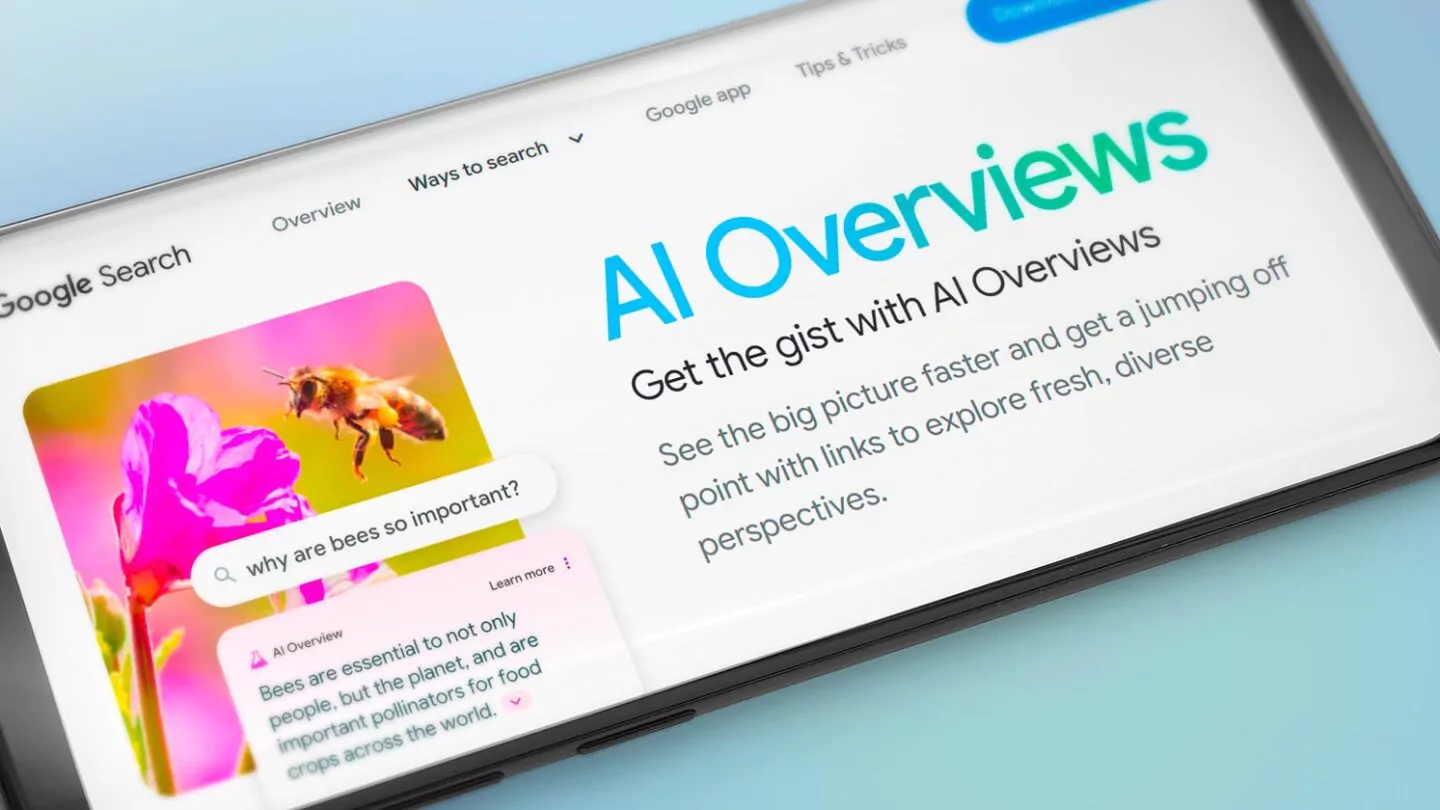
AI Overviews
Key Takeaways
- About 50% of Google searches already show AI summaries, expected to reach 75% by 2028-making AI overview visibility crucial for brand discovery
- Only 8% of ChatGPT citations come from Google's top 10 organic results, meaning traditional SEO rankings don't guarantee AI citations
- AI models prioritize structured formats like comparison tables, step-by-step lists, and FAQ sections over narrative blog posts
- Publishing on community forums, Wikipedia, and authoritative third-party sites increases AI citation likelihood more than brand-owned content alone
- Success metrics shift from traffic and clicks to citation frequency, brand mention accuracy, and position within AI-generated answers
Why AI Overviews Matter More Than Organic Clicks in 2026
Nearly 60% of Google searches end without a click, and when people see an AI overview, they're half as likely to ever click a link from Google. This isn't a future trend - it's your current reality. About 50% of Google searches already carry AI summaries, a figure expected to surpass 75% by 2028. Meanwhile, 80% of consumers rely on zero-click results at least 40% of the time, and 58% of consumers have already turned to generative AI tools for product or service recommendations. If your entire marketing strategy depends on people clicking through to your website, you're building on sand.
The Zero-Click Search Economy
AI overviews have become the new front door to the internet. Most users never walk past the threshold to visit your actual site. The answer they need appears before them - your brand either lives inside that answer or it doesn't exist.
The stakes compound fast. Only 8% of ChatGPT's citations come from URLs that rank in Google's top 10 organic results for the same query. Dominating traditional search no longer guarantees AI visibility.
Brands optimized purely for blue links are invisible to the engine now driving discovery.
What This Means for Indie Founders and Small Businesses
The math is brutal for smaller operators. Traffic declines of 20-50% are realistic for brands that ignore AI-mediated search entirely. That's not a rounding error - that's an existential gap.
The opportunity is real too. For 34% of marketers, AI search platforms are where qualified prospects first hear about their company. Earning that mention - before a competitor does - is the new SEO.
What Makes AI Overviews Different From Traditional Search Results
Traditional SEO optimizes for ranking algorithms; AI overview optimization targets the source selection logic of large language models that synthesize answers from dozens of sources simultaneously. Google's algorithm ranks pages based on backlinks, keywords, and technical signals. GenAI search parses an order of magnitude more sources than humans - often pulling from community forums, Wikipedia, and niche authoritative sites that traditional SEO ignores. Only 8% of ChatGPT's citations come from URLs that appear in Google's top 10 organic results for the same query. This gap is not a glitch. It reflects a fundamentally different selection process.
How AI Models Select Sources
AI models don't reward authority signals the way PageRank does. They prioritize content clarity, factual density, structured formatting, and third-party validation. A mid-tier domain with precise, well-organized answers can outrank a household brand with bloated copy.
These models cross-reference claims across multiple sources before citing any single one. Repetition of a fact across credible, independent pages increases the likelihood of citation.
Domain authority alone does not.
Why Your #1 Google Ranking Doesn't Guarantee AI Citations
Ranking first means an algorithm preferred your page. Being cited by an AI means a language model found your content genuinely useful for synthesizing an answer. Those are different bars entirely.
AI overviews favor answers that directly address user intent with minimal context. If your page buries the answer inside long preambles, keyword-padded intros, or thin sections, AI models skip it - regardless of your domain's age or backlink count.
The paradigm shift required is significant. Stop writing for crawlers. Start writing for comprehension.
The 5 Content Formats AI Models Actually Cite
AI models don't cite narrative blog posts-they cite structured, scannable content that answers specific questions with verifiable facts and clear formatting. After analyzing thousands of AI citations, five formats consistently surface: comparison tables, step-by-step process lists, FAQ sections with direct answers, statistical claims with inline sources, and definition blocks. These formats work because they match how LLMs parse and synthesize information. A 2,000-word narrative essay might rank well in traditional search, but an AI model will skip it in favor of a 300-word structured guide presenting the same information in scannable chunks. The key is information density and retrieval efficiency - AI models search for accuracy, not engagement metrics or time-on-page. Furthermore, only 8% of ChatGPT's citations come from URLs appearing in Google's top 10 organic results for the same query (Ahrefs research), proving that AI citation follows different rules entirely.
Why Tables Outperform Paragraphs
Tables give AI models pre-structured relationships between data points. No inference required. The model extracts, attributes, and cites - fast.
Paragraphs bury comparisons inside prose.
Tables surface them in two seconds.
- Comparison tables: Use 3-5 columns showing feature differences, pricing tiers, or use-case fit - the format AI models extract and reproduce most reliably.
- Step-by-step numbered lists: Break processes into discrete, actionable stages with one verb per step and no compound instructions.
- FAQ sections: Format each question as a heading, answer in 2-3 sentences, and never pad with filler - AI models favor direct resolution.
- Statistical sentences: State one numeric claim per sentence with an inline source citation - no narrative wrapping needed.
- Definition blocks: Explain technical terms in plain language within 50 words. Tight scope signals trustworthiness to the model.
How to Structure Step-by-Step Guides for AI Citation
The structure matters as much as the content itself. Each step should name one action, specify one outcome, and stay under 20 words.
| Step Element | Best Practice | Common Mistake |
|---|---|---|
| Step label | Start with an action verb | Starting with "Make sure to" |
| Step length | One sentence, one outcome | Multi-clause instructions |
| Total steps | 5-9 discrete stages | Fewer than 3 or more than 12 |
| Context | State the goal in step one | Assuming reader background |
With ChatGPT surpassing 800 million weekly users (Search Engine Land), the volume of structured-content citations compounds daily. Format is no longer cosmetic - it is infrastructure.
Where to Publish Content That AI Search Engines Trust
Your brand blog isn't enough-AI models disproportionately cite community forums, Wikipedia, industry publications, and third-party review sites over brand-owned content. This is the hardest pill for founders to swallow: AI models treat your marketing content with skepticism. They prefer sources that appear neutral or community-validated. Reddit threads, Quora answers, industry-specific forums, and Wikipedia entries consistently earn more AI citations than polished brand blogs. For 34% of marketers, AI search platforms are where qualified prospects first hear about their company-but those mentions often come from third-party discussions, not owned media. The strategy shift is profound: instead of only publishing on your domain, seed authoritative content across the platforms AI models trust, then link back to your owned properties for conversion.
The Community Forum Advantage
Forums win because AI models treat community consensus as a credibility signal. A detailed Reddit answer with 200 upvotes reads as validated knowledge. A Wikipedia paragraph citing peer-reviewed research reads as established fact. Your product page reads as advertising.
This isn't fair-but it is actionable. Only 8% of ChatGPT's citations come from URLs appearing in Google's top 10 organic results for the same query (Ahrefs research). The implication is stark: ranking on Google no longer guarantees AI visibility.
How to Ethically Participate in Third-Party Platforms
Genuine participation beats promotional content every time. Answer questions thoroughly on forums relevant to your niche. Contribute to Wikipedia where your expertise is legitimate. Write bylined articles for industry publications your audience already reads.
- Reddit and niche forums: Answer with depth; let helpfulness build credibility naturally
- Wikipedia: Contribute factual edits with citations-never promotional language
- Industry publications: Pitch data-driven bylines, not product announcements
- Quora: Write structured, sourced answers that stand alone without brand mentions
- Review platforms: Encourage authentic customer reviews; respond to criticism openly
- Podcasts and interviews: Transcripts become citable third-party text for AI models
Balancing Owned vs. Earned AI Citations
Owned content still matters-it anchors your brand voice and converts visitors.
Earned citations are what get you into the AI answer in the first place.
The winning structure: publish original research or data on your domain, then seed that research into community discussions, press mentions, and Wikipedia references. AI models follow the citation chain back to your owned source. You earn the citation without sacrificing the conversion.
How to Structure Your Content for Maximum AI Visibility
AI models scan for schema markup, clear heading hierarchy, inline source citations, and factual claims separated from opinion-structure matters more than word count. Start every section with a bolded opener that states the core claim in 25-40 words. Use H2 and H3 tags to build a logical hierarchy AI models can parse at speed. Add schema markup for FAQs, how-tos, and articles so large language models extract structured data without interpretation. Cite statistics inline - "X% of Y according to [Source, Year]" - making fact-checking trivial. Separate factual claims from subjective opinions using phrases like "Data shows…" versus "We believe…". Keep paragraphs to three sentences maximum so AI models extract individual claims without wading through narrative context.
Schema Markup That AI Models Actually Use
Not all schema is equal. FAQ, HowTo, and Article schema give AI crawlers pre-labeled containers for facts, steps, and questions - reducing ambiguity. Search Engine Land reports ChatGPT has surpassed 800 million weekly users - that's a huge audience your schema can reach directly.
Critically, AI citations don't mirror Google rankings. Ahrefs research found only 8% of ChatGPT's citations come from URLs appearing in Google's top 10 organic results. Ranking alone won't get you cited. Structure will.
The Bolded Opener Technique
Bold the first sentence of every section. It signals the core claim to both human readers and AI parsers scanning for citable assertions.
- FAQ schema: Mark up every question-answer pair so AI models extract answers without guessing context
- H2/H3 hierarchy: Match headings to common user queries - these become AI-readable signposts
- Inline citations: Attribute every stat with source name, year, and a URL where possible
- Bolded openers: Open each section with a single bolded sentence stating the primary claim
- Short paragraphs: Cap at two to three sentences so individual claims stay extractable
- Comparison tables: Use clear column headers and consistent row formatting for at-a-glance parsing
- Bolded summaries: End sections with a bolded sentence restating the main claim
Every one of these tactics reduces the cognitive load on an AI model.
Fewer inference steps means a higher chance your content gets cited verbatim.
Measuring Success When Traffic Isn't the Goal
Traditional analytics track clicks and conversions; AI-first metrics track citation frequency, brand mention accuracy, and position within AI-generated answers. When nearly 60% of Google searches end without a click (Search Engine Land original research by SparkToro, 2024), pageviews become a vanity metric. The new KPIs are harder to pull from a dashboard - but far more meaningful. How often does your brand appear in AI overviews for target queries? What position does your content hold in multi-source citations? Are AI models accurately representing your brand's value proposition, or distorting it into something you'd never say yourself?
Citation Frequency Tracking
Manually query ChatGPT, Perplexity, and Google's AI Overviews using your 10-15 highest-priority target keywords. Log every result: whether your brand appears, in what position, and in what context. Do this weekly. Patterns emerge fast.
Citation rank matters as much as citation presence. Being mentioned third as an "alternative" is very different from being cited first as the authority.
Track both frequency and framing - together they reveal your true AI search standing.
Brand Mention Accuracy Audits
AI models sometimes misrepresent products, pricing, or positioning. A monthly accuracy audit catches this before it compounds. Query each platform with brand-specific questions and compare responses against your official messaging.
Sentiment is a KPI now. Positive framing builds trust; neutral or negative framing erodes it - even when no human wrote the words.
Tools for Monitoring AI Search Visibility
- Manual AI Querying: Run structured queries across ChatGPT, Perplexity, and Gemini on a fixed weekly basis - free, direct, and surprisingly revealing.
- Brand Mention Trackers: Tools like Mention or Brand24 can flag when your name surfaces in AI-generated content indexed online.
- Citation Context Logs: Build a simple spreadsheet logging query, platform, citation position, framing sentiment, and accuracy score.
- Referral Source Monitoring: Perplexity does pass some referral traffic - segment it in Google Analytics to catch what AI sends directly.
- Competitor Benchmarking: Query the same keywords and compare how competitors are cited versus your brand - gap analysis for the AI era.
For 34% of marketers, AI search platforms are where qualified prospects first hear about their company (EMARKETER, 2026). If you are not measuring that first impression, you are flying blind into your most important growth channel.
Common Mistakes That Keep You Out of AI Citations
The biggest mistake is treating AI optimization like traditional SEO-keyword stuffing, thin content, and self-promotional content actively reduce your citation likelihood. AI models penalize the same tactics that once gamed Google: keyword-stuffed headings, promotional language disguised as information, and unsupported claims presented as facts. They also ignore content that lacks external validation-if no third-party source mentions your brand or links to your content, AI models assume you're not authoritative. Publishing only on your own domain creates an echo chamber that LLMs discount. Consider that only 8% of ChatGPT's citations come from URLs that appear in Google's top 10 organic results for the same query (Ahrefs research)-proof that traditional ranking signals mean little to AI systems.
Why Self-Promotional Content Gets Ignored
LLMs are trained to surface authoritative, neutral information-not marketing copy. Sales language, superlatives, and brand-first framing trigger a quality penalty before any content is even evaluated. Write to inform first; let authority build naturally.
- Keyword-stuffed headings: AI parsers detect unnatural keyword density and treat it as a spam signal, not a relevance marker.
- Promotional language in informational content: Phrases like "industry-leading" or "best-in-class" signal bias, not expertise.
- Unsupported factual claims: Every statistic without an inline citation looks invented to an LLM trained on sourced corpora.
- Outdated statistics: A figure from several years ago signals staleness. AI models prioritize recent, dated evidence.
- Long, unstructured narrative paragraphs: Dense walls of text resist machine parsing and lower extractability scores.
The Third-Party Validation Gap
AI models weight external consensus heavily. Your own domain saying you're authoritative is weak evidence.
Third-party mentions, backlinks, and independent coverage act as credibility signals that LLMs actually trust.
- Publishing only on owned channels: Without external sites referencing your content, AI models lack corroboration to justify a citation.
- Omitting schema markup: Structured data tells AI parsers exactly what type of content you've published-skipping it leaves interpretation to chance.
- Missing inline source citations: Citing your sources demonstrates epistemic honesty, a quality signal AI models are explicitly trained to reward.
FAQs about how to rank in ai overviews
Do I still need traditional SEO if I rank for AI overviews?
Yes - traditional SEO and AI optimization serve different discovery paths. Google organic results still drive traffic for high-intent queries, while AI overviews dominate informational searches. A balanced strategy targets both: structured content for AI citation and conversion-optimized pages for click-through traffic. Many users toggle between AI summaries and traditional results depending on query complexity, so abandoning either channel in 2026 means leaving significant visibility on the table.
How long does it take to start appearing in AI overviews?
AI citation timelines vary by content type and platform. Community forum posts can appear in ChatGPT citations within days if they gain upvotes and engagement. Brand-owned content typically takes 4-8 weeks to index across AI platforms, assuming proper schema markup and third-party backlinks are in place. Wikipedia edits can appear in AI overviews within hours, but require established editor status and strict sourcing standards. Consistency and authority signals are the biggest factors in how quickly any content gets picked up.
Can small businesses compete with enterprise brands for AI citations?
Yes - AI models prioritize content quality and structure over domain authority alone. A well-structured, fact-dense answer from a small business blog can outrank a vague enterprise article. The advantage shifts to brands that publish specific, actionable content and participate authentically in community platforms like Reddit and niche forums. Only 8% of ChatGPT citations come from Google's top 10 results, which means traditional ranking disadvantages matter far less in the AI overview space than they do in conventional search.
What's the difference between GEO and AEO?
Generative Engine Optimization (GEO) targets AI models like ChatGPT and Claude that generate original text by synthesizing information from multiple sources. Answer Engine Optimization (AEO) focuses on platforms like Perplexity and Google AI Overviews that surface direct answers with cited references. In practice, GEO emphasizes factual density and cross-source validation, while AEO prioritizes structured content formats and schema markup. Both disciplines require moving well beyond traditional keyword-focused SEO strategies to remain competitive in 2026.
How do I track if my content is being cited by AI models?
Manual querying is currently the most reliable method: search your target keywords directly in ChatGPT, Perplexity, Google AI Overviews, and Bing Chat, then document every instance where your brand or content appears in the generated response. Some emerging tools offer AI citation tracking, but the space is still nascent and no single platform provides comprehensive cross-model coverage yet. In the meantime, set up Google Alerts for your brand name combined with common AI platform names to catch third-party discussions and mentions that could feed AI training data and influence future citations.
7 Mistakes That Guarantee You'll Never Appear in AI Overviews
- Treating AI Optimization Like Traditional SEO: Keyword density, meta descriptions, and backlink volume matter far less for AI citations than content structure, factual density, and third-party validation. Founders waste time optimizing title tags when they should be adding schema markup and inline source citations.
- Publishing Only on Your Own Domain: AI models discount brand-owned content that lacks external validation. If no third-party site mentions or links to your content, LLMs assume you're not authoritative. You need a multi-platform presence that includes community forums, industry publications, and collaborative platforms.
- Writing Long Narrative Content Without Structure: A 2,000-word essay might rank in Google, but AI models skip it in favor of scannable, structured content. Paragraphs longer than 3 sentences, missing H2/H3 hierarchy, and narrative flow without clear claim statements reduce citation likelihood to near zero.
- Using Promotional Language in Informational Content: AI models filter out marketing language and sales copy when synthesizing answers. Phrases like 'industry-leading solution' or 'revolutionary platform' signal bias and reduce trust. Informational content must be genuinely educational, with promotional CTAs separated into distinct sections.
- Failing to Cite Sources for Factual Claims: Unsupported statistics and claims without attribution make your content uncitable-AI models can't verify accuracy, so they skip to sources that include inline citations. Every stat needs a source name, year, and ideally a URL in the same sentence.
- Ignoring Schema Markup and Structured Data: Schema markup is the difference between AI models parsing your content correctly versus skipping it entirely. FAQ schema, HowTo schema, and Article schema provide the structured data LLMs need to extract information without interpretation errors.
- Publishing Once and Never Updating: AI models prioritize recent information and penalize stale content. A guide with 2023 statistics in 2026 signals neglect. Regular updates with current data, new examples, and fresh citations keep your content in the citation pool.
Sources
- New front door to the internet: Winning in the age of AI search
- FAQ on GEO & AEO: Where AI search & SEO overlap in 2026
- Brand building in the era of AI search: A practical guide
- Goodbye clicks, hello AI: Zero-click search redefines marketing
- The Future of Discoverability
- Forget What You Know About SEO-Here's How to Optimize Your Brand for LLMs
- 4 Ways to Mitigate the Impact of Falling Traffic on Retail Websites
- IDC Research
About Dana Willow
Author
Senior Marketer sharing 15 years of marketing wisdom through an AI lens. Teaching founders to automate smarter.