
From Zero to Cited, Part 7: Getting Cited by AI Search
AI search visibility beats backlinks now. Here's how to get cited by ChatGPT, Perplexity, and AI Overviews, and how to check where you stand.

Dana Willow
Senior Marketer sharing 15 years of marketing wisdom through an AI lens.
Published on September 21, 2026
Updated on September 22, 2026
Here's the thing about authority. For years the industry treated it like a credit score: domain rating, referring domains, anchor text spread. Then someone asks ChatGPT a question about their own line of work and watches it name three competitors and a Reddit thread. Not a single link anywhere.
That's the moment it clicks: ai search visibility runs on different rules than the old authority score. It's about who the model trusts enough to repeat when someone asks a question in your space.
This is part 7 of our From Zero to Cited series (ten parts total), and it's the one that reshuffles the whole game. The question now is what actually gets a page named out loud.
What Authority Means Without a Backlink Budget
Set the old scorecard down for a second. Domain rating, referring domains, anchor text diversity: none of it means anything to a language model deciding what to say in an answer.
What matters is whether your page is the one ChatGPT, Perplexity, or Google's AI Overviews reach for when someone asks a question in your space. That's the new authority: the model treats your page as the answer itself, not a source buried under ten others.
Small teams actually have a shot here. A one-person bike repair shop with a sharp, well-documented page on "how much a tune-up should cost and why" can outrank a bigger shop's thin blog post. The AI weighs clarity and specificity, and often the detail that gets overlooked: whether other sources already mention your name in the same breath as the topic. Budget doesn't factor into it.
How an AI Engine Decides Who to Mention
These systems aren't magic and they aren't perfect. They read what already ranks well in traditional search, lean on structured, verifiable content, and repeat names they've seen associated with a topic elsewhere. Google has said publicly that AI Overviews draw from the same web index used for organic results, which is part of why the classic on-page fundamentals still matter even as the output format changes.
Three things stand out more than people expect.
A page that answers "how does insurance work for a solo family law practice" gets pulled over a generic "what is malpractice insurance" page, even when the generic page gets more traffic. Specificity wins over breadth.
Clear headers, defined terms, and answerable sub-questions make a page read like something a model can quote directly. This is the heart of generative engine optimization: structuring pages so an AI can lift a clean, accurate answer without guessing at context.
If your clinic shows up on a couple of review sites, a forum thread, and your own FAQ page, all describing the same service the same way, the model starts treating that as fact. That's how a brand gets cited by ChatGPT consistently instead of once by accident.
Hands-On: Audit Where You Actually Stand
You can't fix what you can't see, and guessing is a bad strategy when the answers shift week to week. This is where PostKing's AI visibility check earns its keep.
Run your core topic questions, the ones your customers actually type into a chat box, across ChatGPT, Perplexity, and Google AI Overviews. Not once. As a real, repeated audit.
Here's what you're reading for.
First, which brands get named. Are you in the answer at all, or is it three competitors and a Wikipedia page? That's your current share of voice, cold, no spin.
Second, which URLs get cited. Sometimes an old FAQ page you forgot you had gets the nod instead of your homepage or your best blog post. That's a signal worth acting on.
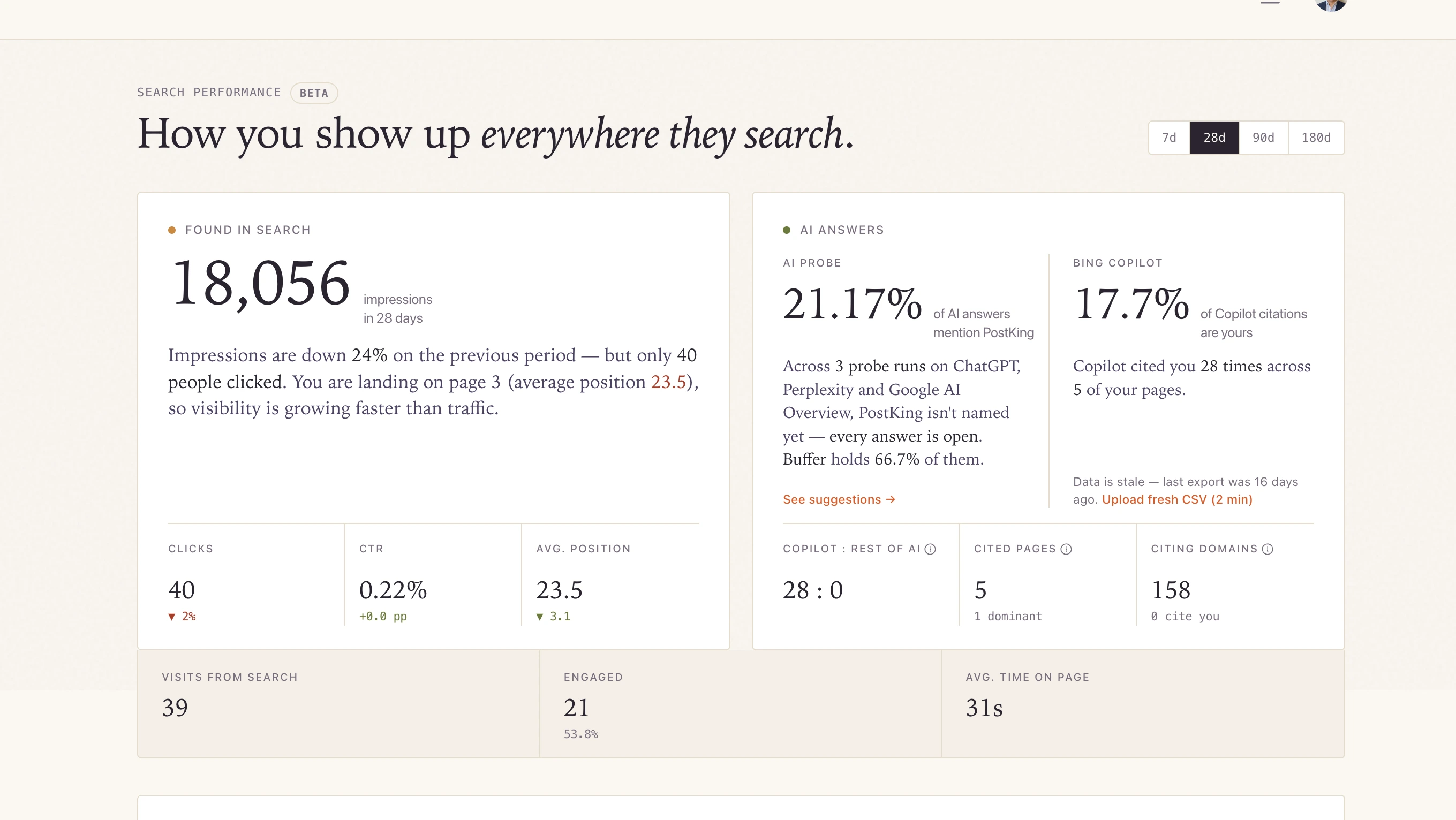
Hop into Search Performance and pull up the leaderboard and competitor-footprint view. It does the legwork of running the same five questions across four apps and screenshotting the results by hand, which is exactly as tedious as it sounds. The outreach insight flags where a competitor's mention traces back to a specific source, so you can see exactly what kind of page earns the citation in your space. That's the practical side of ai overviews seo: working backward from what already gets quoted.
Why This Is a Monthly Check, Not a One-Time Audit
Here's where people trip up: they run one audit, feel good or bad about it, and move on. AI answers don't hold still like that.
Models get retrained, indexes refresh, and a competitor publishes one well-structured comparison page, and suddenly they're the answer for a query you used to own. Search Engine Land and other industry trackers have documented how fast AI Overview citations rotate month to month, sometimes triggered by nothing more than a content refresh on a competing page.
Treat your ai search visibility check like a rank tracker: scheduled, boring, routine. Set it monthly, watch your share of voice trend line, and you'll catch a drop before it turns into a whole quarter of lost visibility instead of one bad week.
Want it straight from Google? This one's worth six minutes.
Do's and Don'ts for Getting Cited
Answer one specific question per page. Put the answer near the top, then back it up.
Describe what you offer the same way everywhere it shows up: docs, about page, everywhere else. That consistency is what makes repetition work for you instead of against you.
Check your visibility every month. Watch which competitors are gaining ground, not just whether your name shows up at all.
Don't stuff a page with keywords hoping volume beats clarity. Models reward precision, not density.
A citation today doesn't guarantee one next quarter. Models forget you exist the moment someone else says it better.
Skipping the audit because you "feel" visible is a mistake. Feelings and actual mention rates disagree more often than people expect.
Where This Leaves You
Backlinks still matter, but they stopped being the whole story a while back. Right now, the brands getting traction are the ones named, by name, inside the answer itself, across every major engine that counts.
Getting there takes the same discipline you've already applied elsewhere: know your baseline, write for clarity over volume, and check your numbers on a schedule instead of a whim. Run PostKing's AI visibility check this month, see where you land, and come back to part 8 for what to do with it.
From Zero to Cited · Part 7 of 10 · Course overview
About Dana Willow
Author
Senior Marketer sharing 15 years of marketing wisdom through an AI lens. Teaching founders to automate smarter.