

Jasper vs Copy.ai Brand Voice: How Each Tool Learns, Enforces, and Scales Your Voice
Find out which tool actually keeps your voice. See how Jasper and Copy.ai brand voice features learn, enforce, and scale tone, plus a decision table.

Dana Willow
Senior Marketer sharing 15 years of marketing wisdom through an AI lens.
Published on October 9, 2026
Updated on October 9, 2026
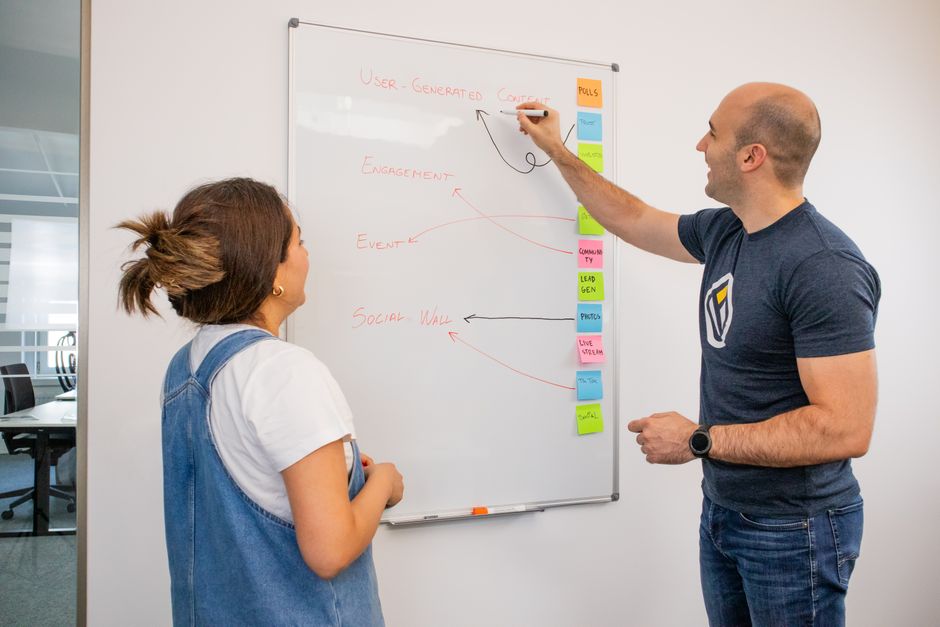
Jasper and Copy.ai take different routes to learning and enforcing a brand voice.
Key Takeaways
- Jasper treats brand voice as a governance layer for marketing teams. It combines voice profiles, style guides, and off-brand tone flagging. Its cheapest paid plan is $49/month.
- Copy.ai treats brand voice as one input inside go-to-market workflows. It fits sales and ops teams producing lots of short-form copy. Long-form drifts and review is manual.
- Neither tool trains on your writing. Both feed a general model your voice description and samples, so you get the right words on a generic rhythm.
- Neither treats social scheduling as a core job. Budget for a second tool if you need to publish.
- A model fine-tuned on your own posts and articles changes the underlying writing patterns, not only the instructions it follows.
- PostKing is the third option. Its voice is fine-tuned on your own writing, then it writes and schedules social posts, blogs and landing pages from $14.99/month, with a 7-day trial and no permanent free plan.
- The most reliable way to choose is a controlled test: same brief, same samples, then compare how much editing each draft needs.
What does brand voice mean in an AI writing tool?
Brand voice in an AI writing tool is the stored set of rules, samples, and context that steers generated text toward a brand's specific tone, vocabulary, and point of view. Without that layer, a model drifts toward the average of the internet. You get generic phrasing, inflated adjectives, and an overexcited tone no editor on your team would sign off on. Readers usually spot the mismatch within a paragraph, and it erodes trust in everything else you publish. Platforms such as Jasper store that guidance once and apply it across every blog post, ad, and email, so writers stop retyping style instructions in each prompt. The real difference between tools is how that guidance is captured, structured, and applied. There are three mechanisms to compare.
- Instruction-based voice profiles: tone descriptors and do/don't rules the model reads before every draft.
- Knowledge bases and style guides hold facts, approved terminology, and formatting rules the writer can reference.
- Fine-tuned models are trained on your own published writing, so patterns come from examples rather than instructions.
Each mechanism trades setup effort against control. Instructions are quick to write but easy for a model to misread. Fine-tuning captures nuance, but it demands more data, time, and cost.
Jasper vs Copy.ai brand voice at a glance
Jasper is built for marketing teams that need brand governance, while Copy.ai is built for GTM teams that need brand voice applied across sales and marketing workflows, so the better fit depends on who owns your content. Both tools capture a brand voice profile, but they use it differently. Jasper centers on a governed workspace where style guides, audience context and tone checks are applied to long-form marketing content. Copy.ai centers on workflows, where a Brand Voice profile and company knowledge shape high-volume short-form copy for sales and marketing. Both share one limit: the voice is a set of instructions on top of a general model, not a model trained on your writing. Jasper holds a 4.7 rating from 1,268 reviews on G2, and its Creator plan starts at $49 per month, according to Jasper's pricing page as summarized by Sasanova. Where vendor pages could not confirm a detail for Copy.ai, the table says to check the current plan, so verify before you buy. PostKing, which publishes this blog, is in the last column as the third option.
| Dimension | Jasper | Copy.ai | PostKing |
|---|---|---|---|
| Core positioning | AI content automation for marketing teams | AI-native go-to-market platform | AI content platform with a voice fine-tuned on your own writing |
| Primary user | Marketing and content teams | Sales, marketing, and ops (GTM) teams | Solo founders and small teams |
| How voice is captured | Brand voice profiles, style guides, audience context | Brand Voice profiles plus Infobase company knowledge | Voice profiles fine-tuned on your own writing |
| Voice enforcement | Flags off-brand tone and suggests fixes | Applied inside workflows and chat; review is manual | Comes from the fine-tuned voice profile; you still review drafts |
| Strongest content type | Long-form, SEO-oriented marketing content | Short-form, high-volume GTM copy | Social posts, blogs, and landing pages |
| Built-in social scheduling | Not the core focus | Not the core focus | LinkedIn, X, Instagram, Threads, Facebook |
| G2 rating | 4.7 from 1,268 reviews | Check current listing | Not compared here |
| Entry paid plan | $49/month (Creator) | Check current plan | $14.99/month (Growth, 3 brands); 7-day free trial, no permanent free plan |
Use the table as a first filter. Teams publishing long-form content under strict style rules lean toward Jasper. Teams carrying one voice through outreach, campaigns and ops workflows lean toward Copy.ai. If you're a founder who wants drafts that sound like you and a scheduler in the same tool, neither is built for that.
How does Jasper learn and enforce brand voice?
Jasper layers voice, audience, and style rules over generation, conditioning each output with brand context rather than retraining the underlying model, so the same writing engine can sound different for every brand you manage inside one workspace. Users supply sample content and descriptors, and Jasper's brand layer (jasper.ai) turns those inputs into instructions that travel with every prompt. They cover tone, vocabulary, audience, and formatting preferences. The base language model stays unchanged. So results depend on your inputs, and a weak sample set produces weak imitation. What you upload matters more than any setting. Reviewers on G2 rate the platform 4.8/5 across more than 1,200 reviews. That score reflects overall satisfaction, not voice accuracy, so test the feature against your own content before you commit a team to it.
Voice profiles built from your sample content
You upload existing writing, such as blog posts or product pages, and Jasper analyzes it for patterns in tone, sentence rhythm, and word choice. The result is a reusable voice profile. Writers then select it when generating, so drafts start closer to the brand's real sound.
Style guides and audience profiles as guardrails
Voice alone does not cover rules like capitalization, banned phrases, or preferred product names. A style guide encodes those rules, while audience profiles describe who the copy addresses and what they care about. Together they narrow the range of acceptable output before a word is written.
Off-brand tone flagging and recommended rewrites
When text drifts from the defined voice, Jasper flags the passage and proposes a rewrite. This works as a review step for pasted or human-written copy too. Editors spend less time hunting for tone slips by hand.
Where this approach falls short
Conditioning is not memory. Outputs can still wander on long documents, and independent reviews such as LookMyAI point to the need for human editing. Agencies can maintain separate voices per client, but each one needs its own curated samples and periodic upkeep.
How does Copy.ai learn and apply brand voice?
Copy.ai learns brand voice from a reusable Brand Voice profile built from sample content, then pairs it with Infobase company knowledge so both feed chat and go-to-market workflows automatically. The profile acts as a standing instruction rather than a one-off prompt. Teams feed it examples of their writing, and the tool distills tone, vocabulary, and sentence habits into something every later request can reuse. Infobase sits beside it as a store of company facts, such as product details, positioning, and customer proof points. Together they answer two questions at once: how should this sound, and what is true about the business? That pairing suits repeatable work like sales emails, outbound sequences, and product descriptions produced at volume. Instead of re-explaining the brand each time, a rep or marketer selects the profile and runs the template. Comparisons such as the machined.ai Copy.ai vs. Jasper review weigh this workflow-first design against Jasper's.
Brand Voice profiles and Infobase knowledge
The profile handles style, while Infobase handles substance. Keeping them separate means a voice update does not require rewriting product facts, and a pricing change does not disturb tone. Both can be selected in chat or attached to a template.
Voice inside automated GTM workflows
Voice matters most when output is generated without a human drafting each piece. Copy.ai's workflows can call the same profile at every step, so a research step, an email draft, and a follow-up all share one register. That consistency is the main reason the approach fits outbound sequences.
Where this approach falls short
Short, templated outputs hold the voice because the structure does much of the work. Long-form narrative content drifts, since a profile cannot supply argument, pacing, or original perspective.
Expect light edits on emails and product copy, and heavier rewrites on essays or thought-leadership pieces.
Setting up a voice profile: what the experience is like in each tool
A voice profile in Jasper or Copy.ai is only as good as the samples, rules, and audience details you feed it, so setup quality shapes draft quality more than any feature does. Jasper's brand voice tooling takes sample text, URLs, and style rules, and it keeps separate voices and style guides for each brand you manage. Copy.ai works from sample text plus company details stored in Infobase, so the reference material matters as much as the writing samples you upload. Plan for an iteration loop, not a one-click result. Generate a few drafts, note where the tone drifts, then adjust descriptors, rules, or samples until the output sounds like your team wrote it.
| Setup step | Jasper | Copy.ai |
|---|---|---|
| Input you provide | Sample text, URLs, style rules, audience details | Sample text, company info in Infobase |
| Editing the profile | Adjust voice descriptors and style guide rules | Edit voice description and knowledge entries |
| Managing multiple brands | Separate voices and guides per brand | Separate voices per workspace or plan limit |
| Ongoing maintenance | Update style guide as rules evolve | Refresh samples and Infobase as messaging changes |
The practical difference is where you spend your effort. Jasper puts more of it into style rules, while Copy.ai puts it into keeping Infobase current. Either way, the upkeep is yours. Coursiv's practical comparison covers how the two tools differ more broadly.
Gather these materials before you start onboarding in either tool:
- 10–20 of your best-performing posts or emails
- 2–3 long-form pieces written by the founder or lead writer
- A list of banned words and phrases
- An audience description, with pain points in their own words
- Examples of copy you dislike, plus a note on why each one misses
Long-form marketing content vs short-form GTM copy
Brand voice fails differently by content type: long-form articles suffer voice drift that compounds with length, while short-form go-to-market copy suffers sameness that compounds with volume across many outputs. In a long blog post or landing page, the voice instructions weaken as the draft grows. Repetition, generic transitions and an overexcited tone creep in around the midpoint. An editor has to catch them paragraph by paragraph, not in one skim. Short social posts, sales emails and ad variants rarely drift within a single piece. But when a team generates dozens a week, the outputs converge on the same hooks, the same openers and the same rhythm. Each one reads fine on its own. The whole set sounds like a template with the names swapped out.
- Blog articles and landing pages: watch for drift and filler transitions. Jasper is the usual pick here, since aitoolradar.io frames it around long-form SEO content.
- Social posts: watch for repetitive hooks and emoji-heavy enthusiasm. Copy.ai's quick-iteration workflow suits batches, but you still need to vary the openers by hand.
- Sales emails and sequences: watch for template sameness across prospects. Copy.ai's workflow focus is often cited for go-to-market teams, as in this machined.ai comparison.
- Product descriptions and ad variants have a shorter run of text, so sameness shows up as near-duplicate phrasing across a catalogue.
Treat these mappings as defaults, not rules. A Jasper user writing short ad copy can hit sameness just as easily, and a Copy.ai user drafting a 1,500-word article still needs a drift check. Match the review step to the failure mode: read long pieces end to end, and read short pieces side by side.
How do these tools handle brand voice across languages?
Most AI writing tools store brand voice profiles written and tested in English, so consistency usually weakens when drafts are generated or translated into other languages, especially around formality, terminology, and idioms. A profile that says "warm, direct, lightly witty" describes an English-speaking persona. A translation engine has no reliable way to rebuild that persona using Czech grammar, German politeness conventions, or French rhythm, so the output often reads like a competent stranger wearing your logo. Global teams, including US and Czech teams, should test each language separately instead of assuming the English profile transfers. In practice, tools like PostKing generate natively in English, German, French, Spanish, Brazilian Portuguese, and Czech, which avoids the write-in-English-then-translate step. Any tool's output still needs the checks below before you publish at scale in any market.
Run these four checks on a small batch in every language you publish in:
- Formality and address forms: formal versus informal "you" in Czech (vy/ty) or German (Sie/du) changes how the brand sounds.
- Product names, feature labels, and branded terms that must stay untranslated should appear unchanged.
- Idioms and humor rarely carry across languages, so flag any joke that survives translation too literally.
- Native-speaker review of the first batch in each language catches errors that no style profile will.
Feed the corrections back into that language's profile. One round of review usually fixes the most visible drift.
Prompt-based voice profiles vs a model fine-tuned on your writing
A prompt-based voice profile tells a general AI model how to sound by adding descriptors and rules to each request, while a fine-tuned model has already learned how you sound from your own published writing. Jasper's brand voice tooling, for example, stores tone descriptors and writing rules that get applied to every generation. That keeps vocabulary and terminology consistent across a team of writers and campaigns. The catch: a general model still writes with its own default voice underneath those rules. The output usually uses the right words but keeps the even, balanced rhythm readers now recognize as AI slop. The same three-part lists. The same tidy, quotable closing lines. The same urge to explain everything. Rules can describe a voice, but they can't reproduce its timing.
| Approach | How it works | Best for | Typical weakness |
|---|---|---|---|
| Voice profile / style guide | Descriptors and rules added to each prompt | Teams with documented brand guidelines | Generic cadence underneath correct vocabulary |
| Knowledge base (e.g., Infobase) | Company facts retrieved into context | Accurate product and positioning claims | Improves facts more than tone |
| Fine-tuned model | Model trained on your own published writing | Founders whose personal voice is the brand | Needs a body of existing writing to learn from |
Fine-tuning works where rules cannot reach: sentence rhythm, word choice, and restraint. A model trained on your posts learns when you stay short, which phrases you never use, and what you leave unsaid. In practice, tools like PostKing train custom models on a brand's website and historical social posts, so the voice comes from evidence rather than adjectives.
The tradeoffs are real. Fine-tuning needs enough source writing to learn from, so a brand with three blog posts has little to teach a model. The upside is less upfront rule-setting, since nobody has to write a forty-page style guide first.
A knowledge base solves a different job. It keeps product facts accurate, but it improves what gets said more than how it sounds.
Pricing and value for small teams and founders
For small teams and founders, the price per brand voice matters more than the sticker price, because a cheap plan covering one voice can cost more per brand than a pricier plan that covers several brands at once. Jasper's cheapest paid plan is $49/month (Creator), according to its pricing page as summarized by sasanova.com. If you run several brands, confirm how many voice profiles that tier includes before you budget around it. Limits on brands and voices change what each one really costs you. Copy.ai's plan structure and free-tier terms shift often, so check its current pricing page instead of trusting a stale comparison. Also check whether scheduling and publishing are included. If they aren't, a separate tool adds a second monthly bill on top of your writing subscription.
| Consideration | Jasper | Copy.ai | PostKing |
|---|---|---|---|
| Entry paid plan | $49/month (Creator) | Check current pricing page | $14.99/month (Growth) |
| Brands included at entry | Check plan limits | Check plan limits | 3 brands |
| Free access | Check current trial terms | Check current free plan terms | 7-day free trial with 350 credits; no permanent free plan |
| Native social scheduling | Not the core focus | Not the core focus | LinkedIn, X, Instagram, Threads, Facebook |
Here's how the math shifts if you run more than one brand. PostKing's Growth plan covers 3 brands and includes scheduling for $14.99/month. Jasper's entry plan is $49/month before you add a scheduler. To be straight about it: PostKing has no permanent free plan, only a 7-day trial. Confirm current trial and plan terms for all three before you commit.
How to test brand voice fidelity before you commit
To test brand voice fidelity, give every tool the same brief, the same voice samples, and the same three content types. Then, score brief fidelity, edit effort, voice match, and banned-phrase violations on a weighted scorecard. Demos are built to flatter, so they reveal little about how a tool handles your actual voice; a controlled test removes that bias because the only variable left is the software itself. Most vendors offer free trials or entry-level plans, so the whole exercise can cost nothing, and comparisons such as Coursiv's Jasper vs Copy.ai breakdown help you shortlist which tools deserve a trial slot. Budget about two hours per tool and keep one person running every test so prompting skill does not skew results; save every draft untouched before editing, because you need the raw output to count edits honestly and to run the blind review later.
- Pick three formats: one LinkedIn post, one 1,000-word article section and one sales email.
- Load identical voice samples and audience notes into each tool.
- Use an identical brief for every tool and format.
- Time the edits and count them until each draft reaches publishable quality.
- Run a blind review where a teammate guesses which draft is human-written.
- Score the results and decide using the table below.
| Criterion | What to measure | Weight |
|---|---|---|
| Brief fidelity | Did it cover every required point? | 25% |
| Edit effort | Minutes and edits to publishable | 30% |
| Voice match | Blind teammate recognition | 30% |
| Banned-phrase violations | Count of off-brand words or clichés | 15% |
Score each criterion from 1 to 5, multiply by its weight and add the totals. A tool that wins on speed but loses the blind review will cost you more in rewrites than it saves.
Where Both Fall Short and What to Use Instead
The third approach to AI brand voice is a model fine-tuned on your own writing that then writes and schedules your content in one place, instead of a style guide layered on a general model. Jasper and Copy.ai share the same limit. Both hand a general model your rules and samples. Neither retrains it on how you write. So you get the right vocabulary on a generic rhythm, and you still edit. Long pieces drift. Batches of short copy start to sound alike. And neither treats scheduling as a core job, so you'll likely pay for a second tool to publish.
PostKing takes the other route. Its voice profiles are fine-tuned on your own writing. The same voice then writes your social posts, blogs and landing pages, and schedules posts to LinkedIn, X, Instagram, Threads and Facebook. Plans start at $14.99/month (Growth, 3 brands). There's no permanent free plan, but you get a 7-day free trial. It needs existing writing to learn from, so it won't help much if you've published three posts. See the side-by-sides: PostKing vs Jasper and PostKing vs Copy.ai.
Which tool fits which team? A decision framework
The right AI brand voice tool depends on who writes, how much they publish, and whether the voice is a documented team standard or one person's style. No tool wins for every profile, so the fair question is which one matches your workflow. Here's the three-way call.
- Pick Jasper if you're a marketing team with a documented style guide and you need governance and off-brand flagging on long-form content. Accept the trade: $49/month to start, a voice that's a rule layer, and human editing on long drafts.
- Pick Copy.ai if you're a sales or GTM team pushing one voice through outbound, enablement and product copy at volume. Accept the trade: manual review, sameness across batches, and heavier rewrites on long-form.
- Pick PostKing if you're a solo founder or small team and you want content that sounds like you without a separate scheduler. Accept the trade: it needs your existing writing to learn from, and there's no permanent free plan.
User sentiment helps as a tiebreaker: LookMyAI collects Jasper ratings, and G2 user reviews summarized by aitoolradar.io compare it with Copy.ai side by side. Read both for patterns in complaints, not just star scores. Satisfaction tells you whether people stay with a tool, but it can't tell you whether the tool fits your team's particular job.
| If you are… | And you need… | Consider |
|---|---|---|
| A marketing team with a documented style guide | Governance and off-brand flagging across long-form content | Jasper |
| A sales or GTM team | Voice applied across outbound, enablement, and product copy at volume | Copy.ai |
| An agency or multi-brand operator | Separate voices with clean switching | Compare per-brand limits in each tool |
| A solo founder or small team whose voice is the brand | Drafts that sound like you, plus scheduling | PostKing, with a voice fine-tuned on your own writing |
Agencies deserve extra scrutiny. Voice limits per workspace and the effort of switching between clients vary by plan, so test with your real client count. Founders face the opposite problem: one voice, but no tolerance for generic output.
Where AI brand voice features are heading
Voice is shifting from prompt setting to trained asset: brands now store tone, vocabulary, and rules as governed profiles that AI tools apply across every draft, instead of retyping style instructions into each prompt. Jasper's brand voice pages describe this direction, pairing voice management with marketing content automation and governance for larger teams. Copy.ai's comparison with Writesonic and Jasper shows it positioning around go-to-market workflow orchestration, where drafting is one step in a longer chain of automated work. The wider content market is also pushing toward personalization at scale and visibility in AI search answers. The trends below are observable directions, not confirmed vendor roadmaps. Verify any specific capability with the vendor before you buy, since feature names and release timing change quickly.
- Real-time off-brand detection: editors flag drifting tone while writers type, not after review.
- Voice consistency checks that span channels, so email, social, and web copy get compared as one body of work instead of single drafts.
- Per-language voice profiles let global teams keep a distinct, native-sounding voice rather than relying on literal translation.
- Content built for AI assistants: voice-consistent pages structured so AI search answers can quote them accurately.
FAQs About Jasper vs Copy.ai Brand Voice
Is Jasper or Copy.ai better for brand voice?
It depends on how your team works. Jasper is the closer fit for marketing teams that need governance. It lets you set up a documented voice, apply it across content types, and flag copy that drifts off-brand. Copy.ai suits go-to-market teams that need to produce a lot of content quickly. It pairs a reusable voice profile with workflows for sales and marketing output. If consistency and review controls matter most, start with Jasper. If throughput across outreach and campaigns matters most, start with Copy.ai. Neither trains a model on your writing, so expect to edit either way.
How does Jasper's brand voice feature work?
You give Jasper sample content and a style guide, and it builds a voice profile from them. The profile covers tone, vocabulary, and style rules. When you generate or edit copy, Jasper applies that profile and can flag tone that looks off-brand. The better your samples and guidelines, the more closely the output matches your voice. Review the output before publishing, because the tool supports your editors but doesn't replace them.
How does Copy.ai's Brand Voice work?
Copy.ai lets you create a reusable voice profile from your existing writing and apply it to new content. It also uses Infobase, a store of company knowledge such as product details, messaging, and positioning, so outputs reflect both how you sound and what you say. You can then run the voice inside workflows, which helps teams keep a consistent tone across repeated tasks like outreach, campaigns, and content production.
Do Jasper or Copy.ai train a model on my writing?
Generally, no. These tools condition a large language model with context rather than fine-tuning it. Your samples, style rules, and knowledge are supplied to the model as instructions and reference material when it generates text. This is why the voice can be updated quickly and doesn't require a custom model. Check each vendor's current data and privacy terms to confirm how your content is stored and used.
How much does Jasper cost for brand voice?
Jasper's Creator plan starts at $49 per month, and it includes brand voice. Pricing, seat limits, and the number of voices or brands you can set up vary by plan and can change. Check Jasper's pricing page for current terms, especially if you manage several brands or need team features.
Can AI keep my brand voice consistent in other languages?
Partly. Generating content natively in the target language usually sounds more natural than translating finished English copy, because idioms, rhythm, and tone carry over better. Translation can work for straightforward content, but it often flattens personality. Either way, have a native speaker review the output. They can catch awkward phrasing, cultural mismatches, and tone that doesn't fit the market.
How many writing samples does an AI tool need to match my voice?
Aim for 10 to 20 strong samples. Choose pieces that represent your best work and not just whatever is available. Mix formats such as blog posts, emails, social posts, and landing page copy, so the tool learns how your voice flexes across contexts. Quality matters more than volume, since a few off-brand samples can pull the output in the wrong direction.
Is there an alternative to Jasper and Copy.ai for brand voice?
Yes. Jasper and Copy.ai both steer a general model with rules and samples. The alternative is a voice fine-tuned on your own writing. PostKing does that with its voice profiles, then writes and schedules social posts, blogs and landing pages in one place. It starts at $14.99/month for 3 brands. There's no permanent free plan, but there's a 7-day free trial. It fits solo founders and small teams best. Larger teams that need governance or GTM workflows may still prefer Jasper or Copy.ai.
What's a cheaper alternative to Jasper for founders managing multiple brands?
Look for a tool with per-brand pricing, so you don't pay for a full team plan for each brand. Built-in scheduling is also worth having, because it removes the need for a separate publishing tool. PostKing is one option that fits this profile. It supports saved voice profiles for each brand and handles content creation and scheduling in one place. Use the 7-day free trial to test it on your own brands before you commit.
Common mistakes when choosing an AI tool for brand voice
- Judging voice from the vendor demo: Demos use polished, generic inputs. The only reliable signal is a draft built from your own samples and your own brief.
- Feeding the tool too few or weak samples: Two or three mediocre posts teach the tool a mediocre voice. Use your best-performing pieces across several formats.
- Confusing company knowledge with voice: A knowledge base improves factual accuracy, but it doesn't change cadence or tone. Check that the tool handles both.
- Skipping a banned-phrase list: Without explicit exclusions, drafts drift toward overexcited clichés that make every brand sound the same.
- Assuming translation preserves voice: Formality, idioms, and rhythm change across languages. Test each language separately and have a native speaker review the first batch.
- Comparing sticker price instead of cost per brand: Multi-brand operators should compare voice-profile limits and whether scheduling is included, not just the monthly fee.
Sources
About Dana Willow
Author
Senior Marketer sharing 15 years of marketing wisdom through an AI lens. Teaching founders to automate smarter.