Organic Social Media Growth: How Founders and Small Teams Grow Without Ads
Grow your audience without ad spend. Get an organic social media growth plan with platform algorithm breakdowns, repurposing workflows, and real KPIs.

Dana Willow
Senior Marketer sharing 15 years of marketing wisdom through an AI lens.
Published on October 9, 2026
Updated on October 10, 2026

Growing a social following without ads takes consistency more than budget.
Key Takeaways
- Organic social media growth means building an audience, engagement, and pipeline without paying for distribution. These days it runs on algorithms, not follower counts.
- Organic reach keeps shrinking because platforms make their money on ads. Your content has to earn distribution through saves, replies, and watch time.
- Every platform rewards something different. LinkedIn rewards dwell time and comments, Instagram rewards Reels and shares, X rewards early replies, and TikTok rewards completion rate.
- Track affection metrics like replies, DMs, saves, and inbound leads, not vanity metrics like impressions.
- A distinct, recognizable voice is the biggest organic edge a small team has over larger brands pumping out generic AI content.
- Take one core idea and reshape it into platform-native formats. You get more reach without piling on more work.
What Is Organic Social Media Growth?
Organic social media growth is the increase in audience, engagement, and business results a brand earns from unpaid content, driven by the platform's algorithm and real audience interest rather than purchased distribution. Put simply, you earn the distribution. You don't buy it. Every follower, comment, save, and inbound lead that shows up without an ad budget behind it counts as organic.
The payoff compounds. A post that resonates keeps working long after it goes live, while a paid impression stops the moment spending stops. That's why organic is still the most cost-efficient channel for founders with more time than money.
It's also slower and less predictable than paid. Plenty of teams quit before it pays off, which is why LinkedIn's analysis of slow organic growth is worth reading before you set expectations.
Definition: Organic social media growth = audience, engagement, and revenue gained from unpaid posts, earned through relevance rather than ad spend.
The old model versus the current model
Years ago, feeds were chronological and reach followed follower count. Post often, and your followers saw it.
Today, interest graphs decide who sees what. Algorithms test each post on a small group, then widen distribution if people react.
Your follower count matters far less than whether a stranger stops scrolling. A small account can out-reach a large one with a single strong post.
Why this is an opening for founders
Here's the uncomfortable part: 64% of marketers are cutting their organic investment. Many have decided organic no longer works.
It still works. It just rewards a different approach. Founders who stay consistent, publish with a clear point of view, and learn from the data face less competition for attention, and when others retreat, the audience they leave behind is up for grabs.
Why Is Organic Reach Declining?
Organic reach declines because platforms prioritize paid placements, feeds are overcrowded with content, and algorithms now rank posts by predicted engagement rather than follower relationships. That leaves unpaid brand posts with shrinking distribution.
The trend is well documented. A Trust Insights analysis found Instagram's organic reach had already fallen about 25% compared with the year before in 2019, and the pressure has only grown since. Every major network is chasing ad revenue and longer sessions from the same finite audience.
None of this is a glitch. It's the business model. Platforms get rewarded for selling visibility, so brands that once reached most of their followers for free now compete with paid campaigns, creators, and algorithmic suggestions. A post that doesn't earn early reactions gets quietly held back from wider audiences before most followers ever see it.
Several forces push reach down together:
- Ad inventory comes first: paid placements win over unpaid posts in every crowded feed.
- Feed saturation means more competition for attention in each user session.
- Interest-graph ranking has replaced follower-graph distribution, so a big following no longer guarantees views.
- Engagement-bait penalties and link suppression bury posts that game reactions or send people off the platform.
- Bot traffic dilutes genuine engagement signals, which makes it harder for algorithms to spot content people truly value.
Organic growth is hard, and nobody should pretend it isn't. But the same interest-based ranking that buries stale follower posts can also lift a strong post from a small account.
Analysts describe organic reach as dying rather than dead. The opportunity sits with original, useful content that starts conversations.
Organic vs. Paid Social: Which Should a Small Team Prioritize?
Small teams should prioritize organic social as the foundation. It builds a lasting audience and asset library, while paid social only rents attention for as long as the budget keeps running.
Paid works best as an amplifier. Once a post earns saves, comments and shares on its own, putting budget behind it pushes proven content to a wider audience instead of gambling on untested ideas. That matters when every dollar and hour on a small team is already spoken for.
The competition is shifting, too. 64% of marketers are cutting their organic budgets and shifting everything into paid ads (Neil Patel). That leaves fewer brands competing for organic attention, so consistent, genuinely useful posts have a better shot at being seen.
That's especially true among niche audiences that paid-heavy competitors no longer court with real conversation.
| Factor | Organic social | Paid social | Best for |
|---|---|---|---|
| Cost | Time and effort, no media spend | Ongoing media budget | Bootstrapped teams: organic |
| Speed to results | Slow, gradual build | Immediate reach | Launches: paid |
| Compounding effect | High: audience and content library grow | Low: stops when spend stops | Long-term brand: organic |
| Trust and credibility | High: earned attention | Lower: labeled as sponsored | Community building: organic |
| Targeting control | Limited to algorithm and audience | Precise demographic targeting | Testing offers: paid |
| Feedback quality | Rich: comments, DMs, replies | Mostly click and conversion data | Product discovery: organic |
Organic's weakness is speed. Growth is gradual, and LinkedIn's overview of why organic growth is slow makes a good reality check before you set expectations.
Go paid for launches and offer tests, where a deadline matters more than compounding.
Everywhere else, publish consistently, watch what earns real engagement, and put money behind only the winners. For the wider budget question, see our organic vs paid marketing breakdown.
How Do LinkedIn, Instagram, X, TikTok, and Threads Algorithms Treat Organic Posts?
Each social platform ranks organic posts by a different primary engagement signal: dwell time on LinkedIn, shares on Instagram, replies on X and Threads, and completion rate on TikTok. So one posting strategy underperforms everywhere.
A post that earns long reading time and thoughtful comments can do well on LinkedIn. The same recycled clip may flop on Instagram, where saves, shares, and watch time decide whether Reels or carousels reach beyond your existing followers (and where reshared stories can extend a post's life by another day).
Practitioners in marketing communities keep making the same point: organic growth now depends on matching format to platform, not copying one asset everywhere.
The table below shows what each feed rewards and which formats win. It also flags the habits that quietly suppress distribution on that platform, like outbound links or low-retention openings.
| Platform | Primary ranking signal | Formats that win organically | What gets suppressed |
|---|---|---|---|
| Dwell time and substantive comments | Text posts with a strong hook, document carousels | External links in the post body, engagement pods | |
| Shares, saves, and watch time | Reels, carousels, reshared stories | Static posts with low saves, recycled watermarked video | |
| X | Early replies and reposts | Threads, timely takes, reply-driven posts | Outbound links, low-engagement accounts |
| TikTok | Completion rate and rewatches | Short native video with a fast hook | Low retention in the first seconds |
| Threads | Conversation depth and replies | Conversational text posts, questions | Cross-posted content with no native context |
| Meaningful interactions and shares | Group posts, native video | Link-heavy page posts |
LinkedIn: dwell time beats reach
LinkedIn rewards posts people stop and read. A sharp first line, a clear story, and a document carousel keep readers on the page. Links in the body and pod-driven comments tend to drag reach down.
Instagram: Reels and shareability
Reels generally reach more non-followers than static posts do. Write for sends and saves, then reshare the post to stories for a second window of visibility.
X and Threads: conversation velocity
On X, the first minutes decide a post's fate. Ask a question or take a clear stance, then reply fast to build momentum.
Threads favors the same back-and-forth, so native, conversational writing beats cross-posted copy.
TikTok: the interest graph in its purest form
TikTok shows videos to people based on interest, not follower count. So the opening seconds are essential. A fast hook and a satisfying payoff lift completion and rewatches, and that's what earns wider distribution.
Which Metrics Actually Measure Organic Social Media Growth?
Organic social media growth is measured by affection metrics: replies, saves, DMs, shares, profile-to-site clicks, and inbound leads. They show real audience investment. Follower counts and impressions only show passing attention.
Attention metrics tell you how many people glimpsed a post. Affection metrics tell you how many cared enough to act. That gap matters because reach keeps shrinking across platforms, while each genuine interaction is worth more to brands that earn it with consistent, useful posting.
The proof is already visible. Brands saw a 20% year-over-year jump in average inbound engagements (Sprout's 2025 Content Benchmarks Report, 2025). Conversation volume is growing even as any single post reaches fewer people.
If your team still reports impressions, you're measuring the wrong thing, and you're missing where audience interest is actually moving.
| Vanity metric | Better affection metric | Why it matters |
|---|---|---|
| Follower count | Follower-to-engager ratio | Shows whether the audience is active |
| Impressions | Saves and shares per post | Signals content worth returning to |
| Likes | Substantive comments and replies | Algorithms weight conversation more heavily |
| Profile visits | Inbound DMs and leads | Connects social activity to revenue |
Weight profile-to-site clicks and inbound DMs the most. They sit closest to revenue, and one lucky viral post can't fake them for long.
You don't have to rebuild your dashboard overnight. Swap out one vanity metric a month, set a baseline, and check the trend against your last ninety days of posts.
Why Does a Distinct Brand Voice Drive Organic Growth?
A distinct brand voice drives organic growth because audiences follow recognizable perspectives, not interchangeable tips. A brand that sounds unmistakably like itself earns attention, trust, and loyal followers. Generic, AI-written content in a crowded feed can't do that.
Feeds are flooded with polished posts that could belong to any company. A stranger should be able to identify your post with the logo covered, as the Ignite Social Media guide to growth beyond follower counts suggests.
Think of social as a living brand lab. Every post tests a position in public, and the replies, saves, and arguments tell you which opinions, phrases, and rhythms people actually remember and want more of. Give it weeks and months of consistent, patient, public experimentation.
Documenting a voice makes it repeatable. Write down your pet phrases, the opinions you'll defend, the words you never use, and your usual sentence rhythm. Short or long? Dry or warm? Settle it once, then edit every draft against it. For a founder's take on finding it, read the bootstrapped founder's guide to vibe-marketing.
To sharpen your brand's voice, try these actions: list three opinions your brand will defend publicly, collect the phrases and words customers use to describe you, ban corporate filler and hype words from your drafts, and audit your best-performing past posts for tone patterns.
Consistency only helps if the output still sounds like you. In practice, tools like PostKing fine-tune models on a brand's past posts and website copy, so scaled publishing keeps the same voice.
How Do You Repurpose One Idea Across Every Platform?
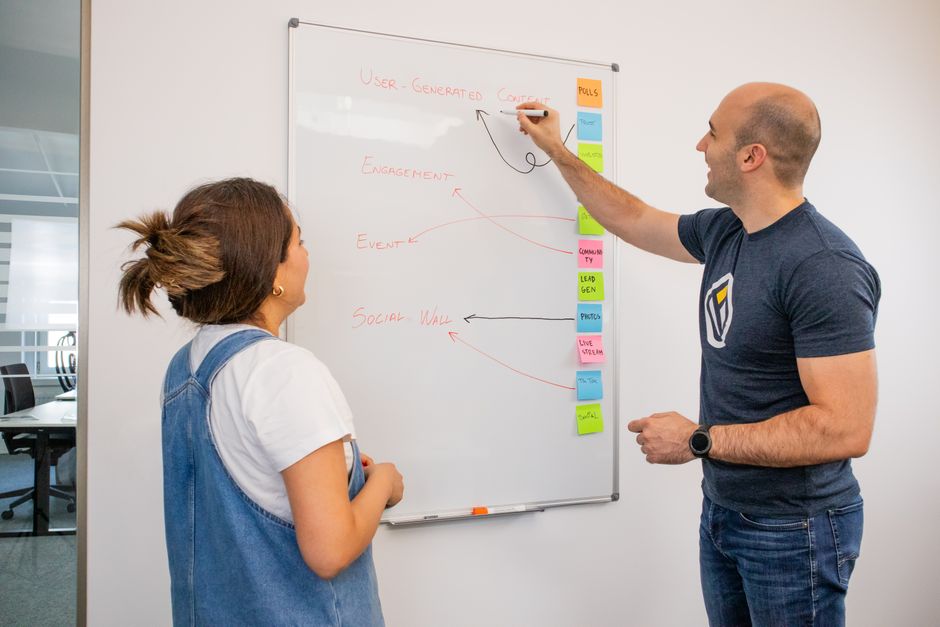
Repurposing means taking one core idea and adapting it into native formats for each platform, so a single customer lesson becomes a LinkedIn story, an X thread, an Instagram carousel, a Threads question, and a blog article. The insight stays the same. The packaging, tone, length, visual treatment, and call to action change to fit each audience and the habits it brings to the feed.
Cross-posting identical text everywhere tends to backfire. Platforms often suppress content that ignores their native formats, so reach stalls while your effort stays the same. Sprinklr's guidance on organic growth points to the same principle: audiences on each network expect content shaped to how they already browse, react, and share, whether they're scanning, swiping, or searching.
Start with one sharp insight, like a lesson a customer taught you, and write it as a single sentence. For LinkedIn, tell it as a short story and close with a clear quote. For X, turn it into a hook, then break the key points into a brief thread.
For Instagram, convert those points into a carousel or Reel with a visual summary. For Threads, boil the idea down to an open question. Then expand it into a blog article that captures search demand.
| Core idea asset | Platform | Native adaptation |
|---|---|---|
| Customer lesson or insight | Story-led text post with a takeaway | |
| Customer lesson or insight | X | Hook post plus a short thread of key points |
| Customer lesson or insight | Carousel or Reel with a visual summary | |
| Customer lesson or insight | Threads | Open question that invites replies |
| Customer lesson or insight | Blog | Long-form article that captures search demand |
Doing this by hand is slow, so many teams automate the adaptation step. In practice, tools like PostKing adjust one idea's format and style for LinkedIn, X, Instagram, Threads, and Facebook, and generate matching visuals alongside each version.
How Do Community and User-Generated Content Accelerate Organic Growth?
Community-led growth turns passive followers into active contributors. Their posts, replies, and reshares carry your brand into networks your own publishing schedule and paid reach could never access on their own.
Every comment you answer, customer story you feature, and conversation you join tells the platform (and anyone watching) that real people are engaged. That makes strangers far more willing to follow, click, and trust a brand they just met. Social proof now does much of the persuading that ads once did.
That gets more true every year. Over half of Gen Z audiences now prefer looking up brands on social media rather than search engines (Global Web Index), so the comments, tags, and shared posts around your brand are often the first thing a prospective customer sees when researching you.
Practical tactics that build a contributor base
Small, repeatable habits beat one-off campaigns. Start here.
- Reply fast: answer every substantive comment in the first hour, when early engagement shapes how widely a post travels.
- Reshare and credit customer posts and testimonials. Contributors feel seen, and others want to be featured next.
- Run a recurring prompt series or hashtag that invites submissions, so your audience has an easy, familiar way to take part.
- Comment first: leave thoughtful replies on posts in your niche before you publish your own, so your name is already familiar.
- Answer questions in relevant subreddits and LinkedIn comment threads without self-promotion, and let your profile do the introducing.
Consistency matters more than volume here. A handful of genuine, helpful interactions each day builds reputation faster than a burst of promotional posts, and it gives your most loyal followers a reason to keep speaking up for you.
What Does Successful Organic Growth Look Like in Practice?
Successful organic growth comes from concentrating on one platform, building a consistent point of view, and converting followers into an owned channel. Justin Welsh did exactly that, growing to 175,000 newsletter subscribers from LinkedIn, according to LinkedIn.
A single social platform can feed a substantial owned audience when the strategy stays narrow and the effort stays steady for a long time. That doesn't mean every brand should copy one creator.
The real takeaway: attention on a social feed is rented. It only becomes durable when you route it somewhere the brand controls, like an email list, where reach doesn't depend on an algorithm and the relationship can deepen over time. Each new post on the platform then adds to a growing asset instead of disappearing.
Lessons you can apply
- Pick one primary platform before expanding: depth on a single channel beats a thin presence on five.
- Use a repeatable post format your audience recognizes, so readers know what they'll get before they click.
- Route attention to an owned channel like email: followers on a platform are borrowed, while subscribers are yours.
- Share a consistent point of view over time, so your name gets tied to a clear idea.
You'll notice what's missing from this list: tricks. It comes down to focus, repetition, and a clear destination for the audience you earn.
Which Tools Help You Analyze Organic Reach and Find Content Opportunities?
The right organic social tool stack shows you which topics already earn engagement and where audience demand goes unmet. Pick each tool for the job it does, not for its feature list.
Most teams need four jobs covered: measuring what works, listening for conversations, publishing consistently, and researching demand. Skip one and you've got a blind spot. You might double down on a format that peaked months ago, or miss a question thousands of people ask every month.
Social discovery and search also feed each other. Organic search traffic converts at 28.5% (Studies), so a topic that wins on social deserves a search-optimized home too. Line the two up and a short-lived post becomes a lasting traffic source.
| Job to be done | Tool category | What to look for |
|---|---|---|
| See what already works | Native platform analytics | Saves, shares, and follower growth per post |
| Spot conversations to join | Social listening | Keyword and competitor mention alerts |
| Publish consistently | Scheduling and content automation | Multi-platform scheduling plus review and approval |
| Find unmet demand | Keyword and AI visibility research | Search volume plus AI assistant citation tracking |
Start with native analytics. They're free, and they show your own proof. Once you know which topics matter, add listening. For the publishing job, teams that prefer to self-host can compare options in our open source social media scheduler guide.
The last category is the newest and often the most overlooked. In practice, tools like PostKing cover it by running keyword research across many country-language markets and tracking brand visibility in ChatGPT, Perplexity, and Google AI Overviews.
Put those two together and you can see which questions people search, and whether AI assistants already cite you for them.
What Should a 90-Day Organic Social Media Growth Plan Include?
A 90-day organic social media growth plan has three phases: foundation work in days 1–30, repeatable systems in days 31–60, and optimization of proven formats in days 61–90. Each one has a measurable success signal.
Organic growth is slow, so treat the first month as groundwork, not a growth sprint. Pick one primary platform, document your voice, and audit past posts to set baselines. Do that before you publish anything new at higher volume or chase trends that don't fit your audience.
Months two and three build on that base. Add a repeatable weekly content plan, a repurposing workflow, and a daily engagement block. Then add small paid posts on posts that already earned strong saves, shares, and replies, so every dollar and hour goes to formats your audience has already proven it values.
| Phase | Focus | Key actions | Success signal |
|---|---|---|---|
| Days 1–30 | Foundation | Week 1: pick a primary platform. Week 2: document your voice. Weeks 3–4: audit past posts and record baseline metrics. | Clear voice guide and baseline metrics |
| Days 31–60 | Systems | Weeks 5–6: build a weekly content plan and repurposing workflow. Weeks 7–8: hold a daily engagement block. | Steady publishing with rising replies |
| Days 61–90 | Optimization | Weeks 9–10: double down on top formats. Weeks 11–12: test a second platform and boost proven posts. | Inbound DMs and leads from social |
Expect small movement early. Sprinklr's organic growth guidance points to consistency and audience engagement as the habits that compound over time.
Check your results at day 30, 60, and 90. Judge the trend, not any single post.
- Stay on your primary platform until its formats are working.
- Only promote posts that already beat your baseline organically. That's a good rule of thumb.
- Replies, saves, and DMs matter more than raw follower counts.
- Drop any format that underperforms for four weeks in a row.
FAQs About Organic Social Media Growth
Is organic social media growth still possible?
Yes, organic social media growth is still possible, but it's slower than it used to be. Platforms now limit how far a post travels by default, so you earn reach through the algorithm instead of getting it handed to you.
Posts that hold attention, spark comments, and get saved or shared reach more people. Founders and small teams can still win by publishing useful, specific content and sharing consistently with their audience.
How long does it take to grow social media organically?
Expect months, not weeks. Most founders see little traction in the first 30 to 60 days while they work out their topics, format, and voice.
Growth tends to compound after roughly 90 days of consistent posting. Older posts keep surfacing, your audience begins to grow, and the algorithm learns who should see your content. Treat the first quarter as a testing period, and judge progress by engagement and follower quality, not just follower count.
Which platform is best for organic growth for B2B founders?
LinkedIn is usually the best place to start for B2B founders. Its feed rewards dwell time, so posts people stop and read (stories, lessons, clear frameworks) tend to travel further.
Founder-led posts also do well because buyers trust people more than brand pages. Once your LinkedIn routine is steady, you can add a second platform where your audience is already active.
How often should I post to grow organically?
Pick a cadence you can sustain over high volume. Three to five strong posts a week that you can keep up for months will beat daily posting that burns you out in a few weeks.
Norms vary by platform. LinkedIn and X can handle frequent posting, while Instagram and YouTube reward fewer, higher-effort pieces. Start with a schedule you can maintain, then adjust based on which posts earn real engagement.
Should I cross-post the same content on every platform?
No, avoid identical cross-posts. Each platform has its own format, tone, and audience expectations, and algorithms often favor content that feels native.
Start with one core idea and adapt it: a LinkedIn text post, a short vertical video, an X thread, or an Instagram carousel. Changing the hook, length, and format takes a bit more time, but it usually earns far better reach.
Can AI tools help organic growth without sounding generic?
Yes, if you use AI to back up your thinking instead of replacing it. Train the tool on your own writing (past posts, emails, talks) so drafts pick up your vocabulary and opinions.
Feed it your real experiences and data, since generic prompts produce generic posts. Before anything goes live, always add a human review step: cut filler, fix claims, and add the personal detail only you can supply.
When should I add paid ads to an organic strategy?
Add paid ads after you see a clear organic signal. Look for posts that consistently earn strong engagement, saves, replies, or inbound leads, since those show the message resonates.
Then boost those proven posts to a wider, targeted audience instead of spending on untested ideas. Paid works best as an amplifier for what already works organically, not as a substitute for finding your message first.
Organic Social Media Growth Mistakes That Stall Small Teams
- Chasing follower count instead of engagement depth: A big, passive audience sends algorithms weak signals. Replies, saves, and DMs are what drive both distribution and revenue.
- Cross-posting identical content everywhere: Each platform rewards its own native formats. Copy-pasted posts underperform and can be suppressed on platforms that detect recycled content.
- Spreading thin across too many platforms: Small teams win by mastering one primary platform first. Expand once you've got a format you can repeat.
- Publishing generic AI content: Content that sounds like everyone else gets scrolled past. Without a distinct voice, posting consistently just adds noise.
- Posting and leaving: Algorithms weight early conversation, so not replying in the first hour wastes a post's best distribution window.
- Dropping links in every post: Most platforms suppress posts with outbound links. Lead with value natively, then move links to the comments or your profile.
- Quitting before the compounding starts: Organic growth is slow by nature. Teams that stop after a few weeks never get to the point where their audience and content library start compounding.
Sources
About Dana Willow
Author
Senior Marketer sharing 15 years of marketing wisdom through an AI lens. Teaching founders to automate smarter.