Why Organic Marketing Beats Paid Ads (And When It Doesn't)
See why organic marketing beats paid ads on CAC, trust, and compounding ROI - plus a 90-day plan to shift spend without losing pipeline. Start here.

Dana Willow
Senior Marketer sharing 15 years of marketing wisdom through an AI lens.
Published on July 27, 2026
Updated on August 21, 2026
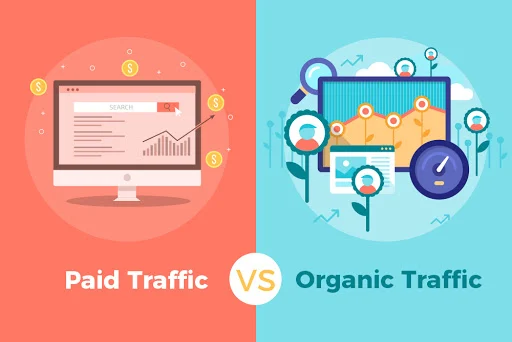
Photo by The difference between free and paid online advertising
Key Takeaways
- Paid ads rent attention; organic marketing builds an asset that keeps producing after spend stops.
- Organic-dominant brands report 41% lower median customer acquisition cost, while CAC overall has climbed ~60% in five years.
- Organic search still drives 53% of website traffic, and 99% of consumers used a search engine in the past week.
- Organic in 2026 means SEO plus AEO, owned audiences, community, and founder-led social - not blog posts alone.
- Paid still wins for launch validation, retargeting, and demand generation in narrow windows - treat it as an accelerant, not a foundation.
- Measure organic on assisted pipeline, LTV:CAC, and branded search growth, not last-click leads.
The Real Question Isn't Organic vs Paid - It's What You Own Afterward
Ownership, not cost, decides the winner here: paid traffic disappears the instant a budget freezes, while organic assets like rankings, content libraries, and backlinks keep compounding value long after the campaign ends. That distinction matters more than any spreadsheet comparing cost-per-click to cost-per-article. Founders obsessing over which channel is "cheaper" are asking the wrong question entirely. The real question is what survives once the checks stop clearing. A paid campaign behaves like rented shelf space - the moment payment lapses, visibility vanishes with it. Organic marketing behaves more like buying the building outright. Rankings built through consistent content and technical SEO don't reset to zero when a founder reallocates spend toward payroll or product. This matters because 99% of consumers used a search engine in the past week, according to Fractl research (Fractl, 2026), meaning organic visibility reaches nearly everyone already searching.
The moment the budget stops
Watch what happens the day a paid campaign gets paused. Traffic drops to near-zero within hours, not weeks.
One growth-stage SaaS company spending $80K a month on paid watched its CAC climb from $120 to $210 in just 18 months (Vizup, 2026). That's the trap: spend more, get less, and own nothing when it ends.
Why "cheaper" is the wrong argument
Cost comparisons miss the compounding effect entirely. Paid leads in B2B SaaS average $310 apiece, according to Deeto's analysis (Deeto, 2026), and inbound leads cost 61% less than outbound ones (HubSpot's research, 2026).
Paid ads buy attention for as long as you keep paying.
Organic assets buy equity that keeps earning after you stop.
What Organic Marketing Actually Covers in 2026
Organic spans far more than search rankings - it includes AI answer engines, founder-led social distribution, owned email lists, community discussions, paid-free repurposing workflows, and long-form content that compounds value long after publication, unlike rented ad impressions. Most teams still treat organic marketing as a synonym for SEO, which undersells the channel and misallocates budget toward one narrow lane while ignoring five other channels that quietly compound value over time, often compounding without any ongoing ad spend. Search remains foundational - 99% of consumers used a search engine in the past week (Fractl, 2026) - but AI answer engines, founder-led social profiles, owned email lists, community forums, paid distribution, and repurposed long-form content each build a distinct, separately compounding asset, with its own timeline, ownership structure, and resistance to the algorithm shifts that can erase rented paid reach overnight entirely.
Search is one lane, not the whole road
Organic search still drives 53% of all website traffic (PushGroup, 2026), and well-optimized blog content can lift traffic by 571 percent (Salesforce, 2026).
But treating SEO as the entire organic strategy leaves AI answer visibility, community trust, and owned reach completely unbuilt. Search is the widest lane, not the only one worth paving.
AEO adds a parallel lane: citation in AI-generated answers now matters as much as ranking position, since generative engines summarize before users ever click through.
Ignoring it means losing visibility exactly where search behavior is heading next.
Owned audiences are the underrated organic asset
Founder-led social is now a serious distribution lane on its own. Personal LinkedIn profiles see 561% more reach than company pages (Digitally Bugged, 2026), and organic social ranks as the second most-leveraged marketing channel of the year (HubSpot, 2026).
Email lists and communities go further still, since they're reach you own outright, immune to ranking changes or platform algorithm resets.
Community platforms like Reddit and Slack groups compound differently, through word-of-mouth insight loops rather than direct reach.
Paid distribution can amplify all of these lanes short-term, but it never replaces the equity they build.
| Organic channel | What it builds | Time to first signal | Compounds? |
|---|---|---|---|
| SEO / long-form content | Evergreen discovery + topical authority | 3-6 months | Yes |
| AEO / AI answer visibility | Citation in AI-generated answers | 2-5 months | Yes |
| Founder-led social (X, LinkedIn) | Personal distribution + trust | 2-6 weeks | Yes |
| Email list / owned audience | Direct, algorithm-proof reach | Immediate on send | Yes |
| Community (Reddit, Slack, Discord) | Word-of-mouth + insight loops | 4-8 weeks | Partially |
| Paid search / paid social | Rented impressions | Days | No |
The CAC Math: Why Paid Gets More Expensive Every Quarter
Auction pricing rises as competitors keep bidding, pushing the cost of every click, lead, and conversion higher each quarter regardless of how well a campaign gets optimized. That's the structural flaw baked into paid acquisition: it runs as a live auction, and every new advertiser entering a category bids up the price for everyone already competing there. Organic-dominant brands sidestep this problem almost entirely, achieving 41% lower median customer acquisition cost than paid-dominant strategies (American Impact Review, 2026). The gap isn't a fluke of one industry or one quarter. It reflects how content and rankings behave as owned assets rather than rented placement. Paid media stops producing traffic the moment budget stops flowing; organic assets keep ranking, keep showing up in search, and keep converting long after the initial work was published. Understanding this asymmetry is the real starting point for building an acquisition model that gets cheaper as it scales, not more expensive.
The $310 lead problem in B2B SaaS
The average paid lead in B2B SaaS now costs $310 (Deeto, 2026). Inbound leads run roughly 61% cheaper than outbound, paid-sourced leads by comparison (HubSpot's research, 2026).
That gap compounds fast. A team generating 50 leads monthly through paid channels pays roughly $15,500
the same volume through inbound could cost closer to $6,000 once content is in place.
When your LTV:CAC ratio slips under 3:1
Acquisition costs don't sit still, either. Customer acquisition costs have climbed roughly 60% over the past five years across both B2B and B2C markets (Vizup, 2026).
Rising CAC only becomes dangerous when lifetime value fails to keep pace behind it. Paid-dependent companies watch this ratio compress quarter over quarter as bids climb.
Organic-dependent companies watch the same ratio widen, since content built once keeps generating leads at near-zero marginal cost.
| Metric | Paid-dominant reality | Organic-dominant reality |
|---|---|---|
| Median CAC | Baseline | 41% lower (American Impact Review) |
| Cost per lead | $310 average paid B2B SaaS lead (Deeto) | Inbound leads ~61% cheaper (HubSpot) |
| CAC trend | Up ~60% over five years (Vizup) | Falls as content library grows |
| Cost when spend stops | Traffic goes to zero | Traffic persists |
The table makes the direction of travel obvious. One column trends upward every quarter with no ceiling in sight.
The other trends downward as owned content compounds. That's the entire CAC argument in four rows.
Compounding vs. Renting: How Organic Assets Accrue Value
Each published asset raises the next one's ceiling. Paid media is rented: the moment budget stops, traffic stops with it. Organic content behaves differently - every article becomes internal-linking infrastructure for the next one, distributing authority instead of resetting to zero. A blog post published in month one still ranks in year three, still earns backlinks, and still feeds branded search volume long after the writer moved on. This is the core mechanical difference between compounding and renting: paid spend buys a single transaction, while organic assets accumulate equity that keeps paying out. Backlinks pointing to page one strengthen page fifty. Topical depth signals expertise that lifts the whole domain, not just individual URLs. Brand search - people typing the company name directly - grows as recognition spreads, and that demand converts at a lower cost than any auctioned keyword ever will.
The compounding curve most founders quit before
Most teams abandon SEO exactly where the curve is about to bend upward. The first several months look like pure cost with no visible return, which reads as failure to anyone measuring month-over-month. That trough is not a sign the strategy is broken - it is the fixed cost of building assets that have not yet had time to rank, link, and get discovered.
- Month 1-3: publishing cost is high, output is near zero - this is the trough that kills most attempts.
- Month 4-6: early rankings and branded search appear; first assisted conversions land.
- Month 7-12: internal linking and topical depth lift older posts without new spend.
- Year 2+: the library produces leads at declining marginal cost while paid CPMs keep climbing.
Why SEO optimization can lift traffic 571%
The payoff shows up in the data once the library matures. Optimizing existing blog content and pages for search can boost traffic by 571 percent (Salesforce, 2026), and that lift compounds on assets that already exist rather than requiring new production spend.
Organic search also drives 53% of all website traffic (PushGroup, 2026), which is the base the compounding curve builds on. None of that volume disappears when the budget meeting goes badly.
Trust and Attention: Why Buyers Route Around Ads
Saturated buyers filter ads before evaluating them. The average person encounters roughly 10,000 ads a day, and the brain compensates by pattern-matching and skipping anything that looks like a pitch (Bettermarketing, 2026). That defense mechanism is why AI Overviews now surface on about 16% of queries and, when they do, organic click-through drops by 61%
yet paid placements face an even steeper credibility tax, since users have learned to associate "sponsored" with self-interest rather than expertise (Pushgroup, 2026). Nearly every buyer still searches before deciding, with 99% of consumers having used a search engine in the past week, which means the filtering happens at the exact moment intent is highest (Fractl, 2026). Ads arrive precisely when skepticism peaks.
Ad saturation and the credibility discount
Every additional ad a buyer sees raises their internal discount rate for the next one. This isn't cynicism
it's calibrated self-protection built from years of overpromised claims. A banner ad selling a solution reads as motivated speech, while the same claim inside a helpful guide reads as evidence.
Educational content as the trust shortcut
Content that teaches rather than sells earns a different cognitive category: reference material instead of persuasion. Buyers cite it, bookmark it, and return to it without feeling marketed to. That's why organic-dominant brands report 41% lower median customer acquisition costs
the content did the convincing before the sales conversation ever started (American Impact Review, 2026). Authority built this way compounds, because trust transfers from one piece of content to the next once a brand is recognized as a reliable source rather than another interruption competing for attention.
Where Paid Ads Genuinely Win
Paid solves speed problems organic cannot, buying certainty in situations where waiting months for rankings would mean missing the market entirely, and no amount of content discipline compresses that timeline. Organic still wins on long-run cost. Organic-dominant brands see 41% lower median customer acquisition cost (American Impact Review, 2026), and inbound leads run 61% cheaper than outbound ones (HubSpot's research, 2026).
But cost efficiency assumes time to compound, and some situations offer no runway at all. A product launch, a seasonal spike, an unproven category - these need answers in days, not the quarters organic requires to mature. Paid media becomes less a growth engine here and more a diagnostic tool: a way to test messaging, pressure-test demand, and buy visibility while slower organic systems build underneath it. Treating paid purely as a cost center misses where it actually earns its keep.
Paid as a research instrument
Launch validation is the clearest case for paid spend. Campaigns test messaging, pricing, and offer angles in days rather than the quarters organic content needs to earn ranking signals.
That same speed makes paid useful for category creation, when nobody is searching for a solution that doesn't have a name yet.
The retargeting exception
Retargeting breaks the usual paid-versus-organic rivalry because it spends money on traffic organic content already earned. It re-engages readers who found a guide or blog post but didn't convert the first time.
Paired with conversion rate optimization - the second-most-used tactic among marketers at 50% (HubSpot State of Marketing Report, 2026) - retargeting turns warm attention into revenue instead of new cost.
- Launch validation: Test messaging and offers in days, not the quarters organic needs to rank.
- Retargeting warm traffic: Re-engage visitors organic content already attracted but didn't convert.
- Seasonal or event-bound demand: Open windows that close before organic content could ever rank.
- Category creation: Reach buyers before search demand exists for a new solution.
- Pipeline gap coverage: Keep leads flowing while organic assets are still maturing.
The Blended Model: Using Paid to Accelerate Organic
Paid should amplify assets you already own. The strongest growth teams don't treat search engine optimization and pay-per-click as rivals competing for budget; they treat paid media as a testing lab and megaphone for organic content. Run ads against a landing page, headline, or piece of content before committing months of organic effort to it.
Guesswork wastes budget - validated winners compound value across both channels. This approach matters more now that organic search drives 53% of all website traffic (Push Group, 2026), meaning every dollar spent validating an organic asset pays off across a much larger surface than the ad itself ever reaches. Few teams get this sequencing right on the first attempt, but a stage-based framework removes most of the guesswork. Blending budgets by company stage, rather than picking one channel exclusively, lets teams capture short-term demand while compounding long-term equity.
Promote your winners, not your guesses
Treat every ad campaign as a cheap, fast experiment for organic content. Test three headlines, two hooks, and one offer with a small paid budget before writing the pillar page.
Once a version proves itself, build the SEO asset around what already converts, not around a guess.
This sequencing protects the content team from wasted production cycles. Only promote pieces that clear a cost-per-click or conversion threshold you've set in advance.
| Stage | Organic share | Paid share | Paid's job |
|---|---|---|---|
| Pre-PMF / 0-$10k MRR | 70% | 30% | Message testing and audience discovery |
| Early traction | 75% | 25% | Retargeting + amplifying top-performing content |
| Scaling SME/SaaS | 65% | 35% | Demand based on bottom-funnel intent |
| Organic-dominant | 85% | 15% | Defensive brand-term bidding only |
Feeding ad data back into content strategy
Paid campaigns generate a fast, structured signal that organic testing alone can't match: click-through rate by headline, cost per lead by audience, and conversion rate by offer. Feed those numbers back into your content calendar instead of filing them away.
A headline that wins in ads usually wins as an H1 too.
The payoff compounds as the mix shifts toward organic. Organic-dominant brands post a 41% lower median customer acquisition cost (American Impact Review, 2026), while the average paid B2B SaaS lead runs $310 (Deeto, 2026). Optimizing the proven winners for search can then boost traffic by 571 percent (Salesforce, 2026).
Measuring Long-Term Organic ROI Beyond Lead Counts
Last-click attribution systematically undervalues organic work, crediting the final touchpoint in a customer journey while ignoring every blog post, guide, and search result that built trust long before the conversion happened. Executives who judge SEO by monthly lead counts alone are measuring the wrong layer of the funnel. Organic content shapes brand recall, primes buyers before they ever fill out a form, and lowers the cost of every channel that follows it. Inbound leads cost on average 61 percent less than outbound leads (HubSpot's research, 2026), a gap that compounds once you account for the branded search demand content generates. Treating organic as a lead-generation line item rather than a compounding asset misses where the real return lives. The fix isn't a better dashboard - it's an entirely different accounting model built for compounding returns.
Build a content P&L, not a traffic report
Traffic reports tell you what happened last month.
A content profit-and-loss statement tells you whether the asset has paid for itself yet.
Organic-dominant brands post a 41% lower median customer acquisition cost than paid-first competitors (Customer Acquisition Cost Optimization Study, 2026). Compare that to the average paid lead in B2B SaaS, which runs $310 (Deeto, 2026). A single evergreen guide that costs a few thousand dollars to produce and ranks for three years isn't a monthly expense - it's a depreciating asset with a shrinking cost-per-lead curve.
The payback-period question executives actually ask
CFOs rarely ask how much traffic the blog got last month.
They ask when the content function turns cash-flow positive.
Answering that requires tracking cost per asset against everything it assists over its full lifetime, not just its launch week. Pair that with LTV:CAC by source, since volume without quality is a vanity metric dressed up as growth.
Report the following alongside - never instead of - raw lead counts, at the rate each one actually moves.
| Metric | What it proves | Review ed |
|---|---|---|
| Branded search volume growth | Demand you created, not captured | Monthly |
| Assisted conversions from content | Influence outside last click | Monthly |
| LTV:CAC by acquisition source | Quality, not just volume | Quarterly |
| Cost per asset over its lifetime | True compounding return | Quarterly |
| AI answer citations / share of voice | Zero-click visibility | Monthly |
Surviving Zero-Click: AEO, AI Overviews, and Owned Audiences
Visibility now matters more than raw clicks. Search engines increasingly answer questions directly on the results page, and AI Overviews already appear on roughly 16% of all queries - when they do, organic CTR drops by 61% (Push Group, 2026). That shift breaks the old model where ranking first guaranteed traffic. Brands that still measure success by sessions alone are optimizing for a metric that's quietly shrinking. The real question is no longer "did we rank," but "did the answer engine cite us, and did the visitor who never clicked still learn our name." This is the AEO (Answer Engine Optimization) reality: content must be structured for extraction, not just for scrolling. Winning here means treating AI Overviews as a distribution channel with its own rules, then building an owned audience that doesn't depend on any single query behaving well.
Why AI Overviews cut organic CTR
AI-generated summaries satisfy the searcher's intent before they ever reach a blue link.
That convenience for users is a traffic tax for publishers. Since 99% of consumers used a search engine in the past week (Fractl, 2026), even a modest CTR drop across that volume compounds into a real revenue gap. The brands cited inside the answer still win exposure - just not a session.
Owned audiences as the zero-click hedge
Email lists, communities, and subscriber bases don't disappear when an algorithm changes. They're the insurance policy against a search engine deciding you no longer deserve a click.
- Structure content so answer engines can extract clean, attributable claims - clear definitions, direct answers, labeled data.
- Publish original data, benchmarks, and opinion - the things AI can't synthesize from consensus content.
- Convert search visitors to owned channels fast, before the next query bypasses you entirely.
- Track citations and mentions, not only sessions and rankings, to see visibility AI Overviews create.
The 90-Day Transition Plan From Paid-Heavy to Organic-Dominant
Shift budget gradually, never in one cut. A 90-day phased transition protects pipeline while organic content matures, moving spend in structured increments instead of an abrupt switch that starves growth. Founders who fear organic is too slow often kill programs at day 45, right before compounding traffic arrives. This plan keeps paid running as a bridge, trimming only the weakest 20 percent of campaigns early, then reallocating a quarter of budget once content starts converting. Organic-dominant brands report a 41% lower median customer acquisition cost (American Impact Review, 2026), and inbound leads cost 61% less than outbound leads (HubSpot's research, 2026). Cutting spend too fast is the single biggest reason founders abandon SEO before it compounds. A staged plan gives content ninety days to build authority while ads still cover near-term demand. Patience during the trough is what makes the math work.
| Window | Actions | Paid budget change | Success signal |
|---|---|---|---|
| Days 1-30 | Audit paid spend by LTV:CAC; map 3 topic clusters; set brand voice guidelines | Hold steady | Clear list of unprofitable campaigns |
| Days 31-60 | Publish 8-12 assets; launch founder-led social media; start email capture | Cut worst 20% | First organic impressions + list growth |
| Days 61-90 | Interlink library; repurpose to social; retarget organic readers | Shift 25% to content | Assisted conversions appear |
| Days 91+ | Double down on winning clusters; keep paid for capture only | Ongoing reduction | Falling blended CAC |
How to keep pipeline alive during the trough
Paid campaigns stay alive as a bridge
only the weakest performers get cut first. Email capture launched by day 60 keeps prospects warm while rankings climb toward page one. The average paid lead in B2B SaaS runs $310 (Deeto, 2026), so trimming underperformers early frees real budget for content that compounds.
Automating output without sounding automated
Templates and drafting tools clear the 8-12 asset backlog fast
founder review keeps every piece sounding human. Voice guidelines set in month one become the checklist every draft runs through before publishing. Content optimized this way can lift traffic by 571 percent (Salesforce, 2026) once distribution catches up.
Common Mistakes When Founders Switch to Organic
Most organic failures are patience and process failures. Founders rarely abandon organic because the channel doesn't work - they quit because they expected paid-style speed from a compounding asset. Organic search rewards accumulation: content, links, and authority stack over months, not days. Organic-dominant brands post 41% lower median customer acquisition costs than paid-reliant peers, but that gap only appears after the asset matures. Cutting the program during month three, right as the curve should be bending upward, forfeits the payoff before it arrives. The second failure mode is operational: publishing without a plan to move content beyond the blog. Volume alone doesn't create visibility. Salesforce found that SEO-optimized content can lift traffic by 571 percent, but only when distribution, internal linking, and promotion support it. Both mistakes share a root cause: treating organic like a campaign instead of infrastructure.
Quitting inside the compounding trough
- Judging month 2 by month 24 standards: expecting ranking gains before search engines have re-crawled and trusted the new content cluster.
- Killing the budget after one flat quarter: pulling spend right before compounding backlinks and internal links start driving traffic.
- No CLV:CAC tracking: without a ratio benchmark, founders can't tell if organic is underperforming or simply still ramping.
- Reverting to paid at the first CAC wobble: panic-buying ads instead of diagnosing whether the funnel needs optimization, not abandonment.
- Comparing channels on mismatched timelines: judging a six-month-old organic program against a three-year-old paid account.
Publishing volume without a distribution plan
- No internal linking strategy: new posts sit orphaned, never passing authority to money pages or older content.
- Skipping repurposing: one blog post never becomes a LinkedIn thread, newsletter section, or video script.
- Ignoring personal profiles: founders post only from brand pages, missing reach - personal LinkedIn profiles see 561% more reach than company pages.
- No promotion strategy: publishing and walking away instead of syndicating to communities, email, and partners.
- Treating SEO as a checklist: optimizing keywords without building the topical depth search engines actually reward.
Your Next Move: Build the Asset, Then Rent the Attention
Own the foundation before renting more reach. Every founder faces the same fork: pour cash into ads that vanish the moment spend stops, or build organic assets that keep compounding. The data settles the argument. Organic-dominant brands post a 41% lower median customer acquisition cost than paid-first peers (American Impact Review, 2026), and inbound leads cost 61% less than outbound ones (HubSpot, 2026). Paid buys attention for as long as you rent it.
Organic content, SEO pages, and owned audiences keep working after the invoice is paid. That distinction is the whole strategy in one sentence.
The decision rule is simple. If a channel disappears the moment you stop paying, treat it as rent - useful, but never the foundation. If it keeps compounding without ongoing spend, treat it as an asset worth building first.
Paid ads, boosted posts, and rented placements are rent. Optimized content, technical SEO, and owned audiences are assets.
Founders who confuse the two end up funding someone else's platform indefinitely. Founders who build the asset first eventually rent attention only to amplify what already compounds, not to prop up what never will.
Your next move is not another campaign. It's an audit: what have you built that survives without spend?
FAQs about why organic marketing beats paid ads
Is organic marketing actually cheaper than paid ads?
On average, yes. Organic-led acquisition tends to run at a median customer acquisition cost (CAC) around 41% lower than paid-only strategies, since you're not paying per click or impression once content is live. That said, "cheaper" doesn't mean "free" - organic has a higher upfront time cost, requiring weeks or months of content creation, SEO work, and audience building before it starts paying off. Paid ads trade that time cost for immediate cash cost. The right comparison isn't dollars alone, but dollars plus time-to-payback for your specific stage and team capacity.
How long does organic marketing take to show results?
It depends on the channel. Organic social can show traction in as little as 2-6 weeks, especially with consistent posting and platform-native formats that get picked up by algorithms quickly. Organic search (SEO) is slower - expect 3-6 months before rankings and traffic meaningfully move, since search engines need time to crawl, index, and trust new or updated content. If you need fast validation, lean on social and community channels first, and treat SEO as a longer-term compounding asset you build in parallel.
Should a pre-revenue startup start with organic or paid?
Generally, organic-first. Building an organic-first foundation - content, positioning, SEO basics, and owned audiences - creates infrastructure that keeps paying off long after a single campaign ends, which matters when every dollar counts. That said, it's smart to run small paid tests for messaging alongside it: a modest ad budget can validate which value propositions and hooks work before you scale spend or double down on content themes. Use paid as a research tool, not your primary growth engine, until you have revenue to reinvest.
Do AI Overviews make SEO pointless?
No, but it changes the game. The CTR drop from AI Overviews is real - many informational queries now get answered directly in search results, reducing clicks to your site for top-of-funnel content. The smart response is a shift to AEO (answer engine optimization) and owned audiences: structure content so AI systems can cite and attribute it, and invest more heavily in email lists, communities, and direct channels you control regardless of how search interfaces evolve. SEO isn't dead - it's just no longer the only channel worth trusting.
How do I prove organic ROI to stakeholders?
Look beyond last-click attribution. Track assisted conversions and branded search - both are strong signals that organic content and SEO are influencing buyers even when a paid ad or direct visit gets final credit. Then compare LTV:CAC by source: customers acquired organically often have higher lifetime value and lower cost, even if the raw conversion numbers look smaller than paid. Presenting organic's compounding, long-tail contribution alongside these metrics gives stakeholders a fuller, more accurate picture than pipeline reports alone.
What's the right organic-to-paid budget split?
There's no universal ratio - it should follow stage-based ratios that shift as you grow. Early-stage companies typically weight budget toward organic to build durable assets cheaply; as you scale and have proven messaging, paid spend increases to accelerate growth. In most mature marketing mixes, paid is best used for capture and retargeting - converting demand that organic content already generated - rather than as the primary channel for cold audience discovery. Revisit the split quarterly as your CAC, LTV, and growth targets evolve.
Can automation produce organic content that still sounds like my brand?
It can, with the right setup. Voice-trained models - fine-tuned or carefully prompted on your existing content, tone, and terminology - can produce drafts that sound recognizably like your brand rather than generic AI output. But automation shouldn't run unchecked: human review on positioning claims is essential, since AI can confidently state inaccurate facts, outdated pricing, or claims that don't match your actual product. Use automation to scale drafting and consistency, and reserve human judgment for accuracy, nuance, and anything customer-facing that touches trust.
Five Mistakes That Send Founders Back to Paid Ads
- Quitting during the compounding trough: Organic returns are back-loaded - most of the value lands in months 7 through 24. Founders who judge month three against a paid campaign's week-one CPL conclude organic 'doesn't work' and abandon a library that was about to start paying.
- Cutting paid spend to zero overnight: Killing paid before organic produces pipeline creates a revenue gap that panics the team. Taper spend in stages, starting with the campaigns showing the worst LTV:CAC, and reinvest the savings directly into content production.
- Treating organic as SEO only: Publishing blog posts while ignoring owned email, community, and founder-led social leaves the strategy dependent on a single algorithm - the same fragility that makes paid risky. Diversify the organic surface area from day one.
- Measuring organic on last-click attribution: Content rarely closes the deal on first touch, so last-click reporting makes it look unprofitable next to bottom-funnel ads. Without assisted-conversion and branded-search tracking, you will defund the channel that's actually creating demand.
- Publishing generic AI content at volume: Undifferentiated content earns no citations, no links, and no trust - it consumes production time while producing nothing that compounds. Voice-matched, opinionated content with original data is what answer engines and buyers actually surface.
- Producing without distributing: A post with no repurposing plan reaches whoever search sends it, eventually. Every long-form asset should ship with social variants, an email send, and a community touchpoint scheduled before publication.
Sources
- Customer Acquisition Cost Optimization: A Comparative Study of Paid Versus Organic Growth Strategies in Direct-to-Consumer Brands
- Why Organic Search Delivers Better ROI Than Paid Ads in 2026
- Why Organic Marketing Is Beyond SEO
- 5 Reasons Organic Marketing Wins Long Term (With Real Data)
- 5 Key Benefits of Organic Marketing vs. Paid Ads
- HubSpot State of Marketing Report
- Organic Search vs. Paid Search - Fractl Research
- Paid Marketing vs. Organic Marketing: What's the Difference?
- Paid vs. Organic Social Media: How to Strike the Right Balance
- Organic vs Paid LinkedIn Marketing: 2026 B2B Strategy Guide
About Dana Willow
Author
Senior Marketer sharing 15 years of marketing wisdom through an AI lens. Teaching founders to automate smarter.


