
How to Choose an Online Content Creation Tool by Content Type, Budget, and Team Size
Find the online content creation tool that fits your content type, budget, and team. Compare 2026 prices and features, then start building your stack.

Dana Willow
Senior Marketer sharing 15 years of marketing wisdom through an AI lens.
Published on October 9, 2026
Updated on October 9, 2026

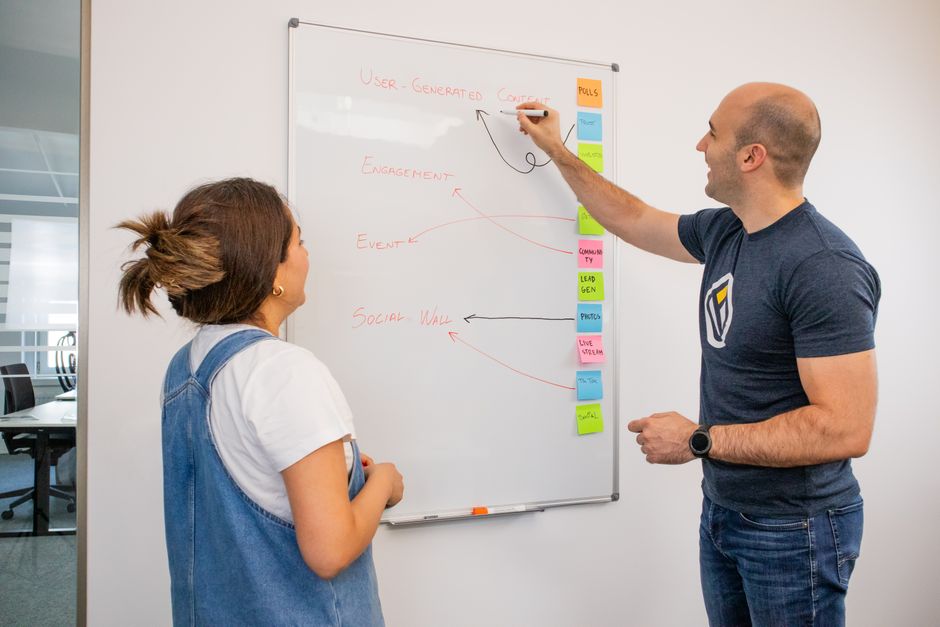
Picking a content creation tool by content type, budget and team size.
Key Takeaways
- An online content creation tool is browser-based software for producing written, visual, video, or social content. Most fall into one of five categories, and few do every job well.
- Choose by content type first, then by budget and team size. Picking the most-hyped all-in-one tool usually leaves gaps.
- AI adoption is close to universal: 84% of small businesses use AI for content creation. That makes sounding different from everyone else the real competitive edge.
- Readers notice and punish generic AI copy. Prioritize tools that learn your existing voice over tools that just write faster.
- Most solo founders and small teams can cover blog, social, and visuals with two or three tools for under $50 a month. Check each vendor's current pricing page before you commit.
What Is an Online Content Creation Tool?
An online content creation tool is browser-based software that helps people draft, design, edit, and publish digital content, such as articles, graphics, videos, and social posts, without installing heavy desktop applications or hiring specialist production teams. Most run in the cloud, so teams can collaborate in real time and work from any device. The best ones now bundle AI assistance, templates, and publishing connections into one workspace. That shortens the path from rough idea to live content. The market reflects this shift: the content creation tools segment reached $10.94 billion in 2025, while the broader digital content creation market was valued at USD 32.3 billion in 2024. Growth comes from two forces. AI features make output faster and cheaper, and brands must now publish across more channels than any single writer or designer can cover by hand.
The Five Categories That Matter
Choosing by category beats choosing by brand name. A famous design app will not fix a weak blog workflow, and a strong writing assistant will not schedule your posts. Match the tool to the job first, then compare vendors inside that group.
- Writing and SEO tools: drafting, optimizing, and editing long-form and short-form text.
- Visual design tools cover templates, graphics, and image generation.
- Video and audio tools handle editing, captioning, repurposing, and voice.
- Social scheduling tools: planning, adapting, and publishing posts across platforms.
- All-in-one content automation platforms generate voice-aware content across blog, social, and landing pages.
Why Your Tool Choice Matters More in 2026
Tool choice matters more in 2026 because AI adoption is nearly universal, so the tool you pick, not whether you use AI, determines whether your content sounds human and earns audience trust. Adoption is no longer a competitive edge: 84% of small businesses use AI for content creation, and the share of marketers who skip AI for blog creation collapsed from 65% to 5% in two years, according to the HubSpot 2026 State of Marketing Report, so almost every competitor now publishes with the same underlying models. When everyone has the same engine, the difference lives in the workflow around it: how much real editing control you get, whether you can feed in your own voice and facts, and how much of the generic, recognizable machine rhythm survives into the published draft that readers actually see.
Audiences notice when a post was written on autopilot, and many react with quiet skepticism rather than outrage. Detection does not require software; a stiff opening, hollow transitions and claims without examples are enough. That skepticism is expensive, because it shows up as shorter visits, fewer shares and weaker enquiries.
Speed gained: a publishable draft in minutes, so a weekly cadence becomes realistic. Trust lost: one formulaic intro or vague claim tells readers that nobody checked the page.
That is why the tool is a brand decision, not only a productivity one. Before comparing features, ask which tool keeps your editors in control of the final wording. Choose one that lets you steer voice, add original data and edit freely, and AI speeds you up without flattening you into everyone else.
Match the Tool to the Content Type
The right content creation tool depends on the content type you publish most: blog articles need writing and SEO tools, social posts need schedulers, graphics need design tools, and video needs editors. Start with what you publish, not what's trending. A tool that dazzles in a demo but misses your main format becomes shelfware within a month. Most teams publish three or four formats regularly, so list those first and rank them by volume. Then pick one primary tool per format, and only add a second when a real gap appears. Overlap is where budgets leak, because every tool carries its own seats, learning curve, and brand settings. Roundups such as Ceros's guide to content creation tools for marketing teams and Jasper's overview of content creation tools sort the market the same way, by job rather than by hype. The table below does the same in one view.
| Content type | Tool category | Must-have capability | Example tools |
|---|---|---|---|
| Blog articles and SEO pages | Writing and SEO tools | Keyword research, outline briefs, on-brand drafting | Jasper, Surfer |
| Social posts (LinkedIn, X, Instagram, Threads, Facebook) | Social scheduling or content automation | Platform-aware variations, scheduling, approval flow | Buffer, Hootsuite |
| Graphics, carousels, thumbnails | Visual design tools | Brand kits, templates, resizing | Canva, Adobe Express |
| Short-form and long-form video | Video editing tools | Auto-captions, templates, text-based editing | CapCut, Descript |
| Landing pages and website copy | All-in-one content automation | Brand-voice copy plus page generation | Jasper, Webflow |
| Interactive and immersive content | Interactive content platforms | No-code interactivity, embeds | Ceros |
Read the table by row, not by column: find the format that drives most of your output, then judge tools only on the capability listed beside it. A strong video editor will never fix a weak blog workflow, so resist buying breadth before you have depth in your core format.
Writing and SEO Content Tools
Writing and SEO content tools are software that draft, edit, and score text for search and AI citation, spanning general AI assistants, dedicated AI writers, and SEO optimizers. General chatbots draft fast but rarely sound like you, and most marketers start there: a LinkedIn poll found 86% of marketers used ChatGPT as their primary AI tool in content marketing, which makes it the default baseline every other category must beat. Jasper's guide to content creation tools shows the split clearly: dedicated writers add brand voice, templates, and workflow, while SEO and GEO optimizers add keyword research, content scoring, and checks for whether AI engines can cite your page, so the strongest stacks in practice pair a drafting tool with an optimizer instead of trusting any single category to fully cover drafting, research, and ranking alone.
General-purpose AI assistants
Chat assistants turn a rough prompt into a usable outline or first draft in seconds. The output often reads generic, and they cannot see search volume, competitor pages, or ranking gaps.
- Best for: brainstorming angles, outlines, and quick rewrites.
Dedicated AI writing platforms
These platforms store brand voice, reusable templates, and team workflows, so drafts need less editing. Many can generate a content brief from a topic. Keyword research is usually thin or missing, so rankings still depend on outside data.
- Best for: teams producing consistent, on-brand copy at volume.
SEO and GEO optimization tools
Optimizers analyze top-ranking pages, then score your draft against the terms, headings, and questions those pages cover. Newer GEO features check whether answers are structured so AI engines can quote them. They guide strategy but write poorly on their own.
- Best for: refining drafts to rank in search and earn AI citations.
Visual Design and Image Tools
Visual design tools for social content fall into two groups: template-based editors such as Canva, which speed up layout work and enforce brand consistency, and AI image generators, which create original artwork from text prompts. Templates suit repeatable formats like quote cards, carousels and announcements. Generators suit concept art, abstract backgrounds and scenes that stock photography cannot supply. Most teams need both, but they should start with templates because consistency builds recognition faster than novelty does. Canva reports that organizations using its platform saw a 60% increase in content creation in one month. That is the vendor's own figure, so treat it as a directional signal rather than an independent benchmark. Still, the logic holds: when design stops being a bottleneck, more posts actually ship.
The hidden cost sits in the pairing step. Writing a caption takes minutes, but matching it with a correctly sized, on-brand visual for each platform can take far longer. Multiply that by five networks and a weekly calendar, and design quietly becomes the slowest stage of the workflow.
What to look for when choosing a tool
- Brand kit support: fonts, colors and logos stay locked in, so every asset looks like yours.
- One-click resizing turns a single design into the right dimensions for each social platform.
- AI image generation should come with clear commercial-use rights, so published visuals carry no licensing risk.
- Team collaboration and approval features let reviewers comment and sign off without email chains.
- Export options and a searchable asset library prevent anyone from rebuilding a graphic that already exists.
Pick templates for volume and consistency. Reach for AI generation when a post needs something genuinely original.
Video and Audio Creation Tools
Video and audio creation tools are software that records, edits, captions and reformats footage or sound, and the best ones turn a single long recording into many short clips, posts and episodes for each channel. For small teams, repurposing is the real return on investment, because a single thirty-minute webinar, podcast or founder interview can yield a dozen vertical clips, quote graphics, audio snippets and a newsletter draft without another shoot, and that output keeps feeds full while the team spends its hours on ideas rather than production. Two editing styles dominate the category, and choosing between them shapes your whole publishing workflow, since each one suits a different kind of source material, a different skill level on your team, and a different tolerance for time spent scrubbing through footage before anything is actually published.
Timeline editors such as CapCut give frame-level control over cuts, transitions, effects and music. Text-based editors such as Descript let you delete a sentence from the transcript and the video follows.
Timeline tools shine for polished short-form clips. Text-based tools shine for interviews, podcasts and talking-head recordings. Before you commit, check these points:
- Auto-captions that support your languages and let you edit the text.
- Export limits: length, resolution and the number of exports per month.
- Watermarks on free or lower tiers, which can make clips unusable for brand accounts.
- Presets for vertical, square and horizontal formats.
- Commercial-use rights for bundled music and stock footage.
Multi-Channel Social Content and Scheduling Platforms
A social scheduler publishes posts you have already written, while a content automation platform generates, adapts, and schedules those posts for you, so scheduling saves clicks and generation plus scheduling saves hours. The gap matters because the writing, not the publishing, eats most of the week. A Salesforce survey found generative AI saved marketers five hours per week on content tasks. A scheduler cannot deliver that saving, because it only moves finished drafts onto a calendar. Automation platforms also solve a quieter problem: one message rarely works everywhere. LinkedIn rewards longer, professional framing. X demands a tight hook. Instagram needs a visual first and a caption second. Copy-pasting one draft across all three flattens the message and lowers reach on each.
Scheduler: you write every version by hand, then queue it. Automation platform: you approve one idea, and it produces versions shaped for each network.
In practice, tools like PostKing generate per-platform versions of each post and schedule them after approval. That is the automation model in action. Use this checklist when you compare options:
- Native publishing to LinkedIn, X, Instagram, Threads, and Facebook, with no manual reposting.
- Per-platform formatting: automatic adjustment of length, tone, and structure for each network.
- A review-and-approve workflow, so nothing goes live without a human sign-off.
- A weekly content planning view that shows gaps and overlaps at a glance.
- Visuals: auto-generated or matched images, so posts do not keep waiting on design.
Starting Prices Compared: What You Actually Pay
Content tool pricing depends on more than the sticker price: per-seat, per-channel, and credit-based models can make a $6 plan cost far more than a $20 one once your team and publishing needs grow. The table below lists eight common tools by content type, entry price, free access, and billing model. Prices are approximate as of October 2026, and vendors change plans often. Check each vendor's pricing page before you commit budget. Vendors such as Canva and Jasper publish overviews of their content tools, but only the live pricing page shows what you will actually be billed. Treat every figure here as a starting point for your own math, not a quote.
| Tool | Primary content type | Starting paid price | Free plan or trial | Pricing model |
|---|---|---|---|---|
| PostKing | Blog, social, landing pages, SEO/GEO | $14.99/month (Growth, 3 brands) | 7-day free trial with 350 credits; no permanent free plan | Tiered subscription plus credits |
| Canva | Visual design | Canva Pro, approx. $15/month | Free plan available | Per user |
| Adobe Express | Visual design, quick social posts | Premium, approx. $9.99/month | Free plan available | Per user |
| ChatGPT | General writing | Plus, approx. $20/month | Free tier available | Per user |
| Jasper | Marketing copy | See Jasper's site | Free trial | Per seat |
| Buffer | Social scheduling | Essentials, approx. $6/month per channel | Free plan available | Per channel |
| CapCut | Short-form video | See CapCut's site | Free plan available | Per user |
| Descript | Video and podcast editing | See Descript's site | Free plan available | Per user plus media hours |
Pricing Traps to Watch
- Per-channel fees: a $6 scheduler plan multiplies by every profile you connect, so ten channels cost ten times the headline.
- Credit caps can run out mid-month, forcing a top-up or upgrade before your next publishing cycle.
- Annual-only discounts often advertise the lowest monthly rate but require a full year paid upfront.
- Per-seat pricing grows with every writer, designer, and approver you add.
- Free plans frequently remove exports, watermarks, or scheduling, so test the exact workflow you need.
- Usage meters: media hours or generation limits can add cost for video and audio tools.
How to Choose by Business Size, Budget, and Content Goals
The right AI content tool depends on your team size, monthly budget, and content goals. Match those three constraints before you compare any product. A solo founder needs consistency without daily writing, so a single automation platform that drafts, designs and schedules usually beats a stack of specialist tools that each demand setup, logins and weekly attention from someone already stretched thin. A small team of two to ten people can justify separate tools for search-driven writing, distribution and design because someone owns each job, while an SME or NGO with ten to fifty people cares more about approvals, roles and brand consistency across programs than about raw output, since one off-message post costs more trust than a missed publishing day ever will, a concern that grows as AI adoption spreads, as the First Page Sage AI content report tracks.
| Profile | Typical monthly budget | Primary content goal | Recommended categories |
|---|---|---|---|
| Solo or indie founder | Under $50 | Consistent presence without daily writing | One content automation platform plus a free design tool |
| SaaS team (2–10 people) | $50-$200 | SEO traffic plus social distribution | SEO/writing tool, scheduler or automation platform, design tool |
| SME or NGO (10–50 people) | $150-$500 | Multi-brand or multi-program consistency with approvals | Multi-brand automation with roles, design with brand kits, video editor |
A five-question checklist for any tool
Run every shortlisted product through these questions before you start a trial.
- Which content types do you publish every week?
- Can the tool learn your existing voice, or only follow a prompt?
- Does it publish natively to the channels you actually use?
- What does it cost at your real volume, not the entry tier?
- Does it support approvals and roles if more than one person touches content?
Two or more "no" answers usually mean the tool belongs in a different budget tier.
Brand Voice and the Hidden Cost of Over-Relying on AI
Over-relying on AI costs brands their distinct voice, because a generic model told to "sound friendly" produces the same averaged prose as every competitor, while a model trained on your own writing reproduces your actual patterns. The risks go beyond style. Homogenized messaging makes a brand forgettable, unchecked output carries factual errors, and readers who spot machine-written filler lose trust quickly. First Page Sage tracks how audience reactions to AI-generated content split, and a meaningful share of readers respond negatively when content feels machine-made. That is the cost of "AI slop": rankings may arrive, but loyalty does not. Disclosure expectations are also rising on many platforms, so hiding AI involvement adds a reputational risk on top of a quality one. The fix starts with understanding what a tone instruction actually does to a model, and what it cannot do.
Prompted Tone vs. Fine-Tuned Voice
Prompted tone: a generic model receives a line such as "write in a confident, warm style" and applies surface adjustments to its default patterns. Fine-tuned voice: the model's weights are updated on your past writing, so sentence rhythm, vocabulary and structure come from your own habits.
In practice, tools like PostKing fine-tune proprietary models on a brand's existing website and posts rather than layering a tone prompt on a shared model.
Safeguards That Keep AI Useful
- Feed the tool your own best-performing posts and pages, so it learns from what already works.
- Human review: keep an editor between the draft and the publish button.
- Fact-check every statistic and claim against its original source.
- Ban overused phrases and hype language in your style rules.
- Disclosure: state AI assistance where your audience or platform expects it.
Emerging Tech Beyond Text Generation: AR, AI Video, and GEO
For a small team in 2026, generative engine optimization (GEO) is worth adopting now, while augmented reality content and AI-generated video avatars are better watched until budgets, tooling, and audience demand justify the investment. GEO costs almost nothing beyond editorial discipline, because it rewards the clear, well-structured writing you should already produce. AR and avatar video, by contrast, demand production time, specialist skills, and ongoing maintenance. Spreading a lean budget across all three means doing each poorly. Pick the one with the fastest payback, then revisit the others every quarter as platforms mature and prices fall. The sections below give a plain verdict on each so you can sequence your spending sensibly.
Interactive and AR content
Interactive experiences such as calculators, quizzes, and immersive pages are now easier to build with no-code platforms like those Ceros covers in its content tool roundup. True AR filters still need design talent and distribution through social apps you do not control.
Verdict: watch. Start with one interactive asset, such as a pricing calculator, before touching AR.
AI-generated video and avatars
Avatar presenters can turn a script into a training clip or product explainer in minutes. Quality is improving fast. Audiences still notice stiff delivery, and that can erode trust.
Verdict: watch, with small tests. Use it for internal tutorials or support videos, not your flagship brand story.
Generative engine optimization (GEO)
GEO means writing so AI assistants can quote you. Lead with direct answers, name your subjects explicitly, structure content with clear headings, and back claims with sources.
Verdict: adopt now. It needs no new software, and every article you publish becomes a candidate for citation.
Sample Tool Stacks for Founders, SaaS Teams, and NGOs
Two or three well-chosen tools beat a full stack, because every extra login adds friction that erodes the weekly publishing habit the stack exists to protect. The three stacks below are illustrative setups, not testimonials, and each one pairs a drafting tool, a design tool, and a scheduler sized to the team's headcount, approval needs, and budget, so nobody pays for features that sit unused in a dashboard. Return on investment is measured in time recovered and publishing consistency rather than raw output, and the benchmark is the Salesforce survey cited by Piktochart, which found marketers using generative AI reclaim about five hours per week, so each estimate below treats that figure as a ceiling for a team that follows the weekly workflow and skips constant tool switching, rather than a guaranteed result for every account or every month.
The solo founder stack
- Drafting: one AI writing assistant on a paid entry plan.
- A template-based design tool such as Canva handles visuals.
- A free or low-cost scheduler queues a week of posts in one sitting.
- Weekly workflow: draft Monday, design and schedule in a single 90-minute block.
Estimate: roughly $30–60 per month, recovering about two to three hours weekly.
The SaaS growth team stack
- An AI content platform drafts blogs and social posts from one brand voice.
- A design tool with shared brand kits keeps visuals consistent.
- An SEO research tool feeds the editorial calendar.
- Weekly workflow: plan Monday, review Wednesday, publish and report Friday.
Estimate: roughly $150–400 per month, recovering about four to five hours per person weekly.
The NGO or multi-program stack
- Brand management: one account holding separate voices for each program.
- Role-based access lets program leads draft while communications staff approve.
- Shared design templates keep every campaign recognizably part of one mission.
- In practice, platforms like PostKing support brand-level switching and role-based permissions from a single login.
Estimate: roughly $100–300 per month, recovering about five hours weekly across the small team.
FAQs About Online Content Creation Tool
What is the best online content creation tool for beginners?
The best starting point depends on the content you make most. For visuals and social graphics, begin with a free design tier such as Canva or Adobe Express. For blogs, emails, and captions, add one AI writing tool. This pairing covers most beginner needs, costs little or nothing, and keeps the learning curve manageable. Add more tools only when a clear gap shows up in your workflow.
Are there free online content creation tools?
Yes. Canva, Adobe Express, and Buffer all offer free tiers that work well for getting started. The limits usually show up in exports, premium templates, brand kits, and the number of connected channels or scheduled posts. Free plans are fine for testing a workflow. Once you hit those caps regularly, a paid plan is usually the next step.
Can one tool handle blog, social, and visuals?
Yes, all-in-one automation platforms can produce blog posts, social posts, and visuals from a single workspace. This saves time, keeps your brand consistent, and cuts down on switching between apps. The trade-off is depth. Specialist tools often offer more advanced editing, design controls, or analytics than a combined platform. Choose an all-in-one tool if speed and consistency matter most, and a specialist if one content type is central to your business.
How do I keep AI-generated content from sounding generic?
Start by training the tool on your voice, using past blog posts, emails, or social posts as examples. Next, set banned-phrase rules to block clichés and filler words you never use. Finally, have a person review every draft and add real examples, opinions, and details only your team knows. Together, these steps keep AI output sounding like your brand rather than a template.
How much should a small business spend on content creation tools?
A solo creator can often stay under $50 per month. A small team will typically spend around $50 to $200 per month, depending on seats and features. Base your budget on your real publishing volume rather than headline prices. Check credit limits, seat counts, export caps, and channel limits, because the plan that looks cheapest can cost more once you scale your output.
Does Google penalize AI-written content?
Google focuses on quality and helpfulness rather than how content was produced. AI-assisted content is not penalized by default, but low-quality, unoriginal, or mass-produced pages can perform poorly. To stay in good standing, fact-check every claim, add your own expertise and examples, and make sure each page answers the reader's question clearly.
Does PostKing have a free plan?
PostKing does not have a permanent free plan, but it offers a 7-day free trial that includes 350 credits so you can test the platform before paying. Paid plans start at $14.99 per month.
Common Mistakes When Choosing an Online Content Creation Tool
- Choosing by hype instead of content type: A top-rated video editor won't help if most of your output is LinkedIn posts and blog articles. Map your weekly content mix first.
- Judging cost by the entry-tier price: Per-channel, per-seat, and credit-based pricing can multiply the sticker price once you reach your real publishing volume.
- Accepting generic AI output as 'good enough': Audiences notice and penalize AI-sounding content. A tool that doesn't learn your voice can cost you more trust than the time it saves.
- Stacking too many disconnected tools: Every extra tool adds logins, copy-paste steps, and asset mismatches. Consolidate wherever one tool covers several content types well.
- Skipping the human review step: Publishing unreviewed AI drafts risks factual errors and off-brand claims. Build approval into the workflow, even if you work solo.
- Ignoring multi-brand and team needs: Agencies, NGOs, and founders with several products outgrow single-brand tools quickly without brand switching and role permissions.
Related Guides
- The Best AI Writing Assistants in 2026
- The Best Content Marketing Tools in 2026
- Content Marketing Platforms: How to Choose One
- 7 Copy AI Alternatives
- 7 Best Blaze AI Alternatives
Sources
- AI Content Creation Statistics: 2026 Report
- HubSpot 2026 State of Marketing Report
- Salesforce survey
- Content creation tools to help you design faster | Canva Business
- Best content creation tools for marketing teams in 2026, Ceros
- 11 Powerful Content Creation Tools For Scaling Your Business
- Content Creation Tools Market Outlook and Forecast Report 2026-2030
- Grand View Research
About Dana Willow
Author
Senior Marketer sharing 15 years of marketing wisdom through an AI lens. Teaching founders to automate smarter.