

How to Use AI for a Marketing Plan That Actually Ships
Build a marketing plan with AI in a weekend, not a quarter. See the exact stack, prompts, and guardrails founders use to avoid generic AI slop.

Dana Willow
Senior Marketer sharing 15 years of marketing wisdom through an AI lens.
Published on September 24, 2026
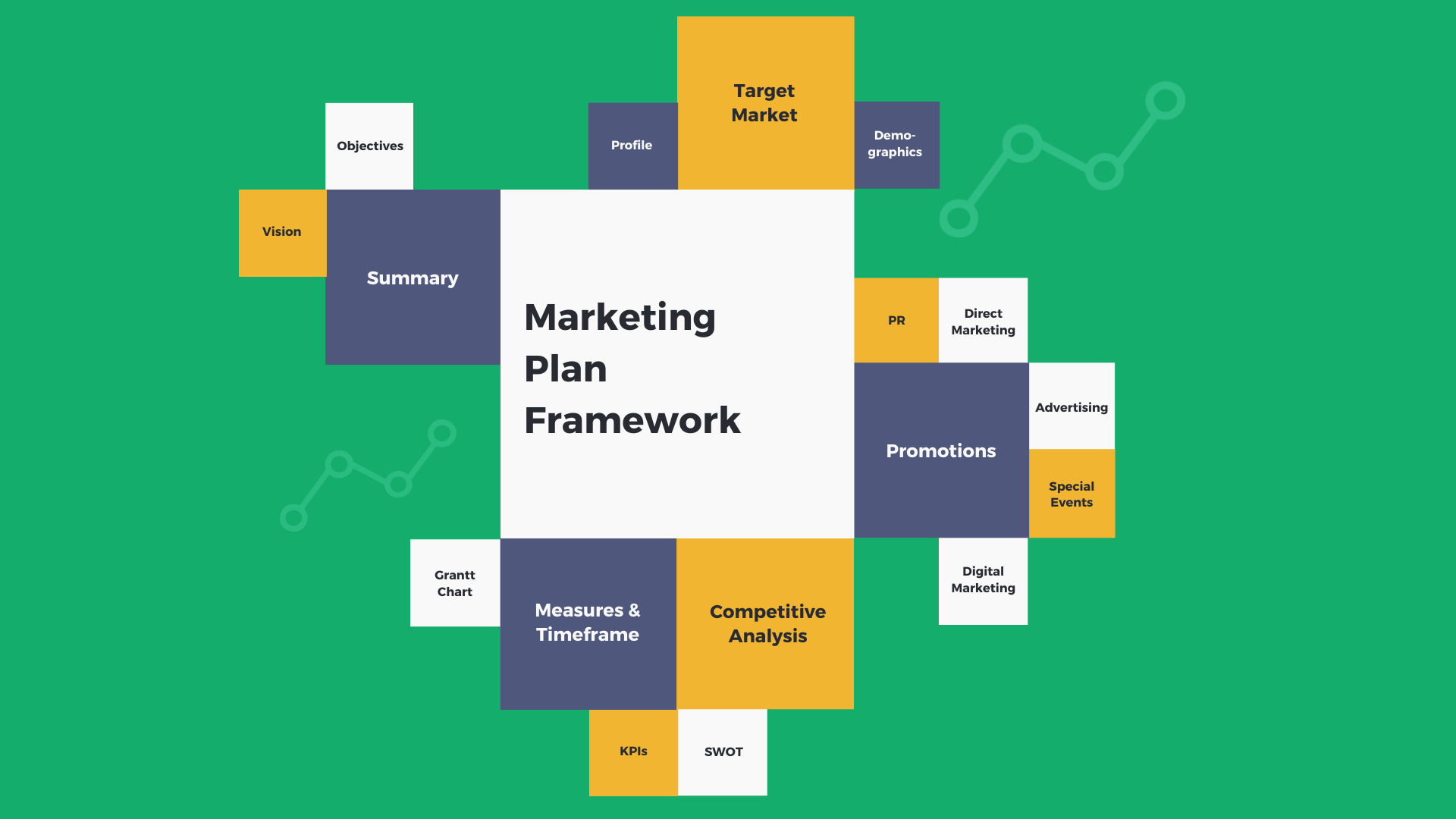
Discover how artificial intelligence can streamline your marketing strategy from conception to execution, ensuring your plans move beyond ideas to tangible results.
Key Takeaways
- AI compresses marketing planning from weeks to hours, but only after you feed it real positioning, audience, and constraint data.
- Tool choice should map to a specific marketing job - research, calendar, copy, distribution - not to a feature list.
- A cohesive stack beats a long tool list: fewer handoffs means fewer places your brand voice gets flattened.
- Human review gates on strategy, claims, and voice are what separate a working plan from AI slop.
- Measure the plan on published output and pipeline, not on how impressive the generated document looks.
Why Most AI Marketing Plans Die in the Doc
Generated plans fail at execution, not ideation. Any tool can produce a polished 4,000-word marketing plan in seconds, complete with personas, channel mixes, and quarterly milestones. The document looks finished, so teams treat it as done, file it in a shared drive, and move on to the next fire. Nothing in that workflow forces a task to get assigned, a deadline to get set, or a budget to get approved. Effectiveness data backs up the pattern: the Content Marketing Institute’s 2026 report found only 12% of marketers say they're highly effective at hitting their goals (CMI, 2026), while the same report noted nearly half describe themselves as stuck or struggling (CMI, 2026). The plan was never the hard part.
Shipping it, tracking it, and adjusting it were. Most organizations already use AI for planning and copywriting (BuzzHive Marketing, 2025), yet adoption hasn't translated into output. Faster drafting just means faster-produced documents that die at the same execution wall.
What AI Can and Cannot Decide for Your Plan
AI drafts the plan; you own the bets. Marketing tools now handle research, drafting, and formatting at a scale no team could match manually, and a significant majority of organizations already lean on AI for copywriting and marketing planning tasks. That adoption curve masks a harder truth. LatentView's 2026 analysis of CPG brands, for instance, found most remain stuck describing what happened last week without reliably explaining why, according to LatentView - a gap no amount of automated drafting closes. AI is a capable research assistant and prolific first-draft writer.
AI cannot function as a strategist, a legal reviewer, or the person accountable when a campaign misreads the market. The table below separates the work AI genuinely accelerates from the calls that still require a human signature. Treat it as a division of labor, not a checklist to automate away.
| Planning task | AI handles well | Human must own | Why |
|---|---|---|---|
| Market and competitor research | Summarizing sources, clustering themes | Deciding which competitor to attack | Judgment on positioning risk |
| Audience segmentation | Drafting personas from existing data | Validating with real customer calls | AI cannot interview your buyers |
| Channel selection | Listing options and effort estimates | Committing budget and headcount | Resource tradeoffs are strategic |
| Messaging and copy | Producing on-voice drafts at volume | Approving claims and tone | Legal and brand exposure |
| Calendar and scheduling | Sequencing, spacing, reformatting | Setting realistic capacity | Only you know your week |
| Reporting | Describing what happened | Explaining why it happened | Causal reasoning still needs context |
The Five Inputs Your AI Marketing Plan Needs First
Garbage inputs produce a confident, generic plan. AI does not know your buyers, your voice, or your budget until you hand it the specifics, and vague prompts return vague strategy that reads well but fits no one. Most SERP guides skip this step entirely, jumping straight to prompt templates.
That's backwards. The Content Marketing Institute’s 2026 report found nearly half of marketers already report stuck or struggling effectiveness (CMI, 2026), and only 12% call themselves highly effective (CMI, 2026) - a gap input quality closes faster than any tool swap. Before opening a chatbot, assemble five things: positioning, ICP detail, voice samples, hard constraints, and baseline numbers. Each one removes a layer of guesswork the model would otherwise invent on your behalf.
- Positioning statement: who you serve, what you replace, why you win against the alternative.
- ICP detail: role, company size, buying trigger, and the objection you hear most often.
- Voice samples: 10-20 pieces of existing content, not a tone adjective like "friendly."
- Hard constraints: hours per week, budget ceiling, channels you flatly refuse to run.
- Baseline numbers: current traffic, list size, conversion rate, best-performing post.
Choosing AI Tools by Marketing Job, Not by Hype
Match tools to jobs before comparing features, because no single AI platform handles keyword research, strategy, content production, visuals, distribution, and reporting equally well across every marketing team. Most teams patch together a stack anyway, pairing a research tool for demand data with a general assistant for planning and a content platform for voice-matched output. A significant majority of organizations now use AI for tasks like copywriting and content planning (BuzzHive Marketing, 2025), which makes tool choice a strategy decision, not a shopping list. The category map below pairs each marketing job with the tool type built for it, plus where that tool quietly breaks down. Get this wrong and you inherit two failure modes: leaning on a general assistant for research it cannot verify, or forcing a content platform into strategic thinking it was never trained for. The Content Marketing Institute’s 2026 report found only 12% of marketers call their content highly effective right now (CMI, 2026), and tool mismatch quietly contributes to that gap.
| Marketing job | Tool category | Best for | Watch out for |
|---|---|---|---|
| Keyword and SERP research | SEO/GEO research platforms | Finding demand before you write | Per-day prompt and keyword caps - some platforms cap monitoring at 500 keywords per day (BehindRankings, 2026) |
| Strategy drafting | General LLM assistants | First-pass plan structure | Confident but unsourced claims |
| Content production | Brand-voice content platforms | On-voice blog and social at volume | Generic output when voice isn't trained |
| Visual assets | Automated asset generation | Pairing images with posts | Off-brand stock look |
| Distribution | Multi-platform schedulers | Publishing without tab-switching | Same copy pasted across platforms |
| Reporting | Analytics and BI layers | Spotting what moved | Descriptive-only dashboards - most teams can report last week's numbers but not explain them (LatentView, 2026) |
Where a single platform beats a stitched-together stack
A stitched-together stack multiplies vendor logins without multiplying results.
One platform that covers research, drafting, and voice-matched writing removes the copy-paste hand-offs where errors creep in. Consolidation pays off most for content production and reporting, where context needs to persist between steps.
Wiring Your Tools Into One Cohesive Stack
Every handoff between tools leaks brand context. A drafting AI writes in one tone, a repurposing tool re-renders it in another, and a scheduling app strips whatever nuance survived. Each copy-paste between platforms is a small act of translation, and translation always loses something. The solution is fewer seams, not fewer capabilities. Most marketing teams are still assembling five or six point solutions that were never designed to talk to each other, which is part of why only 12% of marketers call their content highly effective, according to the Content Marketing Institute’s 2026 report. Wiring your stack ensures the voice, assets, and calendar that define your brand live in one place that every tool reads from, instead of six places that quietly drift apart. Treat consolidation as a design decision, not an afterthought bolted on after you've already picked five separate apps.
- Map the workflow: Trace every step from idea to published post and name the tool that owns it
- Flag copy-paste points: Each manual transfer between tools is a voice leak point
- Merge redundant steps: Consolidate adjacent steps that pull from the same source material
- Centralize the source of truth: Keep one system of record for voice, assets, and calendar
- Use role-based access: Give teammates individual permissions, not shared logins
Turning the Plan Into a 90-Day Campaign Calendar
A plan without dates is just a document. Strategy decks sit in shared drives because nobody assigns them a week, a channel, or an owner. A campaign calendar forces every idea through a filter: does this ship, and when? Most marketers already lean on AI for the planning layer, since a significant majority now use it for copywriting and content scheduling (BuzzHive Marketing). That matters because effectiveness is still rare - the Content Marketing Institute’s 2026 report found only 12% of marketers report exceeding goals over the past year (CMI). A calendar closes that gap by making execution visible instead of aspirational. Ninety days is long enough to build momentum
short enough to adjust before a bad theme wastes a quarter. Here's the build sequence:
- Pick three campaign themes tied to your offer, one per month.
- Assign one pillar asset per theme and derive spokes from it.
- Generate platform-native variations instead of cross-posting identical copy.
- Lock a weekly planning slot to review and approve the next batch.
- Leave 20% of slots open for reactive, timely posts.
This rhythm keeps AI output structured, not scattered, and turns strategy into shippable weeks.
Guardrails: Brand Voice, Ethics, and Review Gates
Guardrails are what keep automation from embarrassing you. Speed is worthless if a chatbot invents a stat, leaks a customer's data, or hands your competitor a screenshot of "content that sounds like everyone else." A significant majority of organizations now lean on AI for copywriting and marketing planning(BuzzHive Marketing, 2025), which means the brands that separate themselves aren't the ones using AI fastest - they're the ones policing it hardest. Online mentions of "slop" jumped over 200% in 2025(Creative Ghost, 2025), a signal that readers now smell generic output on sight. Treat every AI draft as a first pass from a junior writer, not a finished asset.
Build gates before you scale volume, not after a factual error goes public. That means a named reviewer, a privacy rule, and a voice check applied every single time, no exceptions for deadline pressure.
The AI slop test: read it out loud
If it sounds like a press release wearing a company polo, rewrite it. Real voice has quirks, opinions, and specific detail; slop has none of those.
- PII lockout: Never paste customer PII or unreleased financials into general-purpose chat tools
- Named approver: Require a human sign-off on any claim, statistic, or comparison
- Disclosure: Disclose AI assistance where your industry or platform requires it
- Voice check: Would a reader guess this was written by your team?
- Cliché kill: Cut superlatives, em-dash pileups, and "in today's quick world" openers
Measuring Whether the AI Plan Actually Worked
Track shipped output before you track revenue. A plan review that starts with pipeline numbers skips the steps that explain them, and skipped steps are where AI content plans quietly fail. Most teams can already report last week's traffic or lead count. LatentView's 2026 analysis found most brands remain stuck at the descriptive stage, able to state what happened but not why (LatentView, 2026). Closing that gap means pairing leading indicators, the signals that predict whether execution is on track, with lagging indicators that confirm business impact weeks later. Leading metrics answer whether the workflow itself is sound: is the plan realistic, is AI actually saving hours, is the voice landing with each audience. Lagging metrics answer whether that sound workflow is compounding into discovery and pipeline. Reviewing both on a set frequency, weekly for leading and monthly for lagging, turns reporting into diagnosis instead of a scoreboard. The table below is a starting frame; adapt cadence to your publishing volume.
| Metric | Type | Check ing | What it tells you |
|---|---|---|---|
| Pieces published vs planned | Leading | Weekly | Whether the plan is executable |
| Hours spent per published piece | Leading | Monthly | Real efficiency gain from AI |
| Engagement rate per platform | Leading | Weekly | Whether voice and format landed |
| Organic sessions and AI-search citations | Lagging | Monthly | Discovery compounding |
| Qualified signups or demos | Lagging | Monthly | Plan-to-pipeline connection |
Upskilling a Small Team to Run the Plan
Small teams need shared assets, not shared heroics. An AI content plan collapses the moment it depends on one person's memory of what "good" sounds like. Nearly half of marketers are already stuck in neutral on effectiveness, and a 2026 Annual AI sentiment survey found burnout has jumped 11 points in a single year (Annual AI sentiment survey, 2026) - proof that tools alone don't fix output.
The solution is structure: clear ownership, shared references, and a standing habit of correcting the system instead of individual drafts. A team of three can run a full AI content pipeline if each stage has one accountable owner and the knowledge lives in documents, not heads. This turns AI from a personal skill into a team capability, which is what actually scales.
- Assign one owner per stage: research, draft, approve, publish.
- Keep a shared prompt and brief library so quality doesn't depend on one person.
- Run a monthly 30-minute review of what the AI got wrong and update guidance.
- Protect focus time - automation should reduce hours, not fill them.
FAQs about ai for marketing plan
Can AI write a complete marketing plan on its own?
AI can handle the parts that follow a repeatable structure - outlines, messaging drafts, campaign calendars, channel breakdowns, and first-pass copy. What it can't do reliably is make the judgment calls that depend on context only your team has: where to position the brand against competitors, which segment to prioritize, and how to allocate a limited budget across channels. Those decisions need a human who understands the company's constraints, risk tolerance, and goals. Treat AI as the drafting engine and a person as the final decision-maker on positioning and spend.
Which AI tool is best for a marketing strategy?
There's no single best tool because "marketing strategy" is actually several different jobs. Research tasks - market sizing, competitor scans, audience insights - are better suited to tools built for retrieval and synthesis. Production tasks - writing copy, building decks, drafting emails - favor generation-focused tools. Distribution tasks - scheduling, A/B testing subject lines, repurposing content across channels - need tools tied into your marketing stack. Pick based on the job to be done at each stage of the plan rather than looking for one tool to cover all three.
How do I stop AI content from sounding generic?
Generic output usually means the AI has nothing specific to draw from. Feed it real inputs - past campaigns, brand guidelines, customer language from support tickets or reviews, and examples of copy that already sound like your brand. The more concrete samples you give it, the less it defaults to filler phrasing. Just as important: build in a human voice check before anything publishes. Have someone who knows the brand read every draft for tone, specificity, and whether it actually sounds like you before it goes live.
How long should an AI-assisted marketing plan take to build?
With prepared inputs - clear goals, audience data, past performance numbers, brand guidelines - a solid first draft of a marketing plan can come together in a matter of hours. Without that groundwork, expect it to stretch into days, because most of the time gets spent gathering and clarifying inputs rather than generating content. The bottleneck is rarely the AI itself; it's how ready your source material is before you start prompting.
Is it safe to put company data into AI marketing tools?
Be cautious with general-purpose chat tools - avoid pasting in customer PII, internal financials, or anything confidential unless you know exactly how that data is handled. Before entering any company or customer data into an AI tool, check its data retention policy and whether your inputs are used to train the underlying model. Many business-tier AI products offer settings to disable training on your data or to auto-delete inputs after a set period - use them, and default to redacting sensitive details when in doubt.
How many AI marketing tools does a small team need?
Two to three is usually the sweet spot - one for research and drafting, one for production or design, and possibly one for distribution or analytics. Adding more tools than that creates friction: more logins, more manual handoffs between systems, and a higher chance that your brand voice drifts as content passes through different AI models with different defaults. A small, well-integrated toolkit that your team actually masters beats a sprawling stack that nobody uses consistently.
Five Ways AI Marketing Plans Go Wrong
- Prompting before preparing inputs: Asking a model for a marketing plan without positioning, ICP, and voice samples returns a template anyone could have generated. The output feels generic and says nothing specific about your business.
- Collecting tools instead of closing gaps: Signing up for seven AI tools creates seven places to copy-paste and seven versions of your brand voice. Pick tools that cover a full stage of the workflow, then cut the overlaps.
- Confusing a document with a calendar: A generated plan with no dates, owners, or capacity limits never gets executed. Convert every single line into a dated deliverable with a named owner before you call the plan finished.
- Skipping the human review gate: Publishing unreviewed AI output is how factual errors and off-brand claims reach your audience. One approver on claims and voice costs minutes and prevents the slop reputation that is now widely mocked.
- Measuring the plan by its length: A 40-page AI-generated strategy is not evidence of progress. Track pieces published against pieces planned, hours per piece, and qualified signups - those numbers tell you whether the plan is real.
Sources
- CMI’s B2B Content and Marketing Trends: Insights for 2026 report
- Report on AI adoption in marketing statistics
- Creative Ghost - small business marketing trends
- 20+ Best AI Marketing Tools I Tested for Marketers
- LatentView - category management software shortlist
- ABI Research - global AI market size
- Statista Market Insights - AI worldwide outlook
- DataReportal - Digital 2026 Global Overview Report
- AI market size statistics
- Annual AI sentiment survey (Noam Segal)
About Dana Willow
Author
Senior Marketer sharing 15 years of marketing wisdom through an AI lens. Teaching founders to automate smarter.