
Human vs AI Content Creation: Finding the Right Balance
Master ai content creation with human oversight. Learn which tasks to automate and when human creativity wins for authentic brand growth.

Dana Willow
Senior Marketer sharing 15 years of marketing wisdom through an AI lens.
Published on February 9, 2026
Updated on September 27, 2026

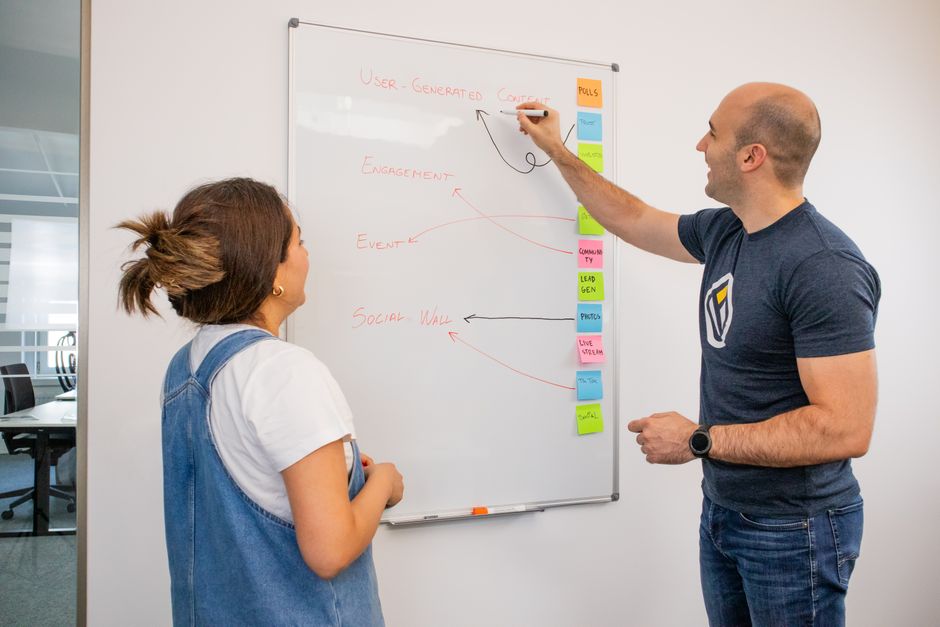
Photo by Tai Ngo
Last Tuesday, I watched a founder delete 3,000 words of AI-generated content. She'd spent $200 on an ai content creation tool, fed it her brand guidelines, and got back something that read like a corporate press release. Zero personality. Zero connection.
Here's the thing: AI isn't bad at content creation. But neither are humans obsolete. The founders winning at content right now? They've figured out exactly where each belongs in their workflow.
After testing every major ai content creation platform over the past year, I've learned this—the question isn't "human or AI?" It's "which tasks deserve human creativity, and which ones don't?"
Why This Balance Matters More Than Ever
Your audience can smell generic content from a mile away. According to research from the Content Marketing Institute, 70% of consumers feel more connected to brands with authentic content. Yet many founders are drowning in content demands—blog posts, social updates, email campaigns, landing pages.
This is where artificial intelligence bloggers and ai content creation tools enter the picture. But here's what most miss: these tools work best as your creative assistant, not your replacement.
I've seen SaaS teams triple their output without sacrificing brand voice. I've also seen companies lose engagement because they automated everything. The difference? Knowing the split.
Where AI Content Creation Tools Shine
AI excels at three things: speed, scale, and structure. Let's break down where you should lean on ai tools for content creation.
First Drafts and Outlines
Use an ai powered content creation platform to beat the blank page. I generate outlines in minutes for topics that used to take hours to structure. The AI handles research compilation, suggests angles I might miss, and creates a skeleton I can build on.
Tools like Jasper AI and similar platforms excel here. They pull from massive datasets to suggest frameworks and talking points. But—and this matters—these are starting points, not finish lines.
Repetitive Content Formats
Product descriptions. Meta descriptions. Social media variations. Email subject lines. These follow patterns. An ai generator text tool can produce 20 variations in the time it takes you to write three.
I ran a test last month: wrote 10 product descriptions manually (90 minutes), then used an ai content creation tool for 10 more (12 minutes). After editing both batches to match brand voice, the time difference was stark. The quality? Identical.
Data Synthesis and Summarization
Got a 50-page report to distill? AI handles this beautifully. It finds patterns, extracts key points, and structures information faster than any human can read.
According to McKinsey's research on AI adoption, businesses using AI for data processing save an average of 30% on time-intensive tasks. That time goes back to strategy and creativity—the things AI can't do.
Where Human Creativity Wins Every Time
Now for what AI can't touch. These are the moments your content needs a human brain and heart.
Brand Voice and Personality
Your brand voice is your fingerprint. It's the difference between "We help companies grow" and "We turn your marketing into a growth engine while you sleep."
AI content creation tools can mimic patterns, but they can't create authentic personality. They don't know why your founder started the company at 2am in a coffee shop. They can't capture the frustration that led to your product idea.
I edit every AI draft to inject this. It's not optional—it's the difference between content that converts and content that gets skimmed.
Original Insights and Experience
Here's what separates content that ranks from content that resonates: unique perspective. AI pulls from existing information. It can't share what it's like to lose $10,000 on a failed campaign, then figure out the fix.
Your war stories, your failed experiments, your "here's what it's rarely mentioned" moments—that's human territory. That's what builds trust.
Emotional Connection and Storytelling
Stories need stakes. They need tension and release. AI can structure a narrative, but it doesn't understand why a detail matters emotionally.
When I write about a founder's breakthrough moment, I'm choosing which details to include based on emotional weight. AI would include everything or nothing. It doesn't have judgment honed by 15 years of watching what makes readers lean in.
Building Your Hybrid Content Workflow
Here's the system that works. I've tested this with a dozen teams over the past six months.
Step 1: Let AI handle the heavy lifting. Use your ai content creation tool for research, outlines, and first drafts. Feed it your topic, target keywords, and any specific angles. Get a rough draft in minutes.
Step 2: Human edit for voice and value. This is where you earn your keep. Strip out the corporate speak. Add your perspective. Insert examples from your experience. Make it sound like a human wrote it—because now, one is.
Step 3: AI assists with optimization. Run your edited content back through for SEO suggestions, readability improvements, or headline variations. The AI spots opportunities you might miss.
Step 4: Human final review. Read it out loud. Does it sound like you? Would you send this to a friend? If not, keep editing.
Practical Tips for Getting the Balance Right
Start with a 70/30 split—70% AI generation, 30% human refinement. Track your time and adjust based on results.
Create brand voice guidelines your AI can reference. The more specific your prompts, the less editing you'll do later. Include tone descriptors, example sentences, and words you never use.
Never publish AI content without human review. Ever. I don't care how good the tool is. One off-brand phrase can undo months of positioning work.
Use AI for volume, humans for flagship content. Your weekly blog post? Heavy human involvement. Your 50 product descriptions? Lean on AI with light editing.
Batch your AI tasks. Generate all your outlines Monday, edit Tuesday through Thursday, use AI for optimization Friday. Switching contexts kills productivity.
The Future Looks Like Partnership
We're not heading toward AI replacing writers. We're heading toward writers who use AI effectively replacing those who don't.
The founders I work with who've nailed this balance? They're publishing 3x more content without hiring a content team. They're ranking for competitive keywords because they have the volume to target long-tail variations. And their engagement metrics are climbing because the content still sounds human.
That's the sweet spot. AI gives you speed and scale. You give it soul and strategy.
Stop thinking about ai content creation tools as a shortcut. Think of them as a force multiplier. They handle the grunt work so you can focus on the creative decisions that actually differentiate your brand.
The perfect balance isn't a formula. It's a practice. Start with one piece of content this week. Generate an AI draft, then edit it until it sounds like you wrote it from scratch. Notice where the AI saved you time. Notice where you added the value.
That's your balance. Now scale it.
About Dana Willow
Author
Senior Marketer sharing 15 years of marketing wisdom through an AI lens. Teaching founders to automate smarter.