
From Concept to Publish: A Content Workflow with AI Tools
Build a streamlined content workflow with ai tools for content creation. From ideation to publish—practical strategies for founders who value efficiency.

Dana Willow
Senior Marketer sharing 15 years of marketing wisdom through an AI lens.
Published on February 11, 2026
Updated on September 27, 2026

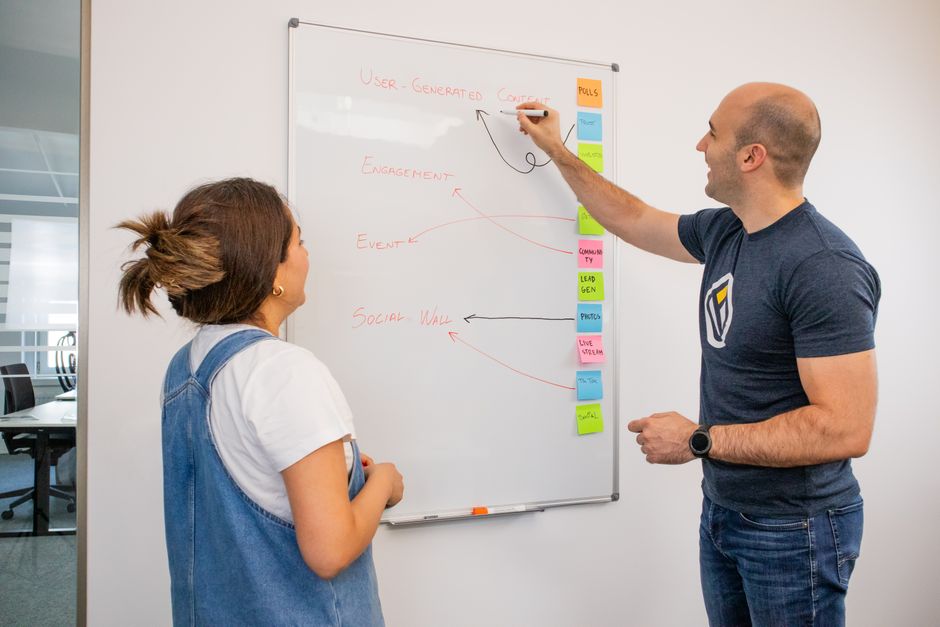
Photo by Walls.io
Last month, I watched a founder friend burn out trying to publish three blog posts per week. She'd spend hours staring at blank screens, rewriting sentences, second-guessing every word. Meanwhile, her product roadmap collected dust.
Here's what I've learned after 15 years in marketing: ai tools for content creation won't write your brand voice for you. But they'll handle the heavy lifting so you can focus on what actually matters—strategy, authenticity, and connecting with your audience.
Let me walk you through building a workflow that works.
Why Traditional Content Creation Breaks Down
Most founders treat content like a side project. You squeeze it between product updates and customer calls. Then you wonder why your blog feels inconsistent or goes silent for weeks.
The problem isn't commitment. It's process.
According to the Content Marketing Institute, 60% of B2B marketers struggle with producing content consistently. You're fighting against time, not talent.
Ai content creation fixes the bottleneck. Not by replacing you, but by automating the parts that drain your energy without adding value.
Step 1: Ideation Without the Blank Page Panic
Start with a brain dump. Open your ai content creation platform and feed it your customer questions, support tickets, and the topics your audience actually asks about.
I use this prompt: "Generate 20 blog post ideas for [your audience] struggling with [specific problem]."
You'll get a mix of gems and garbage. That's fine. Your job isn't to use everything—it's to spot the three ideas that make you think, "Yes, we need to say this."
Filter through your brand lens. An ai generator text tool can suggest "10 Ways to Boost Productivity," but only you know your audience cares more about "How to Ship Features Without Burning Out Your Team."
Create Your Idea Bank
Don't start from scratch every time. Build a simple spreadsheet with columns for:
- Topic idea
- Target keyword
- Customer pain point it addresses
- Priority level
When you batch ideation, you break the cycle of "What should I write next?" panic.
Step 2: Outlining That Guides Without Restricting
Here's where ai powered content creation tools shine. They build structure fast.
Feed your chosen topic into your AI tool with context: "Create an outline for [topic] targeting [audience] with a [tone] voice."
You'll get a skeleton in seconds. But don't hit publish on that outline yet.
Ask yourself:
- Does this match how we actually talk?
- Are we missing the insight only we can provide?
- Would our customers recognize our voice here?
I learned this the hard way. Early on, I let AI drive the structure completely. The posts felt hollow—technically correct but missing personality. Now I treat AI outlines like first drafts from a junior writer. Good bones, needs your expertise.
Step 3: Drafting Without Overthinking Every Sentence
This is where speed meets quality.
Take your refined outline and expand each section using your AI tool. Some platforms like Jasper AI let you write section by section, which helps maintain flow.
But here's the important part: don't edit while you draft.
Let the AI generate. Let yourself generate. Get words on the page. According to research from the University of California, separating creation from editing reduces cognitive load and improves output quality.
Your first draft will be rough. That's the point.
The Two-Pass Method
Pass one: Generate content with AI assistance. Accept that it's imperfect.
Pass two: Edit with your human brain. This is where you inject stories, cut jargon, add examples only you know, and make it sound like you wrote it—because now you are.
Many artificial intelligence bloggers skip pass two. You can tell. The content feels generic, disconnected from real experience.
Step 4: Editing for Voice and Authenticity
Read your draft out loud. Seriously.
If you stumble over sentences, your readers will too. If it sounds like a robot wrote it, that's because you let the robot do too much.
Here's my editing checklist:
- Replace formal language with conversational phrases
- Cut adverbs and weak modifiers
- Add contractions where natural
- Insert one personal anecdote or specific example per section
- Remove anything you wouldn't say in a client meeting
The goal isn't perfection. It's connection.
AI gives you the scaffold. You add the warmth, the specificity, the moments that make someone think, "This person gets it."
Step 5: SEO Optimization Without Keyword Stuffing
You've written something valuable. Now make sure people find it.
Use your AI tool to identify related keywords and questions people search for. Most ai content creation platforms include SEO features that suggest where to place keywords naturally.
But don't obsess over density percentages. Google's algorithms are smart enough to understand context and synonyms.
Focus on:
- Including your main keyword in the title and first 100 words
- Using variations throughout headers
- Answering the actual questions your audience asks
- Linking to relevant internal content
Think like a reader first, search engine second.
Step 6: Final Review and Publishing
Before you hit publish, run through this quick checklist:
- Does this provide value our audience can't get elsewhere?
- Would someone recognize our brand voice?
- Are claims backed with examples or data?
- Is the post scannable with clear headers and short paragraphs?
- Does the post give readers a clear next step?
Then publish and move on.
Perfectionism kills consistency. Done and published beats perfect and stuck in drafts.
Building Your Sustainable Workflow
Here's what a realistic workflow looks like:
Monday: Batch ideation for the month (1 hour with AI assistance)
Tuesday: Outline next week's posts (30 minutes per post)
Wednesday-Thursday: Draft and edit (1-2 hours per post)
Friday: Final review, SEO check, schedule publishing
You're not writing every day. You're batching the work, using AI to handle repetitive parts, and focusing your energy on the pieces that require human judgment.
This is how small teams compete with content machines. Not by working harder, but by working smarter.
What to Avoid
The biggest mistake? Treating ai tools for content creation as a replacement instead of an assistant.
AI can't replicate your customer conversations, your product insights, or the lessons you learned building your business. Those are your competitive advantage.
Also avoid:
- Publishing AI-generated content without editing
- Ignoring your brand voice guidelines
- Forgetting to add unique value and perspective
- Skipping the human review process
The tools are powerful. But they're tools, not authors.
Making AI Work for Your Workflow
You don't need to use every feature of every tool. Start simple.
Pick one ai content creation platform that fits your budget and workflow. Learn it well. Then gradually add complexity as you find what works.
Some weeks you'll lean on AI heavily. Other weeks, you'll barely touch it. That's fine. The workflow should flex with your schedule, not fight it.
What matters is consistency. Publishing regularly builds momentum, authority, and trust with your audience. AI helps you maintain that rhythm without sacrificing quality or burning out.
Your Next Steps
Start small. Choose one post to create using this workflow.
Track how long each step takes. Note where AI saves you time and where you need to add more human touch. Refine the process.
Within a month, you'll have a workflow that feels natural—not like you're fighting against the tools or forcing content that doesn't sound like you.
The goal isn't to automate everything. It's to automate the right things so you can focus on what makes your content worth reading: your expertise, your voice, your perspective.
Because remember, ai powered content creation tools are just that—tools. What you build with them is still entirely up to you.
About Dana Willow
Author
Senior Marketer sharing 15 years of marketing wisdom through an AI lens. Teaching founders to automate smarter.