
Storylines: The Marketing Plan You Never Had to Write
PostKing 0.2 introduces Storylines: a structured marketing plan that keeps your brand voice consistent across every automated post.

Dana Willow
Senior Marketer sharing 15 years of marketing wisdom through an AI lens.
Published on July 15, 2026
Updated on October 9, 2026
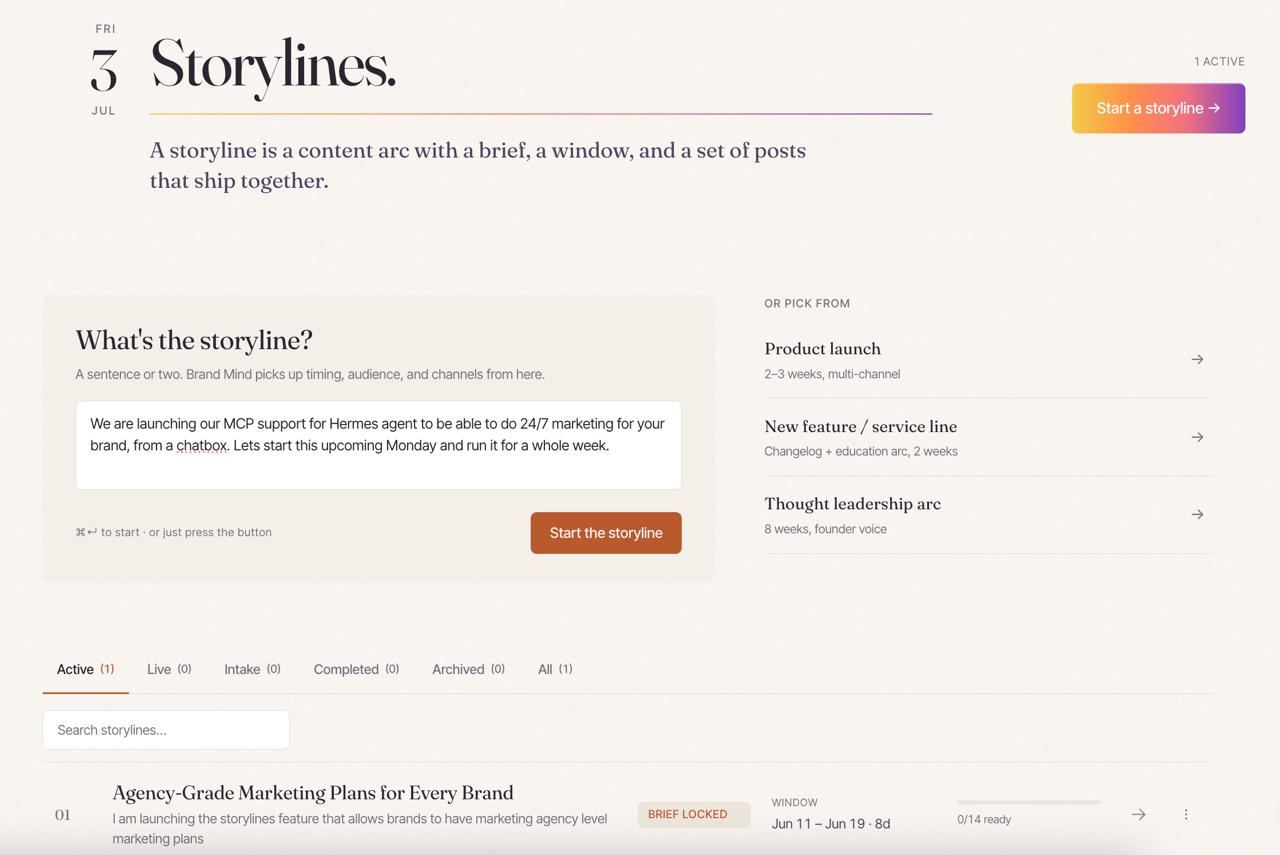
Storylines turns a goal into a marketing plan you do not have to write yourself.
Building a product is one problem. Getting anyone to notice it is a completely different one. I spent years writing code and shipping features, then watching them disappear into the ether because I had no consistent way to talk about what I was building. PostKing came out of that specific frustration.
Version 0.2 is a meaningful step forward, and the centerpiece is something we're calling the Storylines Marketing Plan. This post walks through what it is, why we built it this way, and how to get the most from it.
The Problem With "Just Post More"
Most marketing advice for founders circles back to volume. Post every day. Be on every channel. Stay consistent. It's not wrong, exactly, but it skips over the part where you actually have something coherent to say.
Automation tools made this worse for a while. You could schedule 30 posts in an afternoon, but half of them would read like they came from a different company, or a different person entirely. The brand voice got diluted. Readers could feel it even if they couldn't name it.
According to the Content Marketing Institute's 2025 B2B report, brand consistency across channels is one of the top 3 challenges for small marketing teams, ranking above budget and above content volume. That tracks with what we heard from early PostKing users: the problem wasn't output, it was coherence.
Where this shows up in practice
A SaaS founder might write a thoughtful LinkedIn post on Monday, then let PostKing auto-generate something on Wednesday that sounds vaguely corporate, then share a casual tweet on Friday. Three pieces of content, three different personalities. Followers don't build a mental model of who you are, so they don't stick around.
NGOs run into this differently. They often have mission-driven language that matters to their donors and communities, and generic automation flattens that into beige nonprofit-speak. SMEs face it too, particularly when the founder's voice built the audience but a team member takes over posting.
What a Storyline Actually Is
A Storyline in PostKing is a structured marketing plan built around a single narrative thread. Think of it as a container that holds your brand voice, your content themes, your posting rhythm, and your intended audience response, all in one place.
It's not a content calendar. A calendar tells you when to post. A Storyline tells you what you're trying to say over time and keeps every post anchored to that through-line.
Each Storyline has 4 core components:
- Narrative anchor: The central idea your content keeps returning to. For PostKing, that anchor is "distribution is learnable." Every post we publish connects back to that, even if it's about a specific feature.
- Voice profile: A set of parameters that define tone, vocabulary preferences, sentence length tendencies, and topics to avoid. This is what keeps automated posts sounding like you.
- Content arcs: Shorter thematic clusters within the Storyline. An arc might run for 2 weeks and focus on a specific pain point or product use case.
- Post rules: Not just frequency, but rhythm. When to go deep versus when to keep it short. Which days suit which content types for your specific audience.
How Storylines Work Inside PostKing 0.2
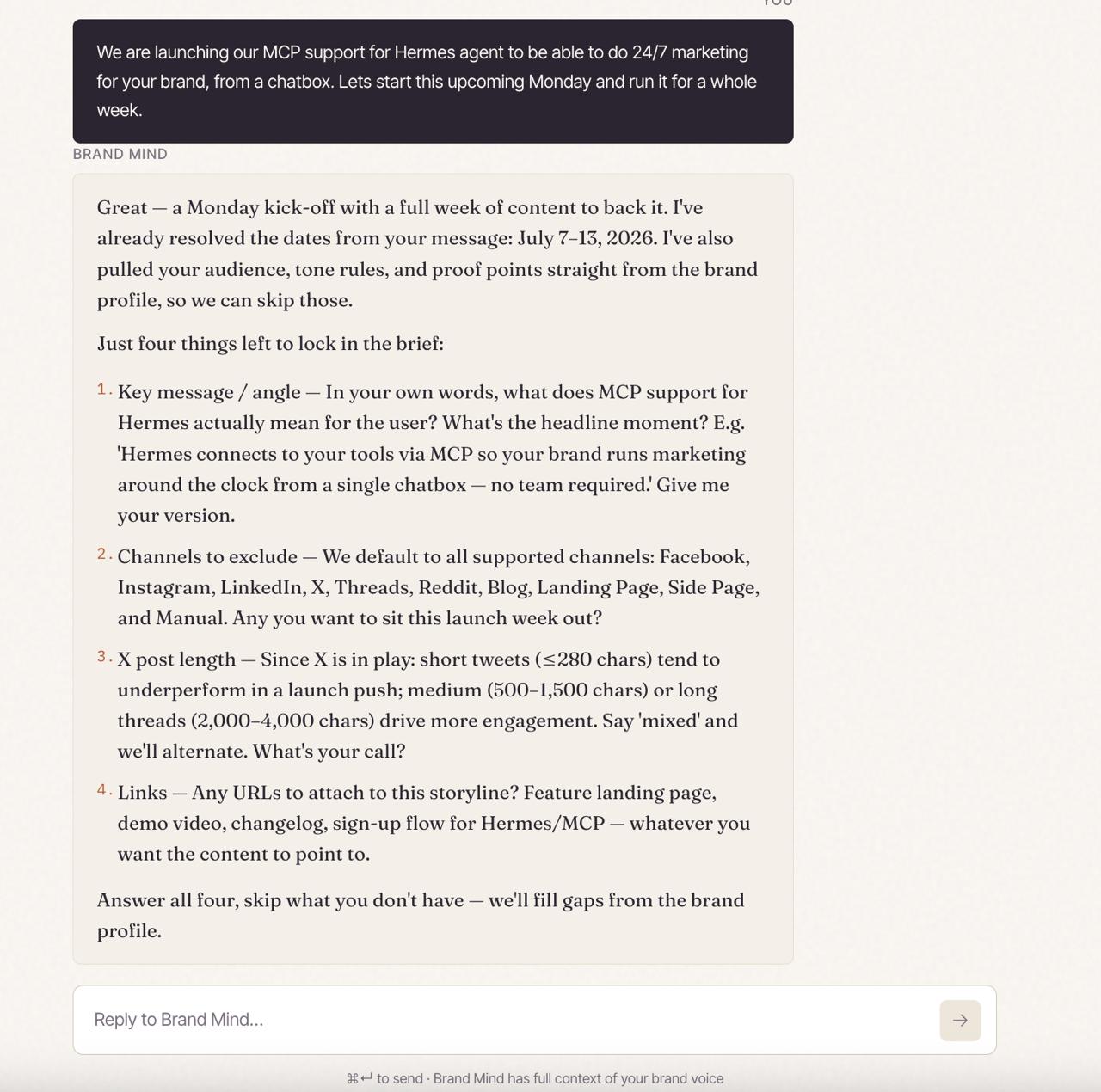
When you set up a Storyline, PostKing uses the voice profile and narrative anchor to shape every piece of content it generates. You can still edit anything before it goes out. The goal isn't to remove you from the process; it's to make the starting point much closer to what you'd actually write yourself.
The setup process takes about 15 minutes the first time. You answer a series of questions about your brand, your audience, and the story you're trying to tell. PostKing uses those answers to build the initial voice profile. You can refine it over time as you approve or reject suggestions.
The feedback loop
This is the part I'm most proud of from an engineering standpoint. Every time you edit a generated post, PostKing logs what changed. Over time, it builds a clearer picture of your preferences and tightens the voice profile accordingly. The system gets more accurate to your voice the more you use it, without you having to manually update settings.
Nielsen Norman Group's research on content personalization suggests that systems which learn from explicit user corrections outperform static rule-based systems in brand consistency tasks by a considerable margin. We built the feedback loop with that principle in mind.
Multiple Storylines for different audiences
You can run more than 1 Storyline at once. A SaaS company might have one Storyline aimed at developers and another aimed at non-technical buyers. Same product, different narrative anchors, different voice profiles. PostKing keeps them separate so content doesn't bleed across audiences.
For NGOs, this is particularly useful. A donor-facing Storyline sounds different from a volunteer-facing one, and both sound different from media outreach. Managing those separately in a single dashboard cuts the coordination overhead considerably.
Practical Examples
Indie founder launching a new feature
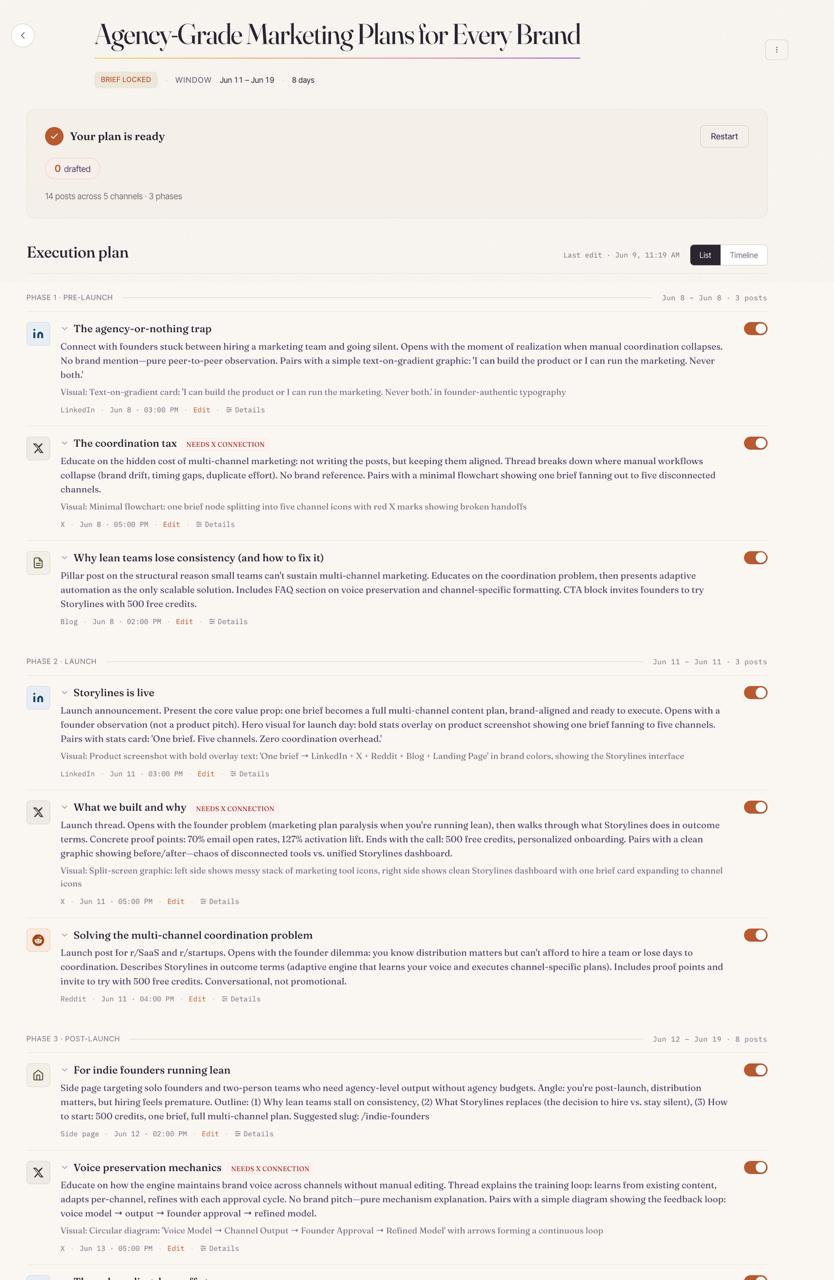
Say you're shipping a new onboarding flow and you want to document the process publicly, building in public style. Your Storyline anchor is "building in the open." You create a content arc for the launch week that covers the problem you identified, the design decisions you made, and what you learned post-launch. PostKing generates drafts for each post in the arc, all rooted in your voice profile. You tweak, approve, schedule. The whole arc publishes over 5 days and reads like a coherent story rather than 5 disconnected posts.
SME with inconsistent posting history
A small agency has been posting sporadically for 2 years. The content ranges from thought leadership to product updates to reposted articles. There's no thread. They set up a Storyline with the anchor "we make your website stop losing you clients." Every piece of content connects back to that. Within a month, followers start reading more because the brand has a point of view they can orient around.
NGO with a seasonal campaign
An environmental NGO runs a fundraising campaign each spring. In past years, the messaging drifted as different team members contributed posts. With a Storyline scoped specifically to the campaign, every post pulls from the same narrative anchor and voice profile. The campaign feels unified. Donor response holds up through the full 6-week run rather than tapering after week 2.
Getting the Most From Storylines
A few things we've noticed from early use:
Spend real time on the narrative anchor. This single sentence does more work than anything else in the system. A vague anchor ("we help businesses grow") produces vague content. A specific anchor ("we help first-time founders find their first 100 customers without running ads") gives the system something to work with.
Don't try to run 5 Storylines on day one. Start with 1, get the voice profile calibrated, then expand. The feedback loop needs a few weeks of data before it becomes genuinely useful.
Use the content arc structure deliberately. When you're between campaigns or launches, a shorter arc focused on audience education keeps the Storyline active without forcing you to manufacture urgency. Evergreen arcs sit in the background and the system pulls from them when the schedule calls for something.
Edit the generated drafts, especially early on. Every edit you make is training data for your voice profile. Approving mediocre drafts because they're "good enough" slows the calibration process.
Where This Is Heading
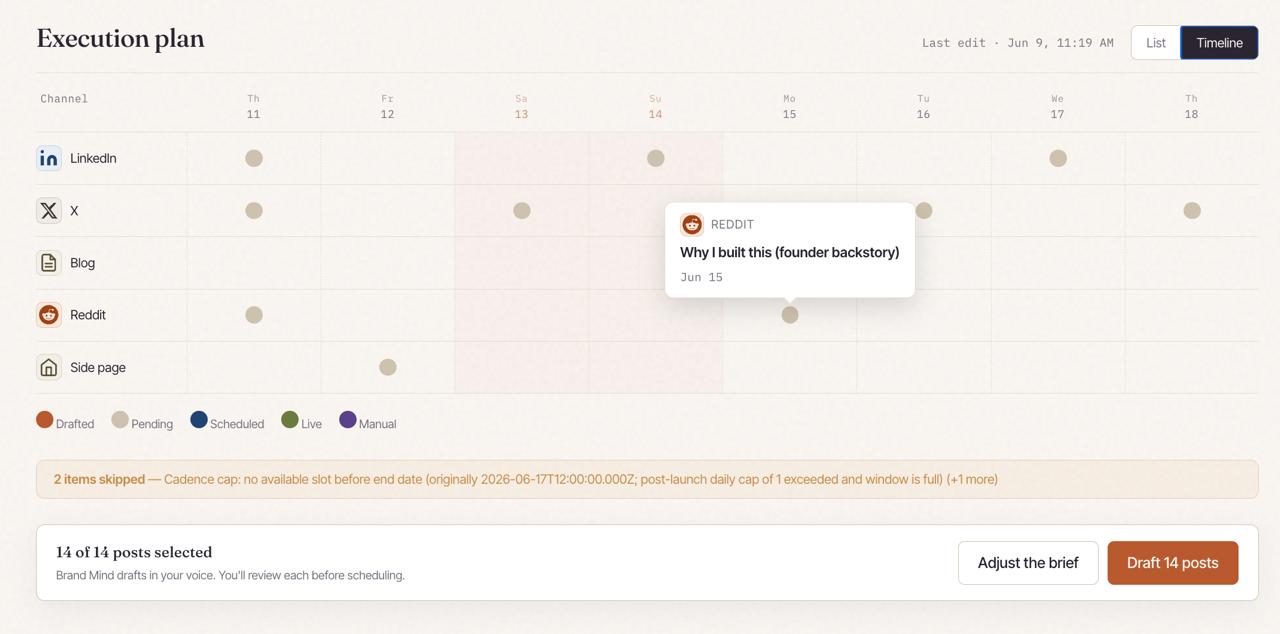
Version 0.2 is the foundation. Storylines are stable and working, but there's a lot we want to build on top of them. Cross-channel coherence, where a Storyline spans LinkedIn, a newsletter, and a blog without each channel feeling like a silo, is next on the roadmap. Analytics tied to narrative arcs rather than just individual posts is something I've wanted since the beginning.
The core principle stays the same though: automated content should sound like you, not like content. Storylines are the mechanism that makes that possible.
If you're on PostKing already, the Storylines feature is live in your dashboard now. If you're not, postking.app has a 7-day free trial to start with. Set up your first Storyline, give the feedback loop a few weeks, and see what changes.
About Dana Willow
Author
Senior Marketer sharing 15 years of marketing wisdom through an AI lens. Teaching founders to automate smarter.