
From Blog Draft to Full Social Calendar in Minutes
PostKing 0.2 turns your content into platform-ready social posts automatically. Here's what social media generation actually does for founders.

Dana Willow
Senior Marketer sharing 15 years of marketing wisdom through an AI lens.
Published on July 2, 2026
Updated on October 10, 2026

Photo by Which Social Media Has AI? Top Platforms Uncovered - AI Marketing Turbo
Most founders hit the same wall. You ship something, write a post about it, and then spend the next couple of hours reformatting that post for 4 different platforms. LinkedIn wants professional, Twitter/X wants punchy, Instagram wants something visual to hang a caption on. Same idea, four rewrites.
Dite Gashi built PostKing after a decade in full-stack development and consistent trouble finding distribution for his own work, which is exactly the kind of frustration that tends to produce useful tools. Social media generation, the feature that ships with PostKing 0.2, is the direct answer to that reformatting problem.
The Distribution Problem Is Mostly a Time Problem
Content creation and content distribution are two different jobs. Most indie founders and small teams only budget time for one of them.
The Content Marketing Institute's research consistently shows that execution across channels is the top challenge for small and mid-sized content teams, ranking above ideas and above budget. Writing the core content is one thing. Adapting it for each platform takes a different kind of attention, and that attention compounds fast across a week of work.
For a solo founder shipping weekly updates, this means hours every week spent on what's essentially formatting work. Your idea exists. Your audience exists. PostKing 0.2 builds the pipeline between the two.
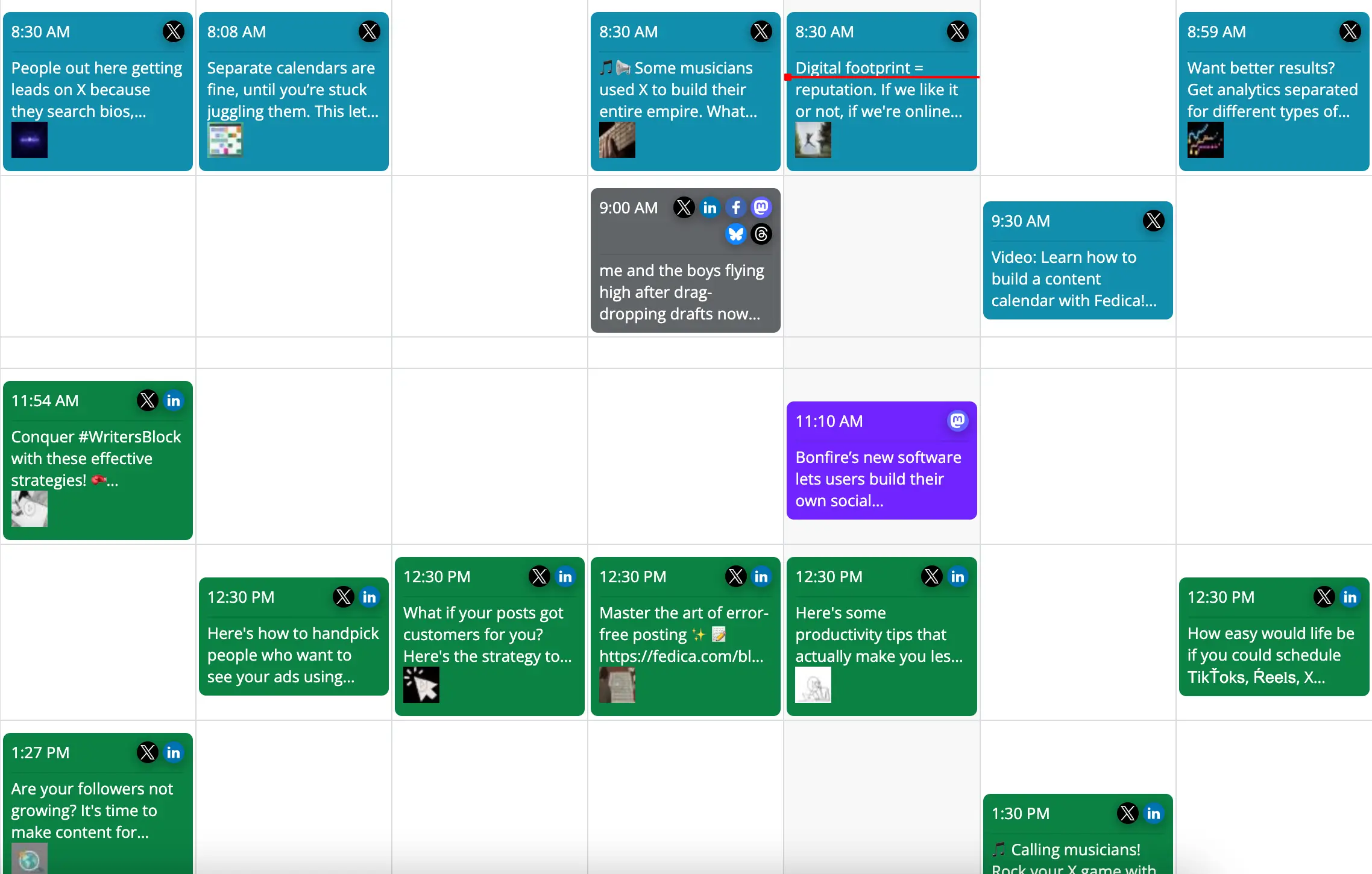 Managing content across multiple social platforms from one calendar, instead of reformatting by hand for each.
What Social Media Generation in PostKing 0.2 Actually Does
The feature reads your existing content, including blog posts, product updates, and changelog entries, then produces ready-to-use social posts for the platforms you've connected. It lives inside the content publishing flow, wired into where you already work rather than bolted onto a separate dashboard you'd have to open separately.
Platform-Native Output
LinkedIn posts have different pacing and structure than Twitter/X threads. PostKing 0.2 accounts for this by generating platform-specific copy rather than copying the same text everywhere. A 280-character tweet and a 1,200-character LinkedIn update start from the same source, but they're shaped differently.
This means you're distributing to each platform on its own terms, which tends to perform better than copy-pasting the same block of text across 4 accounts and hoping it lands.
Brand Voice Preservation
You define how your brand writes: which pronouns, which tone, which topics to pull forward. The generator uses this to produce posts that sound like you and your brand, with voice settings sitting at the center of how the whole feature works.
Brand context is a first-class input in PostKing 0.2, built into the generation process from the start rather than an optional field buried somewhere in a preferences menu (the kind you'd only find by accident on day 12). Many founders who've tried other AI writing tools ended up with outputs that read like generic press releases. PostKing 0.2 avoids that by grounding generation in your defined voice from the beginning. Shopping for a tool that does both? Here's how to choose an AI tool that writes blog posts and social media in your brand voice.
Practical Examples
Say you're a SaaS founder who just shipped a new product. You write a 600-word blog post explaining how it works, what problem it solves, and who asked for it. PostKing 0.2 reads that post and generates a Twitter/X thread that leads with the use case, a LinkedIn update written for a professional audience, and a short caption for an image post. You review, adjust if anything's off (usually not much), and publish. Total time: maybe 10 minutes instead of 90.
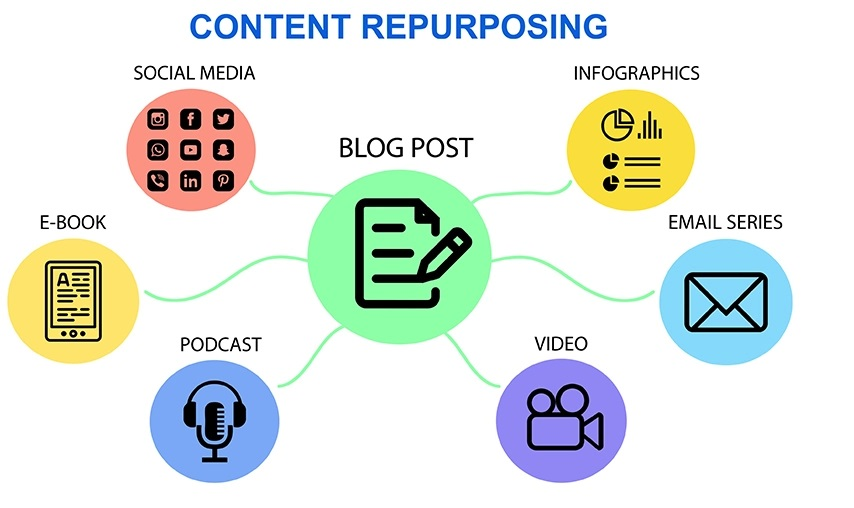 One blog post, repurposed into every format your audience actually shows up on.
For NGOs, the use case shifts a little, because many nonprofits produce content that matters but run thin communications teams where turning a single program update into shareable social posts requires going through a disproportionate amount of coordination. Social media generation closes that gap without adding headcount.
SMEs get similar lift. A local business or regional service company producing a seasonal update, a case study, or a product spotlight can get that content distributed across social without outsourcing the work to an agency.
A Few Things to Keep in Mind
The output from any AI generation tool is a draft. PostKing 0.2 produces good starting points; review before you publish.
A few things that consistently improve results:
- Source content should be specific. Vague blog posts produce vague social posts. If your original content is thin, the generated output will be too.
- Brand voice settings matter. Spend 15 minutes filling those out properly and the difference in output quality becomes noticeable fast.
- Carry your own context. The tool doesn't know that today's tweet might conflict with something you said last week. That judgment stays with you.
Sprout Social's 2025 research on social media management found that brands with documented voice guidelines produce significantly more consistent content across channels, even when using AI tools for drafting. Setting your voice once, so you stop re-making the same judgment calls on every post, is exactly what PostKing 0.2 is built around.
Where to Go From Here
PostKing 0.2 is available now. If you're already producing content and spending more time reformatting than writing, social media generation is worth testing inside your existing workflow.
The best way to start is with content you've already written. Pull something from your archive, run it through, and see whether the output sounds like you. If it does, you've found a workflow worth keeping. If the voice is slightly off, adjust your brand settings and run it again; it usually only takes 1 or 2 iterations to land.
PostKing is built for people who need consistent distribution without a dedicated team to run it. PostKing 0.2 moves that further down the field.
About Dana Willow
Author
Senior Marketer sharing 15 years of marketing wisdom through an AI lens. Teaching founders to automate smarter.