
PostKing 0.2: How to Rank in Google, GEO, and LLM Search All at Once
PostKing 0.2 brings SEO, GEO, and LLM discovery into one automated workflow. Here's what changed and how to use it effectively.

Dana Willow
Senior Marketer sharing 15 years of marketing wisdom through an AI lens.
Published on July 13, 2026
Updated on October 9, 2026
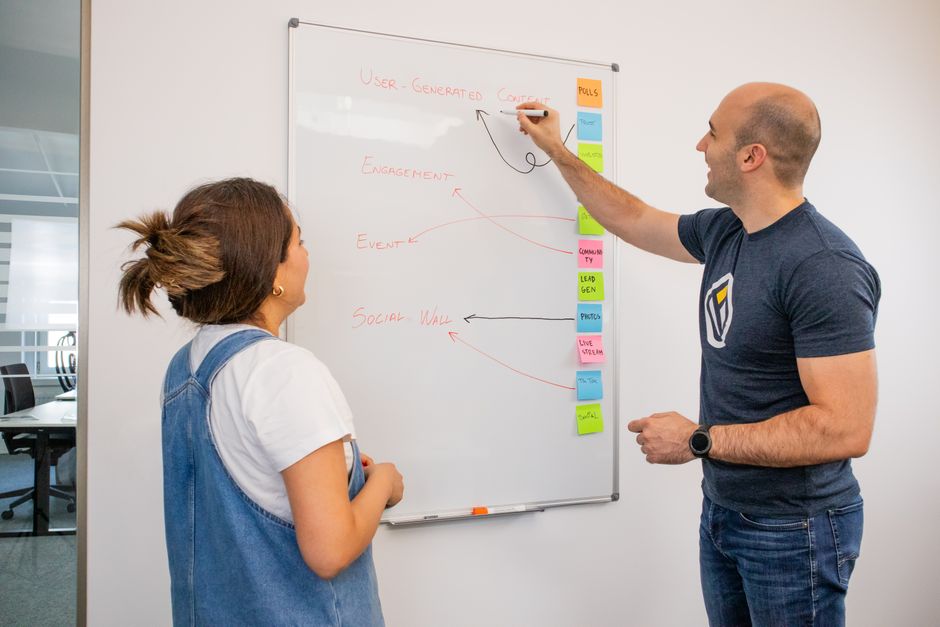
Ranking in Google and getting cited by LLMs now run through the same workflow.
I built PostKing because I kept running into the same wall. Good product, no distribution. Hours of writing blog posts that ranked nowhere, structured data that felt like guesswork, and absolutely no idea whether an AI assistant would ever surface my content when someone asked a relevant question. The tooling just wasn't there.
PostKing 0.2 is my answer to all three of those problems at once. This release pulls together traditional search optimization, geographic relevance targeting (GEO), and something newer: making your content legible to the large language models that are increasingly mediating how people find things online.
If you're an indie founder, a small SaaS team, or running an NGO with no dedicated marketing staff, this guide walks through what 0.2 actually does and how to get the most out of it.
The Three Layers You're Now Optimizing For
Search used to be one thing. You wrote content, targeted keywords, built backlinks, and waited for Google to notice. That model still works, but it's no longer the whole picture.
There are now 3 distinct surfaces where your content can get discovered:
- Traditional search engines (Google, Bing) ranked by crawled signals
- Geographic and local search, where proximity and regional relevance shape what surfaces
- LLM-mediated answers, where models like ChatGPT, Perplexity, and Gemini pull from their training data and live web access to answer questions directly
PostKing 0.2 is built around all three. Most tools handle the first, some handle the second, and almost none handle the third with any real intentionality. Getting found by an AI model answering a query is now as real a distribution channel as ranking on page one.
What's New in 0.2
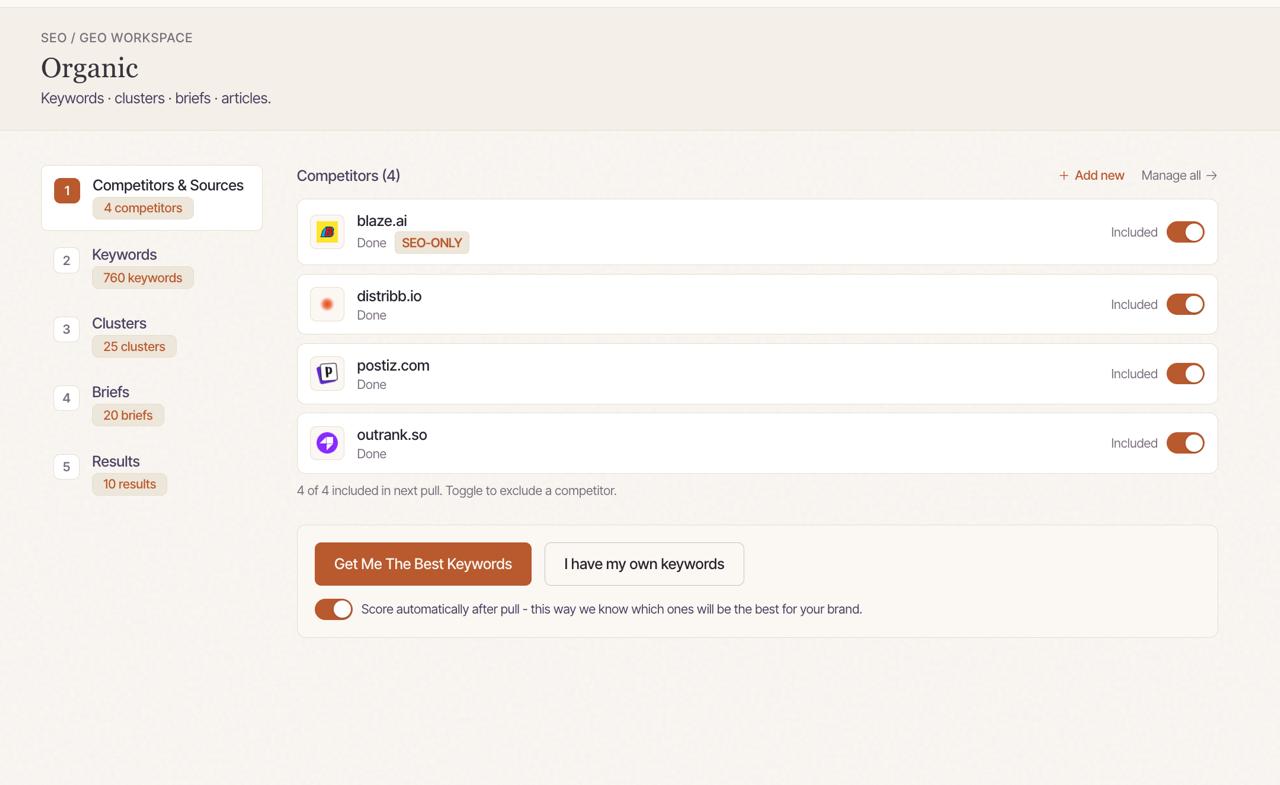
Automated SEO Structuring
The core SEO pipeline got a significant rework. PostKing now generates clean semantic HTML with proper heading hierarchy, schema markup, and meta tags baked in from the start, rather than bolted on after the fact.
This matters because Google's crawlers and LLM scrapers both parse structure before they parse meaning. A well-structured article with clear <h1>, <h2>, and schema tags communicates what a page is about before a single word of body copy is processed.
According to research from Moz and confirmed in Google's own Search Central documentation, pages with proper structured data consistently see improved search result eligibility, which correlates with higher click-through rates from search pages. PostKing handles that scaffolding automatically so you don't have to think about it.
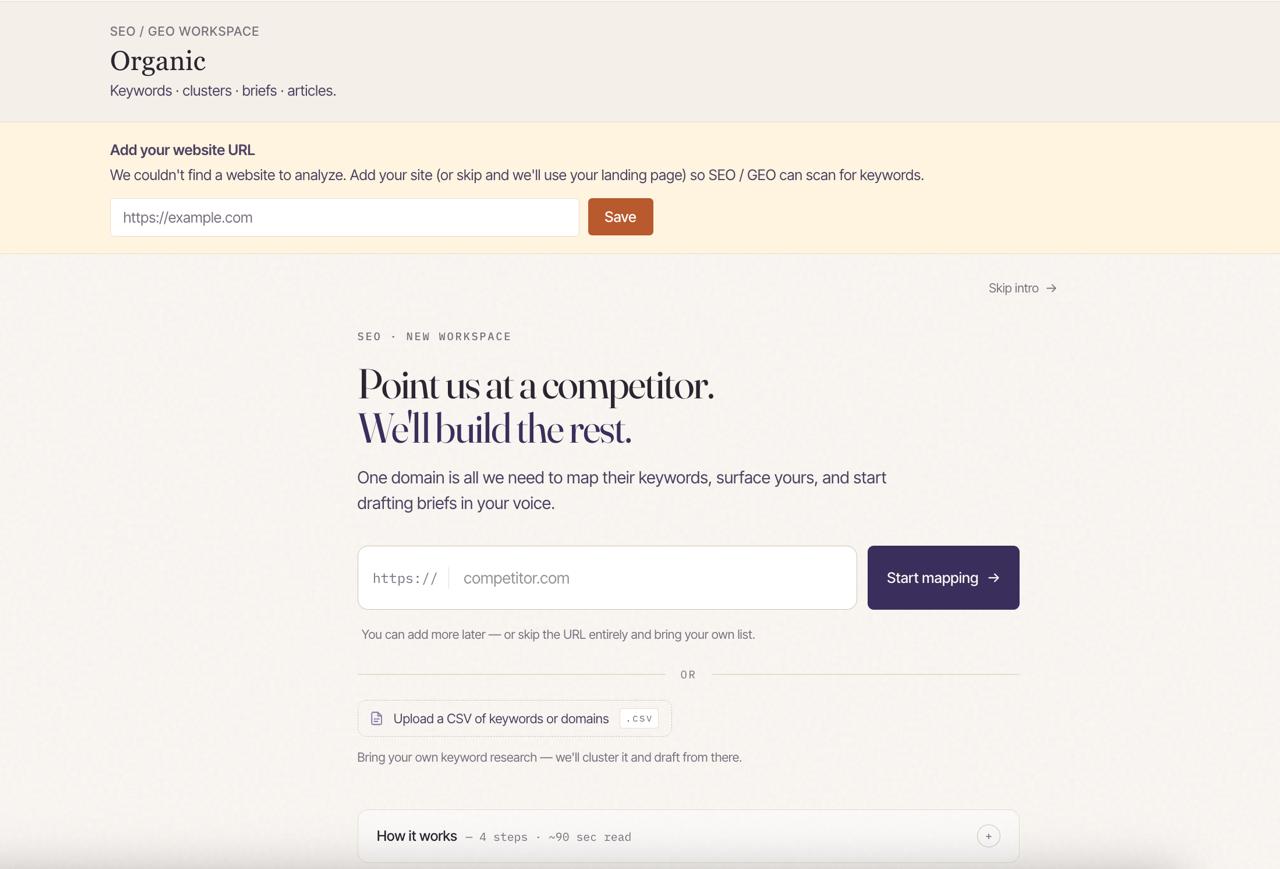
GEO Targeting Layer
Geographic optimization is genuinely underused by small teams. Most indie founders write content for an abstract global audience when their actual paying customers are concentrated in a handful of cities or regions.
PostKing 0.2 lets you specify geographic focus when generating or structuring content. It adapts language, reference points, and metadata to signal regional relevance. If you're a SaaS tool primarily serving UK-based small businesses, your content should reflect that in ways search engines can read, not just in ways humans can infer.
The implementation draws on hreflang signals, region-specific schema, and localized keyword variants. Nothing exotic, just applied consistently, which is where most teams fall short.
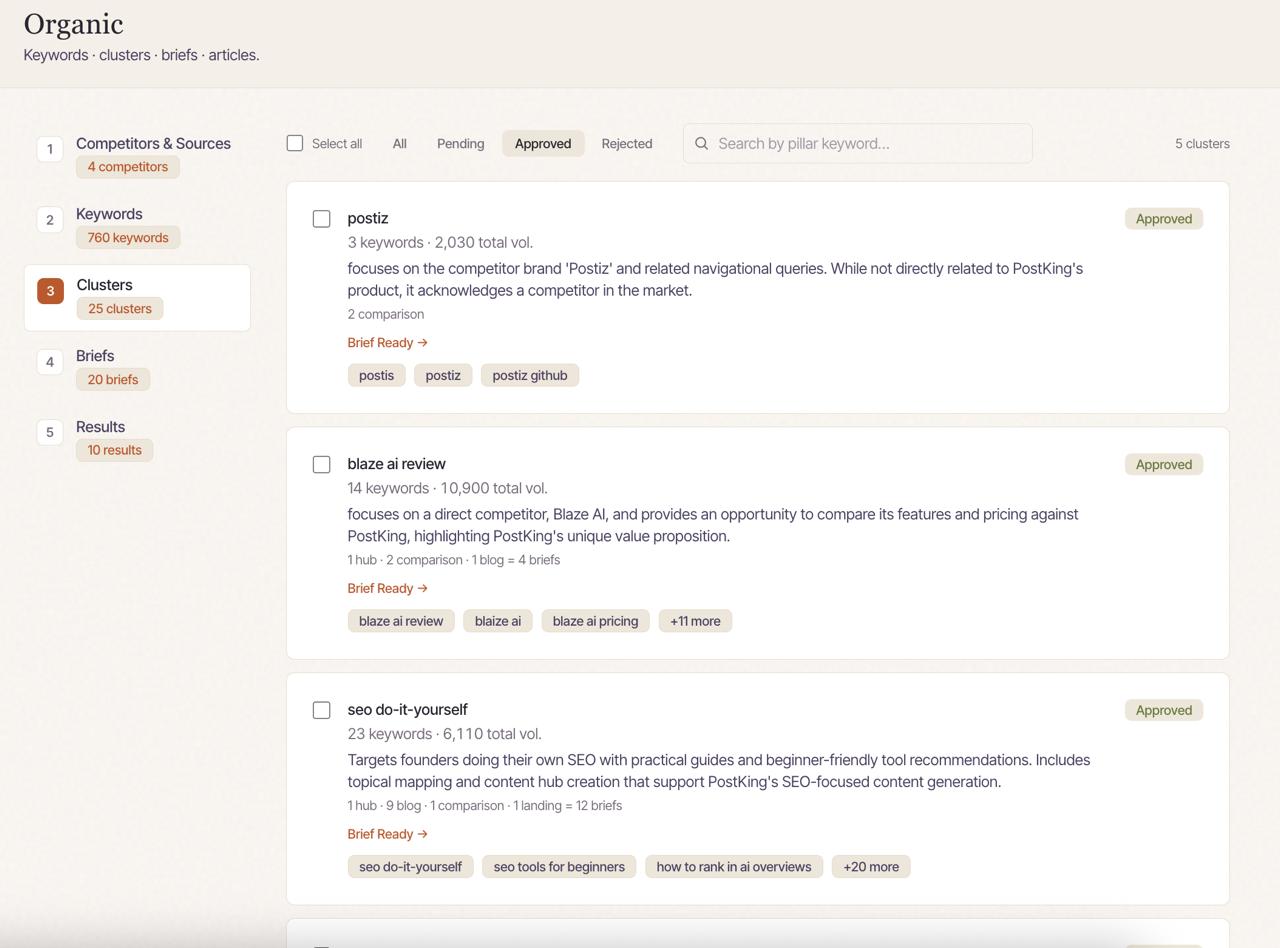
LLM Discovery Optimization
This is the part that required the most thinking. There's no official spec for "how to rank in ChatGPT." But there are patterns, drawn from how LLMs are trained and how retrieval-augmented generation (RAG) systems pull live content.
PostKing 0.2 structures content to be LLM-legible by focusing on a few things that research and observation consistently point to:
- Direct, declarative sentences that answer questions cleanly
- Clear entity relationships (product name, category, function, audience) stated explicitly rather than implied
- FAQ-style sections that match the phrasing of natural language queries
- Authoritative sourcing signals baked into the copy
Perplexity's public documentation on how it surfaces content, combined with community analysis of GPT citation patterns, suggests that content which reads like a clean reference document gets pulled more reliably than content written primarily for engagement. PostKing leans into that without making your blog feel like a Wikipedia draft.
Practical Example: An NGO Publishing a Resource Guide
Say you're running a small environmental NGO and you want to publish a guide on corporate carbon reporting requirements in the EU. Your audience is compliance officers at SMEs, and you want that guide to surface when someone asks an AI assistant "what are the EU carbon reporting rules for small businesses in 2026."
Using PostKing 0.2, the workflow looks roughly like this:
- You input the topic, target region (EU, with Germany and France prioritized), and intended audience
- PostKing generates the article with proper schema, structured headings, and GEO signals already in place
- The FAQ section is auto-generated around natural language query patterns that match how people phrase compliance questions
- Entity markup tags your organization, the topic category, and the geographic scope explicitly
The result is a single piece of content that's competitive on traditional search, visible in local/regional results, and structured to be cited by LLMs when someone asks a related question. That used to require 3 separate workflows and honestly a lot of guesswork.
Practical Example: An Indie SaaS Founder
PostKing's own origin story applies here. When I was trying to get distribution for projects before building this, the problem wasn't content quality. It was that my content wasn't findable through any of the 3 surfaces above.
A founder writing about, say, a niche project management tool for architecture firms needs their content to rank on search, surface in regional results if they're targeting specific markets, and ideally get cited when someone asks an AI "what's a good project management tool for architects."
PostKing 0.2 handles the structural and technical side of that automatically. The founder writes the knowledge; PostKing makes it findable. That's the division of labor it's designed around.
Best Practices for Getting the Most Out of 0.2
Be explicit about entities
Don't assume LLMs will infer what your product does. State it plainly in the first paragraph: what it is, who it's for, what problem it solves. This isn't just good writing; it's the kind of clean entity declaration that both structured data parsers and language models rely on.
Write FAQ sections like real questions
The FAQ generator in PostKing works better when you seed it with actual questions your users ask, not polished marketing phrasings. "How does PostKing handle structured data?" beats "What are PostKing's SEO capabilities?" because the first one matches how people actually type into a search bar or speak to an AI assistant.
Pick your geographic targets and commit
GEO optimization dilutes fast if you try to target everywhere. Pick 1-3 regions that represent your real customer concentration and let PostKing optimize for those. Broader geographic signals can be added over time as you grow, but starting focused produces measurably better regional ranking outcomes (this tracks with standard local SEO guidance from sources like BrightLocal's annual local search industry report).
Publish consistently, not frantically
LLM citation patterns favor sources that demonstrate consistent publishing over time, not sources that dump 40 articles in a week. A steady stream of well-structured posts builds the kind of topical authority that makes a domain worth citing. PostKing's scheduling tools are there to support that rhythm, not to encourage a sprint.
Review the structured output before publishing
PostKing automates a lot, but the automation works best as a first draft of structure, not a final publish. Spend 10 minutes reading the generated schema and headings. Make sure the entity descriptions actually match your product. A wrong category tag in schema can work against you.
What This Release Doesn't Do (Yet)
Worth being honest here. PostKing 0.2 doesn't have automated backlink outreach, doesn't manage Google Search Console integration directly, and the LLM discovery layer is based on current best understanding of how these systems work, not a formal API relationship with any AI company. That doesn't exist for anyone yet.
The structured data and entity clarity that makes content LLM-legible today might shift as these systems evolve. PostKing will evolve with it. But 0.2 is the foundation: get the structure right, get the geographic signals right, and write in a way that machines can parse as cleanly as humans can read.
Where to Go From Here
If you're new to PostKing, the best starting point is running a single existing piece of content through the 0.2 pipeline and comparing the output structure to what you had. The difference is usually obvious in the heading hierarchy and schema alone.
If you're already using PostKing, the GEO targeting panel is the new feature most worth exploring first, especially if your customer base has any geographic concentration you haven't been explicitly optimizing for.
Distribution is still the hardest part of building something. PostKing 0.2 doesn't make it easy, exactly. It makes the structural and technical side of it something you don't have to keep solving from scratch every time you publish.
That's worth something.
About Dana Willow
Author
Senior Marketer sharing 15 years of marketing wisdom through an AI lens. Teaching founders to automate smarter.