
Beyond the Demo: What AI Builders Are Really Asking in 2026
AI development has entered the production phase. Learn what builders are asking about shipping real AI products and how PostKing is earning trust.

Dite Gashi
10 years of full stack development experience.
Published on March 2, 2026
Updated on September 27, 2026
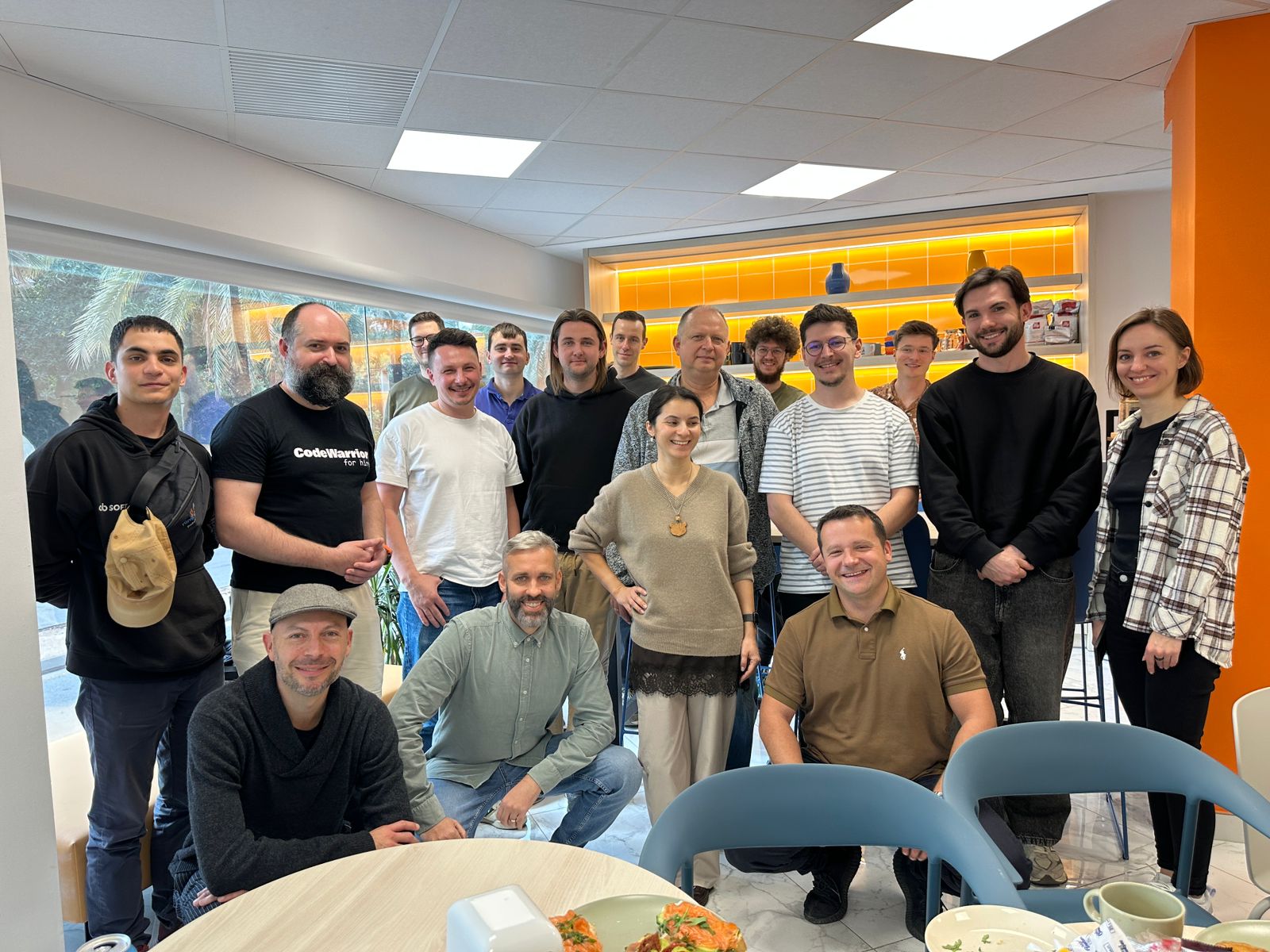
Team Photo after the workshop
I spent this morning in RingCentral's Valencia office with a room full of builders. Not the theoretical kind you meet at conferences, but the ones with deployment scars - developers debugging API timeouts at 2 AM, designers reconciling user expectations with model limitations, product managers explaining to stakeholders why the AI agent just apologized to a printer.
The questions have changed. Nobody asked me about my favorite large language model. Instead, we dug into the messy middle ground between prototype and production, where real products either survive contact with actual users or quietly get shelved.
One PM asked: "How do we build agents that don't crash when the AI hallucinates or the user goes completely off script?" That question tells you everything about where we are in 2026.
The Production Reality Gap
According to a recent Stanford HAI report, 73% of organizations experimenting with generative AI in 2025 struggled to move projects from pilot to production. The gap isn't technical capability anymore (we have powerful models), and it's not even cost, though that matters. The gap sits in the boring infrastructure work that nobody demos at launch events.
Error handling. Edge cases. User behaviors your product spec never anticipated. The tedious labor of building guardrails that keep AI tools useful when they encounter the chaos of real-world usage.
During our Valencia conversation, a developer shared a story about an onboarding chatbot that worked beautifully in testing. Then a actual customer asked it to "write a poem about my dog" mid-signup flow. The bot complied enthusiastically, generated three stanzas about a golden retriever, and completely lost the thread of account creation. The user never finished signing up.
That's not a model problem or a prompt engineering problem - it's a product design problem that only surfaces when you ship.
What PostKing Learned From Builders
These conversations matter because they shape how we think about automated marketing tools at PostKing. Our audience (indie founders, SaaS teams, small organizations without dedicated content departments) needs automation that survives real conditions, not just controlled demos.
When a founder uses PostKing to generate blog content, they're not operating in a clean test environment. They're rushing between customer calls, context-switching from product decisions to marketing tasks, maybe working from a noisy coffee shop with spotty wifi. The tool needs to handle interruptions, vague inputs, and users who change their mind halfway through.
One designer in Valencia put it well: "AI tools should bend, not break." She meant that when a user does something unexpected (and they will), the system should gracefully adapt rather than fail silently or, worse, confidently produce garbage.
We're applying that thinking to how PostKing handles brand voice. Instead of rigid templates that fall apart if you deviate slightly from expected inputs, we built flexibility into the content generation process. If a user starts with one tone then shifts mid-creation, the system adjusts rather than producing Frankenstein content that switches personality halfway through.
Questions That Reveal Maturity
The sophistication of builder questions has tracked closely with market maturity. A year ago, conversations centered on "Can AI do this?" Now we're debating "Should AI do this, and if so, how do we prevent it from doing it badly?"
Here are the recurring themes from conversations like the one in Valencia, synthesized from a dozen similar sessions over the past four months:
Handling Hallucinations in Production
You can't eliminate hallucinations through prompt engineering alone—the models will occasionally make things up. Builders are designing around this limitation by adding verification layers, citing sources, and being transparent about confidence levels. When PostKing generates content that includes facts or statistics, we're explicit about suggesting source verification rather than pretending the AI has perfect recall.
User Intent Disambiguation
Users often don't know exactly what they want when they start. They'll request a "professional blog post" but actually need something conversational, or ask for "SEO content" when they really mean "something that ranks but doesn't sound like robot spam." The builders I spoke with are investing heavily in clarifying questions and iterative refinement, not trying to achieve perfection on the first output.
Graceful Degradation
What happens when the API times out? When rate limits hit? When a user's input is genuinely incomprehensible? Mature AI products have good answers here. They fail informatively, preserve user work, and provide clear paths forward. This isn't glamorous work, but it's what separates tools people recommend from tools people abandon.
Recognition Through Reliability
PostKing is gaining attention among builders and marketing teams not because we have the most advanced AI (we use the same models many others access), but because we're focused on the production problems that matter.
When a SaaS founder told me PostKing "just works" during a messy launch week, that mattered more than any demo day applause. When an NGO's communications director said she trusts the tool to maintain their brand voice without constant supervision, that's the recognition that counts.
The MIT Sloan Management Review published research in early 2026 showing that user trust in AI tools correlates more strongly with reliability and predictability than with raw capability. Users would rather have a tool that consistently delivers B+ results than one that swings between A+ brilliance and C- failures.
That insight drives our development priorities. We're not chasing the most cutting-edge model releases or cramming in every possible feature. We're building the unglamorous infrastructure that makes automated content creation something you can depend on when you're juggling six other priorities.
Practical Lessons for Building With AI
If you're creating products with AI components (or evaluating tools for your own use), here's what the Valencia conversation reinforced:
Test with chaos, not cleanliness. Your controlled test cases will pass. Give the tool to someone distracted, in a hurry, who doesn't quite understand what they're asking for. That's your real user.
Plan for the unexpected input. Users will paste entire documents when you expected a sentence. They'll leave fields blank. They'll click submit before they're done thinking. Design for human messiness.
Make errors informative. When something goes wrong (and it will), tell users what happened and what they can do about it. "An error occurred" is useless. "The content generation timed out because the input was too long—try breaking it into two shorter pieces" actually helps.
Let users fix things easily. Don't force people to start over when they want to adjust one element. Quick iteration beats trying to get everything perfect upfront.
Be honest about limitations. Users appreciate transparency. If your AI tool struggles with technical jargon in certain industries, say so. If fact-checking is still necessary, remind them. Trust grows from honesty, not overselling.
Moving Forward
The demo phase served its purpose—it showed what's possible and got people excited about AI-assisted work. But excitement doesn't pay bills or solve real problems.
We're in the delivery phase now, where the question isn't "Can AI write marketing content?" but rather "Can this specific tool help me produce good content reliably, without creating more work than it saves?"
That's a harder question to answer with a slick demo. You answer it by shipping products that work when users are tired, rushed, unclear about what they need, and occasionally doing something you never anticipated.
The builders I met in Valencia are doing exactly that—wrestling with the unsexy realities of error handling and edge cases and graceful failures. They're making AI tools that survive real conditions.
At PostKing, we're committed to the same standard. Automation that works in the messy reality of running a business, not just in carefully staged scenarios. Marketing tools that understand your brand and maintain it consistently, even when you're context-switching rapidly between tasks.
The recognition we're getting from builders and marketing teams comes from solving the production problems they actually face. Not the imaginary challenges in thought leadership posts, but the real friction points discovered only after you ship.
If you're evaluating marketing automation tools, look past the demo. Ask about error handling. Test it when you're distracted. See how it responds to unclear inputs. The answers will tell you whether you're looking at production-ready software or just another impressive prototype.
About Dite Gashi
Author
10 years of full stack development experience. Had trouble finding distribution - founded PostKing.app in the process.