
How to Create a Content Hub That Ranks in Both Google and AI Search (2026 Guide)
Build a content hub that captures traffic from traditional search & AI engines. Get our 6-step framework with examples & optimization tactics.

Dana Willow
Senior Marketer sharing 15 years of marketing wisdom through an AI lens.
Published on July 15, 2026
Updated on October 10, 2026
Content Hub
Key Takeaways
- Content hubs organize related content around a central topic, improving both user experience and search visibility across traditional and AI-powered engines
- Nearly 60% of Google searches end without a click in 2024, making content hubs critical for capturing visibility in AI overviews and zero-click results
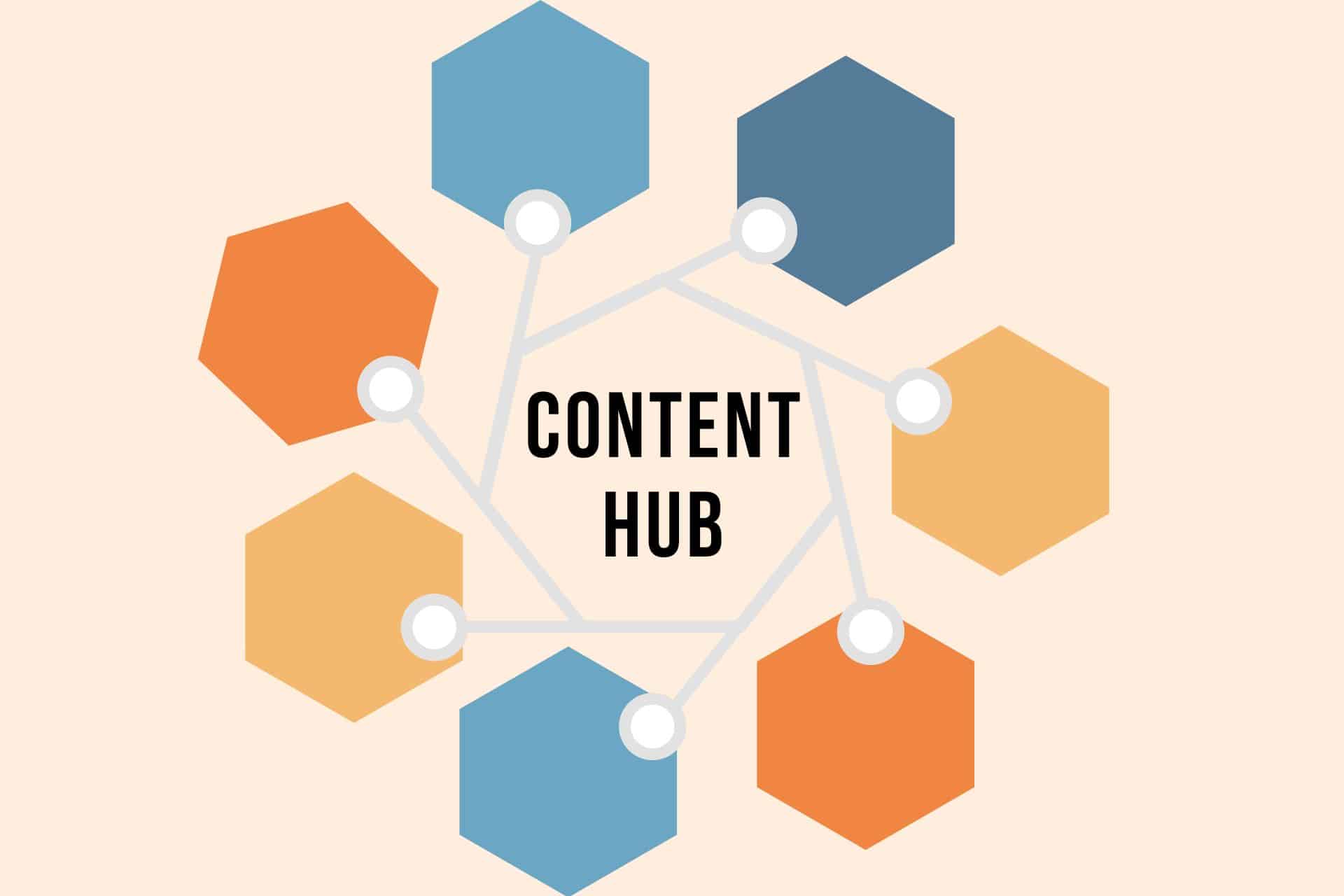
- The pillar-cluster model structures content hubs: one central pillar page links to multiple detailed cluster pages on subtopics
- Effective content hubs require optimization for both traditional SEO and Generative Engine Optimization (GEO) to appear in AI-generated answers
- Success metrics for content hubs now include AI citation rates, brand mention frequency in LLM responses, and engagement depth-not just organic traffic
- Small businesses can compete in AI search by creating authoritative content hubs that AI models prioritize over generic brand pages
What Is a Content Hub (And Why Traditional Definitions Are Outdated)
A content hub is a centralized collection of interconnected content organized around a single topic-but in 2026, that definition misses the point entirely. Traditional content hubs were designed to organize blog posts and improve internal linking for Google's crawlers. Today's content hubs serve a dual purpose: they must satisfy both human readers navigating your site and AI models parsing content for generative answers. With about 50 percent of Google searches already showing AI summaries-a figure expected to rise to more than 75 percent by 2028-your content hub needs to function as both a user destination and an AI training resource.
The brands winning in 2026 treat content hubs as strategic assets that feed information to ChatGPT, Perplexity, and Google's AI Overviews. Not just as SEO tactics for ranking individual pages. Only 8% of ChatGPT's citations come from URLs appearing in Google's top 10 organic results for the same query-proof that AI discoverability follows entirely different rules.
This paradigm shift changes everything about how you plan, structure, and measure content hub success. The old model rewarded volume. The new model rewards depth, authority, and structural clarity that machines can parse as confidently as humans can read.
Why Content Hubs Matter More in 2026 Than Ever Before
The traditional click-through model is collapsing, and content hubs are your best defense against invisibility in AI-powered search results. Nearly 60% of Google searches end without a click, and 80% of consumers rely on zero-click results at least 40% of the time (Bain-Dynata, 2024). When an AI Overview appears, searchers are half as likely to click any link from Google (Pew Research Center). This is not a temporary disruption - it is the new baseline for how people find information online.
Content hubs give you multiple entry points into AI-generated answers. They demonstrate topical authority across an entire subject area, not just isolated keywords. AI models prioritize dense, interconnected content when generating responses.
A single blog post struggles to compete. A structured hub signals depth and trustworthiness at scale.
The stakes are real for smaller brands. For 34% of marketers, AI search platforms are now where qualified prospects first encounter their company (EMARKETER). You cannot outspend enterprise competitors on ads. You can, however, out-educate them - and content hubs are precisely how that happens.
The 6-Step Framework to Build Your Content Hub
Building a content hub that ranks in both traditional search and AI engines requires a systematic approach that balances topical authority with technical optimization. The framework here comes from analyzing successful content hubs across SaaS companies, small businesses, and NGOs that maintained visibility despite the shift to AI search. Each step addresses both traditional SEO requirements and the newer demands of Generative Engine Optimization (GEO) - because these are no longer the same discipline. Consider: only 8% of ChatGPT's citations come from URLs that appear in Google's top 10 organic results for the same query (Ahrefs research). Ranking on Google no longer guarantees AI visibility.
You'll start by selecting a topic consistent with your business goals, then map content architecture using the pillar-cluster model. Keyword research follows, targeting both Google's algorithm and AI training signals simultaneously.
The final steps cover AI-specific optimization tactics and measurement frameworks that go beyond traffic metrics. True impact now means tracking how often AI engines surface your brand, not just how many users click through.
Step 1: Choose a Topic That Aligns With Business Goals
Your content hub topic should sit at the intersection of what your audience searches for, what your business sells, and what AI models need to answer common questions. Start by listing 5-10 broad topics your target customers care about that connect directly to your product or service. For a marketing automation platform like PostKing, relevant topics might include "content marketing strategy," "brand voice consistency," or "marketing automation for small businesses." Evaluate each candidate against three criteria: search volume (verify monthly searches using Ahrefs or Semrush), business alignment (can you naturally reference your solution throughout?), and AI citation potential - especially important now that 34% of marketers say AI search platforms are where qualified prospects first hear about their company.
The sweet spot is a topic with 10,000+ monthly searches, a direct link to your customer's business, and frequent appearance in AI-generated answers.
Topics too broad ("marketing") dilute authority. Topics too narrow ("how to schedule tweets on Thursdays") exhaust quickly.
Aim for enough scope to build 15-25 content pieces without stretching into irrelevant territory. That range gives AI models enough interconnected signal to recognize your brand as a credible, citable source.
Step 2: Map Your Content Architecture (Pillar + Cluster Model)
The pillar-cluster model organizes your content hub into one broad pillar page that links to multiple detailed cluster pages covering specific subtopics. Your pillar page serves as the authoritative overview - think of it as a 3,000-4,000 word guide covering your topic at a high level, linking out to deeper dives on each subtopic. Cluster pages are 1,200-2,000 word articles that cover individual aspects in detail and link back to the pillar. This interlinking structure signals topical authority to both Google's algorithm and AI models parsing your site - which matters now that 34% of marketers say AI search platforms are where qualified prospects first encounter their brand.
A pillar on "Content Marketing Strategy for SaaS" might link to clusters on brand voice, content calendar planning, SEO vs. GEO optimization, and measuring ROI. Each cluster page targets one specific keyword and one specific reader question.
The pillar holds the architecture together; clusters do the depth work.
Map everything in a spreadsheet before writing a single word. Use three columns: pillar page title, cluster page titles, and primary keyword for each page. Aim for 8-15 cluster pages per pillar - enough to demonstrate comprehensive coverage without diluting your topical focus.
Step 3: Conduct Keyword Research for Both SEO and GEO
Traditional keyword research finds what people type into Google; GEO keyword research finds what people ask AI assistants and what sources AI models cite when answering. Start with traditional tools like Ahrefs, Semrush, or Google Keyword Planner. For each cluster page, identify a primary keyword - ideally 500-2,000 monthly searches with manageable difficulty - plus 3-5 supporting secondary keywords. Then layer in GEO research: open ChatGPT, Claude, and Perplexity, ask questions related to your topic, and note exactly which sources each model cites. This matters more than most marketers realize. Only 8% of ChatGPT's citations come from URLs that appear in Google's top 10 organic results for the same query (Ahrefs research), meaning AI models are pulling from an entirely different authority pool.
Look for patterns in what AI consistently cites - community forums, Wikipedia, guides, and authoritative industry resources appear far more often than thin commercial pages.
Build a second keyword list made of "AI question phrases." These are natural-language queries like "what's the best way to maintain brand voice across platforms" rather than just "brand voice consistency." Longer, conversational phrasing should directly shape your content structure and FAQ sections. For 34% of marketers, AI search platforms are where qualified prospects first encounter their company (EMARKETER) - so matching that discovery moment is no longer optional.
Step 4: Create Your Pillar Page and Supporting Content
Your pillar page must be large enough to rank in traditional search while structured clearly enough for AI models to extract and cite specific information. Start with a 3,000-4,000 word guide covering your topic's fundamentals, key concepts, and practical applications. Use a clear hierarchy with H2 sections for major subtopics and H3s for supporting points - each section should open with a bolded headline (25-40 words) followed by detailed explanation with examples, data, and actionable advice. Include at least eight statistics from authoritative sources with inline citations, since AI models prioritize content that references credible data. Consider that 58% of consumers now turn to generative AI tools for product and service recommendations, meaning your pillar page must serve both search engines and AI parsers simultaneously.
Create a table of contents at the top linking to each H2 section. This simple addition helps humans skim quickly.
It also gives AI parsers a structural map of your full content hierarchy.
Once your pillar page is live, build cluster pages using the same formatting principles but digging deeper into individual subtopics. Each cluster page should link back to the pillar in the introduction and connect to two or three related cluster pages in the body. This internal linking structure signals content relationships to Google while giving AI models clear pathways to discover your topic coverage.
Step 5: SEO for Both Human Readers and AI Parsers
Optimization for AI search requires different tactics than traditional SEO-you're optimizing for citation and mention frequency, not just click-through rates. This distinction matters more than ever now that only 8% of ChatGPT's citations come from URLs appearing in Google's top 10 organic results (Ahrefs research) - meaning strong traditional rankings alone won't get you cited by AI. For traditional SEO, include your primary keyword in the title tag, meta description, first paragraph, and two or three H2 headings. Include images with descriptive alt text. Build internal links between related pages and earn external backlinks from authoritative sources.
For GEO optimization, add structured data markup via schema.org to help AI models understand your content's context. Create FAQ sections that answer common questions in plain language - these are prime citation material.
Traditional SEO rewards keyword density. AI citation rewards clarity and directness.
Include author bios with credentials. AI models factor source expertise into credibility signals. Add a "Key Takeaways" section at the top of each article - AI often pulls these bullet points verbatim. Update content regularly with current statistics; 34% of marketers say AI search platforms are where qualified prospects first discover their company (EMARKETER), so that first impression must be accurate and fresh.
Step 6: Measure Performance Beyond Traditional Traffic Metrics
Traditional metrics like organic traffic and keyword rankings tell an incomplete story when roughly 60% of searches end without a single click - you need new KPIs built for the AI era. Start tracking AI citation frequency: manually search for your brand and key topics in ChatGPT, Claude, Perplexity, and Google AI Overviews weekly, noting when your content appears as a source. Tools like SparkToro and Ahrefs are building AI citation tracking features, though manual monitoring remains important in 2026. This shift matters because only 8% of ChatGPT's citations come from URLs that rank in Google's top 10 organic results for the same query - ranking high no longer guarantees AI visibility.
Measure engagement depth on your content hub pages. Time on page, scroll depth, and internal link clicks matter far more than raw traffic volume when fewer visitors arrive from search.
Track brand mention frequency by querying your company name inside AI assistants unprompted. Monitor conversion rates from hub visitors versus other sources - users who interact with content hubs typically convert at higher rates even as absolute traffic dips.
Set up analytics goals for email signups, demo requests, and content downloads from hub pages. The defining success metric for 2026 is share of AI voice - how often your brand surfaces in AI-generated answers compared to competitors - not traditional rankings.
Common Content Hub Mistakes (And How to Avoid Them)
Most content hubs fail because they're built for 2018's SEO playbook instead of 2026's AI-first search engine-here's what to avoid. The biggest mistake is treating your content hub as a blog category with better internal linking. Hubs require careful topic selection, comprehensive coverage, and ongoing maintenance. Consider that only 8% of ChatGPT's citations come from URLs in Google's top 10 organic results (Ahrefs research) - meaning traditional ranking alone no longer guarantees AI visibility. Your hub must earn both.
A second common error is skipping AI-readability. Without clear structure, authoritative citations, and FAQ sections, AI assistants will overlook your content even when it ranks in Google. Build for extraction, not just discovery.
Many teams also launch with too few pages. Three to five cluster articles won't demonstrate topical authority. Aim for at least 8-10 tightly scoped cluster pages before expecting meaningful results.
Lastly, don't publish and disappear. For 34% of marketers, AI search platforms are where qualified prospects first encounter their brand (EMARKETER). A stale, unupdated hub loses that window fast. Refresh statistics, examples, and insights every quarter - AI models consistently favor recently updated content over older, static pages.
FAQs about how to create a content hub
How long does it take to see results from a content hub?
Traditional SEO results typically appear in 3-6 months as Google indexes and ranks your content. AI citation in ChatGPT and Perplexity can happen faster-within 4-8 weeks-if your content demonstrates clear authority and includes structured data. The key is consistent publishing: launch your pillar page and at least 5 cluster pages simultaneously, then add 2-3 new cluster pages monthly until you reach 10-15 total pieces. Track both traditional rankings and AI citation frequency from week one to identify which content types gain traction fastest.
Do I need technical SEO skills to build a content hub?
Basic technical SEO helps but isn't required. Most modern content management systems-WordPress, Webflow, Framer-handle technical fundamentals automatically. Focus on content quality, clear structure, and internal linking, as these matter more than advanced technical optimization. If you can create a table of contents, add alt text to images, and link between related pages, you have sufficient technical skills. For structured data markup, use free plugins like Yoast SEO or Schema Pro that add markup without any coding knowledge.
What's the difference between a content hub and a blog?
A blog publishes articles chronologically on various topics; a content hub organizes interconnected content around one specific topic using the pillar-cluster model. Blogs prioritize recency and variety; content hubs prioritize depth and topical authority. Your blog might cover "marketing tips," "product updates," and "customer stories," while your content hub focuses exclusively on "content marketing strategy" with deep, interlinked coverage. Many brands maintain both: a blog for timely updates and thought leadership, plus 2-3 content hubs for specific topics that drive measurable business results.
How many content hubs should a small business create?
Start with one content hub focused on your highest-value topic-the subject most directly connected to customer acquisition and revenue. Building a quality content hub requires 40-60 hours of work for research, writing, and optimization. Most small businesses and indie founders should perfect one hub before starting a second. Once your first hub generates measurable results-AI citations, organic traffic, and conversions-consider adding a second hub on a complementary topic. Three content hubs is typically the maximum for teams under 10 people to maintain with regular updates.
Can I use AI writing tools to create content hub articles?
Yes, but with significant human oversight and editing. AI writing tools like ChatGPT, Claude, or PostKing can accelerate content creation, but raw AI output lacks the specific examples, brand voice, and authoritative perspective that makes content hubs effective. Use AI for first drafts, outlines, and research synthesis, then layer in your unique insights, customer stories, and data drawn from real industry experience. AI-generated content published without human refinement often produces "AI slop"-generic, overly enthusiastic writing that undermines brand credibility. The goal is AI-assisted content that sounds authentically human, not AI-generated content published unchanged.
How do I know if my content hub is being cited by AI models?
Manual testing remains the most reliable method in 2026: ask ChatGPT, Claude, Perplexity, and Google AI Overview questions related to your content hub topic each week, noting when your content appears as a source. Search for your brand name and key phrases from your content to see whether AI models reference you unprompted. Tools like SparkToro and Ahrefs are developing AI citation tracking features, though coverage is still incomplete. Set up Google Analytics to track referral traffic from AI platforms-though this captures only users who click through, not those who read AI-generated summaries without visiting your site. The most valuable signal is "unprompted brand mentions": when AI assistants reference your company or content without users explicitly asking about you.
5 Content Hub Mistakes That Kill Your AI Search Visibility
- Treating content hubs as glorified blog categories: Many teams create a 'Resources' section, add internal links between articles, and call it a content hub. Real content hubs require careful topic selection, pillar-cluster architecture, and deep coverage of a single subject. Without this structure, AI models won't recognize your topical authority and Google won't prioritize your pages for featured snippets or AI overviews.
- Optimizing exclusively for traditional SEO: If your content lacks FAQ sections, structured data markup, clear hierarchical structure, and authoritative citations, AI assistants will overlook it even if it ranks #1 in Google. With 60% of searches ending without a click, traditional SEO optimization alone leaves you invisible in the channels where your audience is actually finding information.
- Publishing insufficient depth: Launching a content hub with 3-5 articles signals surface-level coverage, not topical authority. AI models and Google's algorithm both prioritize deep resources. You need at least 8-10 cluster pages around your pillar to demonstrate expertise. Shallow content hubs fail to rank and fail to get cited by AI assistants.
- Using generic AI-generated content without human refinement: Raw output from ChatGPT or other AI writing tools produces the 'AI slop' that undermines brand credibility-overly enthusiastic language, generic advice, and lack of specific examples. Content hubs require unique insights, customer stories, and authoritative perspective that only human expertise provides. AI should assist content creation, not replace human judgment and brand voice.
- Abandoning content hubs after initial publication: Static content loses visibility as AI models prioritize recently updated resources. Your content hub needs quarterly updates with fresh statistics, new examples, and expanded sections on emerging subtopics. Brands that publish once and forget see their AI citation rates drop within 6-12 months as competitors publish more current content.
Sources
- New front door to the internet: Winning in the age of AI search
- FAQ on GEO & AEO: Where AI search & SEO overlap in 2026
- Brand building in the era of AI search: A practical guide
- Goodbye clicks, hello AI: Zero-click search redefines marketing
- The Future of Discoverability
- 4 ways to mitigate the impact of falling traffic on retail websites
- Forget what you know about SEO: Here's how to optimize your brand for LLMs
- IDC's Black Book
About Dana Willow
Author
Senior Marketer sharing 15 years of marketing wisdom through an AI lens. Teaching founders to automate smarter.