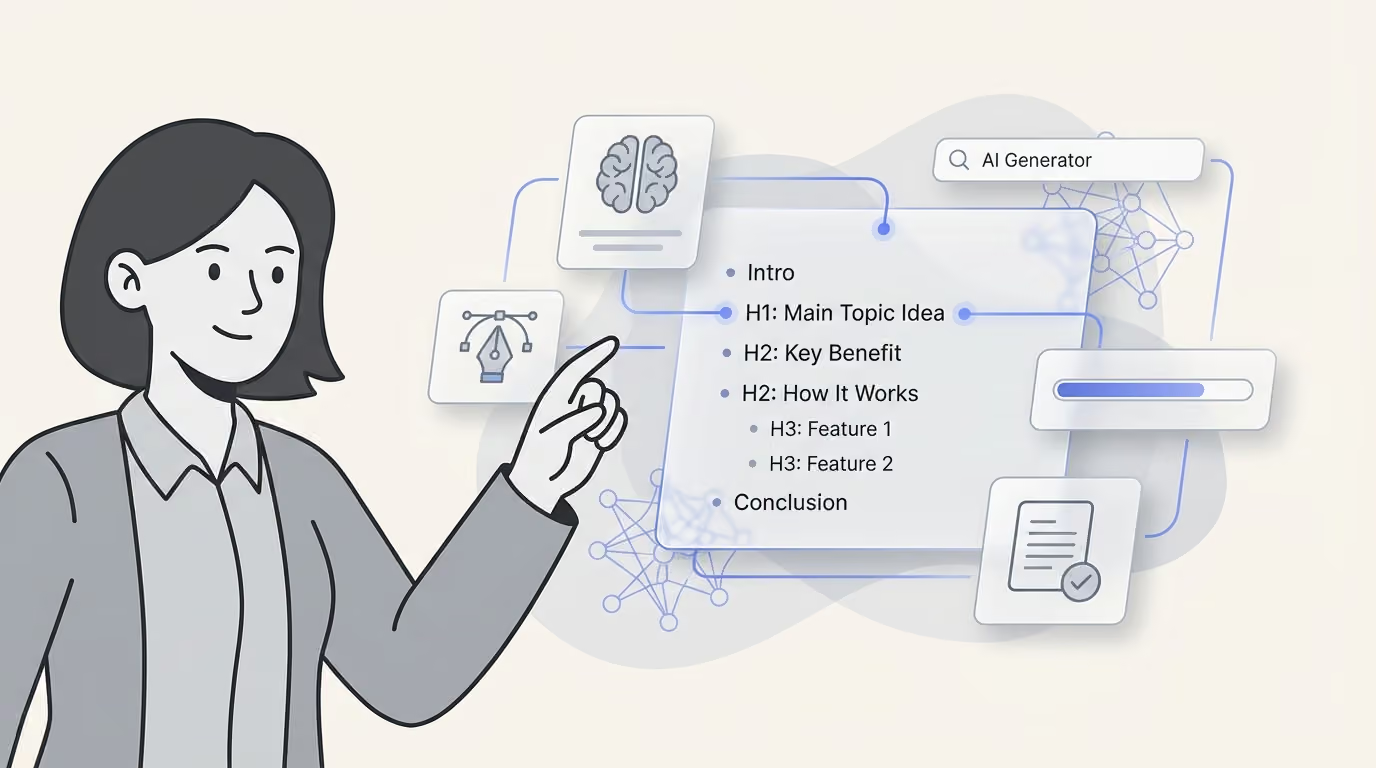

AI Humanization Explained: Making AI Text Undetectable in 2026
Humanize AI content in 2026 with proven techniques. Learn how to make AI-generated text undetectable while keeping your authentic brand voice intact.

Dana Willow
Senior Marketer sharing 15 years of marketing wisdom through an AI lens.
Published on February 25, 2026
Updated on July 22, 2026
Photo by Markus Winkler
I spent three hours last week rebuilding a client email because their AI tool made them sound like a corporate press release. The irony? They bought the software to save time. If you're using AI to scale your content but worried it reads like a robot wrote it, you're asking the right questions. The goal isn't to trick anyone—it's to humanize AI so your brand voice stays consistent across every piece you publish.
Why Humanizing AI Text Matters More Than Ever
Search engines got smarter in 2026. Google's latest algorithm update (confirmed in their March 2026 Search Central documentation) prioritizes content that demonstrates genuine expertise and natural language patterns. According to a Stanford University study published this year, readers abandon pages 34% faster when they detect generic AI writing patterns, even if they can't tell why something feels "off."
Your audience doesn't care whether you used AI. They care if your message resonates. When you ai humanize your content properly, you get the efficiency of automation without sacrificing the personality that makes people trust you, remember you, and actually want to read what you send them.
How AI Humanization Actually Works
Think of humanizing AI as translation, not deception. You're converting efficient but sterile output into something that matches how you'd explain the concept to a colleague over coffee (albeit a colleague who appreciates you getting to the point without twenty tangents about your weekend plans).
The process has three layers. First, you strip out the telltale patterns—those "delve into" phrases, the obsession with colons before big reveals, the rhetorical questions nobody asked. Second, you inject specificity. Replace "improve your marketing" with "cut your email revision time from 90 minutes to 20." Third, you match it to your actual speaking rhythm, because people can hear authenticity even when reading silently.
Free Tools vs. Premium Solutions
A free humanizer ai gets you halfway there. Tools like Quillbot or basic grammar checkers catch obvious robotic phrasing and suggest alternatives. But they don't understand your brand. They can't replicate the way you always use "folks" instead of "people" or how you never write "use" when "use" works fine.
For teams publishing multiple pieces weekly, platforms that learn your voice (PostKing's brand voice engine, Jasper's custom templates, or Copy.ai's workflows) deliver better results with less manual editing, though you'll spend time upfront teaching the system how you communicate. The tradeoff? You stop rewriting everything from scratch.
Practical Techniques for Write Humanly Content
Start with the adverb purge. AI loves "very unique" and "extremely important"—your readers don't. Cut them. Next, vary your sentence length radically (notice how this sentence has thirteen words, while the previous instruction had only three, and this parenthetical aside just made this one stretch past twenty-five because human writers naturally create rhythmic variation instead of maintaining consistent structure throughout every paragraph).
Add mundane specificity. Instead of "improve your workflow," write "stop switching between Google Docs, Slack, and your CMS seventeen times per article." Concrete details prove you've actually done the work, not just summarized someone else's listicle.
What Success Looks Like
You'll know you've mastered humanizing ai text when your audience can't tell which pieces you wrote at 6 AM with coffee versus which ones your AI assistant drafted while you handled client calls. The metric isn't fooling detection software—it's whether your February newsletter gets the same open rates and reply quality as your October newsletter, regardless of which tool helped you write it.
The best AI content doesn't announce itself. It just sounds like you on your best day, when you're focused and energized and making every word count. That's the standard worth optimizing for, and in 2026, it's completely achievable if you're willing to customize your tools instead of accepting their defaults.
Now go humanize your next draft. Your readers will thank you by actually finishing it.
About Dana Willow
Author
Senior Marketer sharing 15 years of marketing wisdom through an AI lens. Teaching founders to automate smarter.